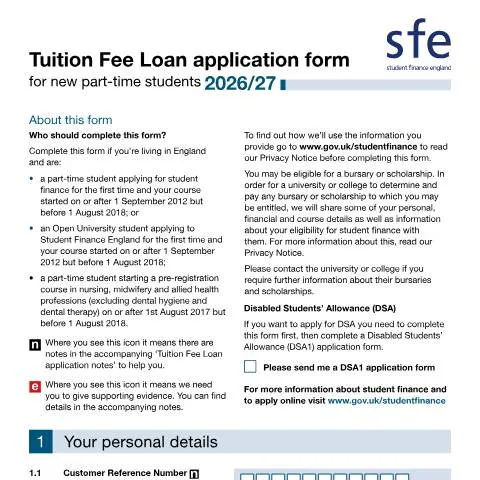
Understanding the Importance of the Student Finance Application
When embarking on the journey of higher education, financial support often plays a crucial role in making it a reality. For part-time students who began their courses between September 2012 and August 2018, the Student Finance Application Form is not merely a procedural hurdle but a significant gateway to accessing essential funding resources. This form, administered by the Student Loans Company (SLC), is designed for students who are pursuing their studies part-time and require assistance with tuition fees.
Who Needs to Utilize This Form?
This application is vital for a specific group of students living in England. If you fall into one of the following categories, you must complete this form:
- First-time part-time students whose courses commenced on or after 1 September 2012 and before 1 August 2018.
- Open University students applying for the first time with a course that started between the same dates.
- Part-time students entering pre-registration courses in nursing, midwifery, and allied health professions after 1 August 2017 but before 1 August 2018.
This targeted approach helps streamline the process for those fitting within the outlined parameters, ensuring that financial resources are allocated efficiently to eligible candidates.
Decoding the Application Process
The completion and submission of the Student Finance Application Form is an essential first step in securing financial support. Here’s a detailed look at the step-by-step journey from application to funding:
- Gather Necessary Information: Before starting the application, ensure you have your personal details, National Insurance number, and any prior education history at hand. This preparation will save time and reduce errors in your application.
- Complete the Application Form: Fill in all required sections accurately, paying particular attention to personal details and previous educational qualifications. Any discrepancies can lead to processing delays.
- Submit Supporting Documents: If requested, submit any additional documentation that supports your identity or eligibility. This may include proof of name changes or evidence of prior qualifications.
- Await Confirmation: After submitting your application, it typically takes a few weeks to process. Use any tracking options available to follow the status of your application.
- Receive Your Funding Decision: You will receive a notification regarding your funding status. This will outline whether you have been approved, and if so, the amount of funding you will receive.
Identifying Key Sections of the Application
The form consists of various sections, each with its distinct requirements and potential pitfalls. Here’s an analysis of some critical parts of the form:
Personal Details
It is imperative to provide personal information exactly as it appears on official documents like your passport. This includes:
- Full Name: Any discrepancies in spelling or order could lead to complications.
- Date of Birth: Ensure the format is consistent with your identification.
- Contact Information: Always provide up-to-date contact details for correspondence.
Previous Support and Qualification History
This section requires details about any funding received for prior studies and the history of your educational background, including:
- Any previous loans from the Student Loans Company.
- Details of any other funding sources, such as employer contributions.
Be transparent here, as failing to disclose prior assistance may have repercussions.
What to Do in Case of Issues or Delays
Facing a delay or receiving a refusal can be stressful. Here’s how to navigate these situations:
If Your Application is Refused
Receiving a refusal notification can be disheartening. The first step is to review the reasons for the refusal, which will be detailed in the correspondence. Common reasons include:
- Ineligibility based on course start dates.
- Incomplete information or missing documentation.
After understanding the reasons, you have the right to appeal or reapply, ensuring that you address the highlighted issues in your new submission.
Handling Missing Information
If your application is being held up due to missing documentation, promptly provide what’s needed. The SLC may specify which documents are required for your application to proceed. Keeping a checklist can be beneficial in ensuring that you gather everything needed.
Timelines and Deadlines
Understanding the critical timelines associated with the application process can significantly enhance your planning. Here are the essential dates to keep in mind:
| Action | Deadline |
|---|---|
| Application Submission for Academic Year | Typically by the end of June preceding the academic year |
| Last Date to Submit Supporting Documents | Usually within a few weeks after application submission |
| Final Confirmation of Funding | Generally by mid-August before the academic year starts |
Mark these dates in your calendar to ensure you do not miss any critical deadlines.
Following Up on Your Application
Once your application is submitted, it’s vital to stay proactive. Here’s how to effectively follow up:
- Keep Records: Document when you submitted your application and any reference numbers provided by the SLC.
- Contact SLC: If you have not received any communication within the expected timeframe, don't hesitate to reach out to the SLC for updates.
- Utilize Online Resources: The SLC website offers tools for tracking your application status; make use of these resources to stay informed.
After Receiving Your Funding
Once your funding is approved, it’s crucial to understand the terms and conditions associated with your Tuition Fee Loan. Be mindful of:
- Repayment Obligations: Familiarize yourself with when you will start repaying your loan, as this is typically linked to your income level.
- Eligibility for Additional Support: Explore whether you qualify for further assistance, such as the Disabled Students’ Allowance (DSA), which requires a separate application following the initial form.
- Keeping Information Updated: If your circumstances change during your studies (e.g., change of address, course changes), it’s crucial to inform the SLC to avoid any disruptions in funding.
Special Considerations for Unique Situations
Some applicants may face unique circumstances that can impact their application. Here are a few special considerations:
Changes in Course Status
If you switch courses or cease attendance, notify the SLC immediately to avoid unnecessary repayments or funding complications.
International Students
Non-UK nationals may have additional requirements. Be prepared to provide evidence of your residency status and eligibility to study in the UK.
Students with Disabilities
Students requiring additional support should ensure that they first complete the Student Finance Application Form before applying for the Disabled Students’ Allowance (DSA). This streamlined process ensures that all necessary information is logged for consideration.
Final Thoughts on the Application Journey
The Student Finance Application Form is more than just a document; it is a key that opens doors to financial support for your educational journey. By understanding its significance, accurately completing the required sections, and navigating potential issues proactively, you can enhance your chances of securing the funding you need to succeed. Remember, starting your education should be an adventure, not an obstacle course. With the right preparation and support, you can embark on this exciting chapter with confidence.
Understanding Student Finance Eligibility Criteria
Before embarking on the application process for student finance, it’s crucial to have a clear understanding of the eligibility criteria that are specific to new part-time students, particularly those enrolled in courses commencing between September 2012 and August 2018. The criteria can vary based on several factors including your age, residency status, and the type of course you are undertaking.
To qualify for financial support, you must be studying a part-time course that is at least 25% of the full-time equivalent. This generally means that your course credits must fall within a specific range. For instance, if a full-time course requires 120 credits per year, you would need to be studying at least 30 credits to be eligible. Additionally, courses must be designated by the relevant education authority, which guarantees that the programme meets the standards required for funding.
Your residency status is also a determining factor. Generally, you must have been ordinarily resident in the UK, the Channel Islands, or the Isle of Man for the three years preceding your course. However, there are exceptions for certain individuals such as refugees or those with settled status. Furthermore, you need to provide proof of your National Insurance number as part of your application, which serves as a unique identifier in the student finance system.
It’s important to note that support for part-time students may also involve different funding limits when compared to full-time students. While full-time students can access a tuition fee loan up to the maximum limit set for their course, part-time students are capped at a lower threshold. Therefore, it's essential to check the latest guidelines from the Student Loans Company to ensure you understand the financing options available to you.
Navigating the Student Finance Application Process
Completing the student finance application can often be a daunting task, especially for new part-time students who may not be familiar with the process. The application can typically be completed online, and you will need to create a Student Finance account. This account will allow you to track your application status and manage your funding details effectively.
When filling out the application, you should carefully gather all required documentation. This includes your National Insurance number, bank details, and information regarding your course. If you're applying for additional support, such as a maintenance grant or a disabled students' allowance, further documentation will be required to substantiate your claim.
Once you've submitted your application, you may receive a request for additional information. It’s crucial to respond swiftly to any such requests to avoid delays in your funding. Generally, you should expect a decision regarding your application within six weeks. However, processing times may vary depending on the volume of applications received, especially during peak periods like the start of a new academic year.
Be aware that if your course changes or if your circumstances alter (e.g., a change in your address, course load, or financial situation), you must inform the Student Loans Company. Updating your application information is vital as it could affect your funding eligibility or amount.
Repayment Responsibilities and Thresholds for Part-Time Students
Understanding your repayment responsibilities is vital once you complete your course. For part-time students, the repayment scheme works similarly to that of full-time students, but the thresholds can differ. Generally, repayments start when your income exceeds a certain threshold, which was £27,295 per year as of the 2023/24 tax year. This threshold is based on your earnings and is subject to annual review, so it’s important to check the latest updates from HMRC regarding any changes.
Your repayments will be calculated as a percentage of your income above this threshold. It’s also notable that interest rates on your loan can vary depending on your income level, which can affect the total repayment amount over time. The interest rates are determined based on the Retail Price Index and your income, making it essential for you to be aware of your financial situation post-study.
If after a period of time (typically 30 years) your loans have not been fully repaid, any outstanding balance will be written off. However, this varies depending on the repayment plan you are on, so it’s recommended to familiarize yourself with the specific terms and conditions associated with your loan.
In the unfortunate event that you find yourself unable to make repayments, it’s crucial to communicate with the Student Loans Company as soon as possible. They may offer alternative repayment arrangements to assist you during financially challenging times.