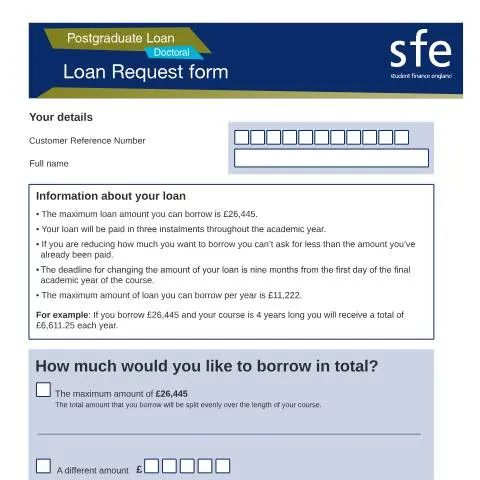
Navigating the 2020 to 2021 Postgraduate Doctoral Loan Request Form: A Comprehensive Guide
As you embark on your doctoral journey, financing your studies is a critical step. The 2020 to 2021 Postgraduate Doctoral Loan request form stands as a pivotal component in securing the financial support you need. Whether you are a newly graduated student or a seasoned professional aiming to deepen your expertise, understanding the ins and outs of this official document can make a significant difference in your educational experience.
Understanding the Context: The Importance of the Postgraduate Doctoral Loan
The Postgraduate Doctoral Loan offers up to £26,445 to assist with tuition fees and living costs for doctoral students in the UK. This funding is crucial, especially as doctoral programs often extend beyond typical undergraduate timelines. The loan is structured to disburse in three instalments throughout the academic year, enabling students to manage their finances more effectively.
But before you can access these funds, you must first complete the Postgraduate Doctoral Loan request form accurately and submit it on time. Failing to do so may lead to delays or even denial of your loan; hence, the urgency of mastering this process.
Step-by-Step Guide: From Initiation to Submission
Starting Your Application
Your journey begins with the decision to apply for the Postgraduate Doctoral Loan. This decision might stem from various circumstances, such as insufficient personal funds or a desire to focus entirely on research without the burden of financial stress. Before you proceed, ensure you meet the eligibility criteria:
- You must be a UK national or a person with settled status.
- Your course must be eligible for funding under the regulations.
- You must be at least 18 years old on the first day of your course.
Completing the Form: Section by Section
The form consists of several sections, each requiring specific details. To ensure a smooth application process, let’s break it down:
- Your Details: This section requires your full name and Customer Reference Number. Ensure that these details match your official identification documents to avoid discrepancies.
- Loan Amount: You can request the maximum amount of £26,445 or specify a different amount. Remember, the total loan amount will be split evenly over the duration of your course. If you’re unsure, consider your annual expenses and educational costs.
- Payment Schedule: Understand that your loan will be divided into three payments. Specify your preferred method of receiving funds, as this may affect the timeline of disbursement.
- Terms and Conditions: Carefully read through the terms, ensuring you understand your obligations. A signature is required to confirm you agree with the terms stipulated.
Common Pitfalls to Avoid
When filling out the form, precision is key. Here are some common pitfalls:
- Inaccurate personal information can lead to delays. Double-check spelling and numbers.
- Failing to sign and date the form can stall your application.
- Overlooking the deadline for adjustments to the loan amount can result in receiving funds less than what you need.
Special Cases: International Applicants and Complex Situations
For international students or those with unique circumstances, the process may differ slightly:
International Students
If you are an EU student or a non-UK resident, you may still qualify for funding under certain conditions. It’s crucial to provide additional documentation proving your residency and eligibility. Understanding the nuances of these regulations can help avoid confusion during your application process.
Changing Your Circumstances
If your circumstances change after submitting your application—such as a change in your course status or funding needs—you must notify the Student Loans Company (SLC) immediately. Failing to do so can lead to penalties or the need to repay funds already disbursed. Keep a record of any communication with the SLC for reference.
The Bigger Picture: The Role of the Postgraduate Doctoral Loan in Student Financing
The Postgraduate Doctoral Loan is part of a larger framework of student finance in the UK. Understanding where this loan fits within the broader landscape of student financing can empower you in your funding journey.
Connecting to Other Student Financial Supports
In addition to the Doctoral Loan, there are other funding options available:
- Scholarships: Various institutions and organizations offer scholarships for doctoral candidates that don’t require repayment.
- Grants: Government and private grants can assist with specific costs like research materials or travel.
- Part-time Work: Balancing work alongside your studies can provide additional income. Consider your workload and how much time you can commit to a job.
After Submission: Tracking Your Application and Managing Your Loan
Once you have submitted your Postgraduate Doctoral Loan request form, understanding the follow-up process is vital for ensuring that your loan is processed smoothly.
Monitoring Your Application
The SLC provides a portal for applicants to track their loan application status. Make it a habit to check regularly, as this allows you to stay informed about any required documents or additional steps needed to finalize your loan.
Repayment Responsibilities
Being aware of your repayment obligations is crucial. Here’s a breakdown of what to expect:
| Repayment Threshold | Percentage of Income Above Threshold |
|---|---|
| £27,295 | 9% |
| £21,000 (Post-2012 loans) | 9% |
| £19,390 (Pre-2012 loans) | 9% |
These percentages apply to your income above the threshold, so it’s beneficial to stay informed about your earnings and budgeting as your studies progress.
Why Timeliness Matters: Deadlines and Contingencies
Missing deadlines can jeopardize your entire application process. The deadline for submitting your Postgraduate Doctoral Loan request form aligns with your course start date. To avoid complications:
- Submit your form as early as possible, particularly if you need additional documentation.
- Be mindful of the nine-month period to amend loan amounts after your course begins; adjustments cannot be made beyond this point.
- Maintain open communication with your institution and the SLC for any uncertainties regarding timelines.
Legal Framework: Understanding Your Rights and Obligations
Legalities govern the relationship between you and the Student Loans Company. Familiarize yourself with the Data Protection Act 2018 and UK GDPR, which protect your personal data throughout the application and funding process. By understanding these legal frameworks, you can ensure that your rights are upheld and that you are aware of your responsibilities regarding personal information.
As you navigate the complexities of your postgraduate journey, the 2020 to 2021 Postgraduate Doctoral Loan request form becomes a vital tool. Each step, from filling out the form accurately to understanding your repayment obligations, contributes to a successful financial experience during your studies. Stay informed, be proactive in managing your application, and embrace the opportunities that lie ahead.
Eligibility Criteria for the Postgraduate Doctoral Loan
Before you begin your application for the Postgraduate Doctoral Loan, it is crucial to understand the eligibility criteria set forth by the Student Loans Company. Firstly, you must be a UK national or a resident of the EU, EEA, or Switzerland. Specifics regarding residency can affect your eligibility; for example, if you have recently moved to the UK, you may need to provide evidence of your residency status.
Additionally, you must be enrolled on a doctoral course that is eligible for funding. This includes full-time or part-time courses at approved higher education providers. However, if you are studying part-time, be aware that you must be studying at a rate that would allow completion within eight years. You will also need to establish that your course is not a distance learning programme unless it is a 'blended learning' course meeting specific criteria.
Another critical aspect is the age limit; you must be under 60 years old on the first day of the academic year in which you are applying for the loan. This age restriction is intended to ensure that the loan is used for educational purposes that will enhance your career prospects.
If you have previously received funding for a doctoral course, you may not be eligible for another loan unless you have completed your previous course. Make sure to assess your previous funding history before applying. The Student Loans Company may require you to provide information about previous loans as part of the application process.
What to Expect After Submitting Your Loan Request
Once you have successfully submitted your Postgraduate Doctoral Loan request form, the next steps are essential to understand, as this can greatly impact your academic and financial planning.
Shortly after submission, you will receive an acknowledgment from the Student Loans Company, confirming that they have received your application. This acknowledgment will include important information about the processing timeline, which can vary from a few weeks to several months, depending on the volume of applications and the time of year.
Your application will be assessed against the eligibility criteria and funding requirements. If there are any issues, such as missing documentation or clarification needed regarding your course, the Student Loans Company will reach out via the contact details you provided. It's recommended to monitor your email and any correspondence closely, as timely responses are vital to avoid delays.
Once your application is approved, you will receive a formal notification detailing the amount of loan you are eligible for, the terms of repayment, and the schedule for disbursement of funds. The loan amount typically covers tuition fees and living costs, but you should be informed that you will need to manage your budget effectively. Be mindful of the fact that you are responsible for ensuring that the funds are used for approved educational expenses.
Important to note is that loan repayments will commence once you reach a certain income threshold, which is reviewed annually. You will need to keep your National Insurance number updated, as it serves as a reference point for your income assessment when the time comes for repayment.
Managing Your Funds: Budgeting as a Postgraduate Student
Effectively managing your finances while pursuing your postgraduate doctoral course is essential to completing your studies without undue financial stress. The Postgraduate Doctoral Loan is designed to support your educational expenses, but it is crucial to create a budget that outlines your anticipated costs and income.
First, identify your fixed expenses, such as tuition fees, which will usually be paid directly to your institution. Next, consider your living costs, including accommodation, food, and transportation. As a postgraduate student, you may also want to factor in costs associated with research materials, conference attendance, and travel expenses related to your studies.
Utilize budgeting tools and apps that can help you track your expenditure against your loan disbursements. This will enable you to identify any overspending early on and make necessary adjustments. Additionally, consider setting aside a small amount of your loan each month as an emergency fund to cover unexpected expenses that might arise during your study period.
For further financial management, explore opportunities for additional funding, such as scholarships or grants specific to your field. Many universities offer financial aid offices that can assist you in finding these opportunities. Building relationships with faculty members can also provide leads on potential funding or research assistant positions that may be available.
Lastly, ensure you are well-informed about the repayment terms and conditions of your loan. Understanding how much you will need to pay back, and the timeline for repayments, will help you plan your finances responsibly throughout your time as a doctoral student.