When Corporate Governance Meets European Legacy: Understanding the UK Societas Appointment Framework
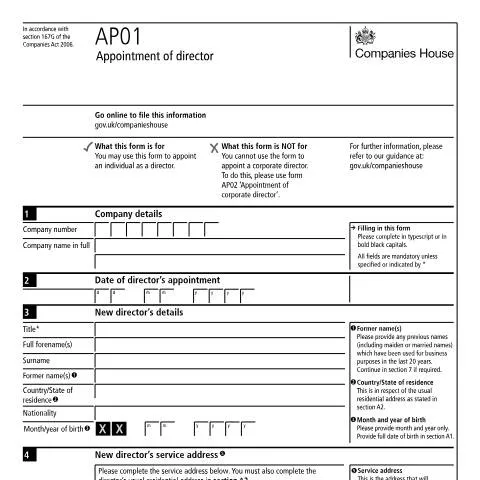
The appointment of directors within UK companies follows well-established procedures, but when dealing with UK Societas entities—those unique corporate structures that emerged from European company law—the process takes on additional complexity. The AP01 form, whilst appearing straightforward as a director appointment document, serves a dual purpose that reflects both traditional company administration and the specialised governance requirements of these hybrid corporate entities.
A UK Societas represents a distinctive corporate form that originated under European regulations and has been adapted for post-Brexit UK company law. Unlike standard limited companies, these entities often feature multi-tiered management structures with supervisory boards, management boards, or other continental European governance models. The AP01 form accommodates these variations by allowing appointments to different "organs" of the UKS structure, rather than simply appointing traditional directors.
This dual functionality means that whilst most users will employ this form for standard director appointments, those dealing with UK Societas entities must navigate additional considerations around which specific organ or management tier their appointee will join. The form's authentication section specifically acknowledges this complexity, instructing users to "delete 'director' and insert details of which organ of the UKS the person authenticating has membership."
Navigating the Individual Director Appointment Landscape
The AP01 form serves a specific niche within Companies House's appointment ecosystem. It handles individual director appointments only—a crucial limitation that catches many users off-guard. Corporate director appointments require the separate AP02 form, reflecting the different disclosure and verification requirements that apply to company entities serving as directors.
This distinction becomes particularly important when dealing with complex corporate structures where holding companies appoint subsidiary directors, or where professional service firms rotate directorial responsibilities amongst corporate entities. The AP01's focus on individual appointments means comprehensive personal information must be provided, including residential addresses, nationality details, and increasingly important identity verification elements.
The form's structure reflects Companies House's commitment to transparency whilst balancing privacy concerns. Section 4 captures the service address—the publicly visible contact point—whilst sections A1 and A2 collect residential details that remain largely protected from public view. This dual-address system acknowledges that directors need accessible business contact points without necessarily exposing their private residential information to general public scrutiny.
Critical Identity Verification Requirements
Recent regulatory changes have introduced mandatory identity verification elements that significantly impact how AP01 forms are completed. Every individual director must now verify their identity with Companies House and obtain a unique 11-character personal code before their appointment can be processed. This requirement, implemented under section 1110A of the Companies Act 2006, represents a fundamental shift towards enhanced corporate transparency and anti-money laundering compliance.
The verification process involves providing Companies House with identity documents and undergoing checks that confirm the individual's legitimacy. The resulting personal code must be included in section A4 of the AP01 form, and any discrepancy between the verified name and the name used on the appointment form must be explained through specific tick-box options covering legal name changes, preferred names, translations, or different naming conventions.
Decoding the Section 243 Exemption Framework
Section A3 of the AP01 form addresses one of the most sensitive aspects of director appointments: the protection of residential address information for individuals facing genuine security risks. The section 243 exemption, established under the Companies Act 2006, provides a mechanism for directors who can demonstrate they face serious risk of violence or intimidation to protect their usual residential addresses from disclosure to credit reference agencies.
This exemption process requires careful coordination with the appointment procedure. Directors seeking section 243 protection must either have already obtained exemption status or submit their exemption application simultaneously with their AP01 appointment form. Both documents must be posted together to a special Cardiff address (PO Box 4082, Cardiff, CF14 3WE) rather than following standard electronic filing procedures.
The exemption's scope is deliberately narrow—it protects against disclosure to credit reference agencies but doesn't prevent other legitimate access to residential address information. Directors must understand that section 243 exemption doesn't create complete anonymity; it provides targeted protection against specific commercial data sharing that could facilitate harassment or intimidation.
Practical Coordination Challenges
The timing requirements for section 243 exemptions create practical challenges for companies seeking swift director appointments. Standard AP01 processing through Companies House's electronic systems typically completes within 8-15 working days, but exemption applications require postal submission and extended processing periods that can stretch to 4-6 weeks.
Companies must therefore plan director appointments well in advance when section 243 protection is required, particularly if the appointment coincides with time-sensitive corporate events such as board restructuring, acquisition completions, or regulatory deadline compliance. The form specifically warns users to verify they haven't inadvertently entered residential address details in section 4 (service address) if those details should remain protected.
The Former Names Documentation Maze
Section 3 of the AP01 form requires comprehensive disclosure of any previous names used for business purposes within the preceding 20 years. This requirement extends beyond simple legal name changes to encompass maiden names, married names, professional names, and any other identities under which the individual has conducted business activities.
The 20-year lookback period reflects Companies House's commitment to maintaining searchable records that can identify connections between current and historical business activities. For individuals with complex personal histories—including those who have married multiple times, changed names for professional reasons, or adopted different naming conventions for cultural purposes—this documentation can become extensive.
| Name Category | Documentation Required | Disclosure Period |
|---|---|---|
| Legal name changes | Deed poll or statutory declaration | 20 years |
| Marriage/divorce names | Marriage certificate or decree absolute | 20 years |
| Professional trading names | Business registration evidence | 20 years |
| Cultural or religious names | Community verification if formal | 20 years |
Section 7 provides overflow space for individuals whose name history exceeds the primary form sections. The requirement focuses specifically on business purposes, which Companies House interprets broadly to include any commercial, professional, or formal administrative context where the alternative name was used consistently.
Authentication Hierarchies and Corporate Governance
The authentication section of the AP01 form reflects the complex hierarchy of individuals authorised to make formal submissions on behalf of UK companies. The form accepts authentication from directors, secretaries, authorised persons under sections 270 or 274 of the Companies Act 2006, and various categories of insolvency practitioners including administrators, receivers, and judicial factors.
This broad authentication framework acknowledges the diverse circumstances under which director appointments occur. Standard trading companies typically use existing directors or company secretaries for authentication, but companies undergoing restructuring, insolvency, or regulatory intervention may require authentication from specialist practitioners with statutory authority to act on the company's behalf.
For UK Societas entities, the authentication process becomes more nuanced. The form specifically instructs users to modify the standard "director" designation to reflect the specific organ of the UKS structure that the authenticating individual represents. This might include supervisory board members, management board representatives, or other governance roles that don't directly translate to traditional UK director positions.
The Consent Confirmation Mechanism
Section 5 requires explicit confirmation that the proposed director has consented to their appointment—a seemingly straightforward requirement that carries significant legal implications. This consent confirmation protects both the company and the individual against unauthorised appointments that could create unwanted legal obligations or liabilities.
The consent requirement becomes particularly important in corporate restructuring scenarios where individuals might be proposed as directors without their full understanding of the role's implications. Companies House doesn't independently verify consent beyond the form's tick-box confirmation, placing responsibility on the authenticating party to ensure genuine agreement exists.
Residential Address Complexities and Privacy Boundaries
The AP01 form's dual-address system creates a sophisticated balance between transparency and privacy that requires careful navigation. The service address (section 4) appears on the public record and serves as the official contact point for legal notices, creditor communications, and regulatory correspondence. The residential address (section A2) remains protected from general public access but may be disclosed to specific authorised parties including credit reference agencies (unless section 243 exemption applies).
Companies often use their registered office address as the service address for directors, creating administrative efficiency whilst protecting personal privacy. However, this approach requires careful consideration of the practical implications—all official correspondence will be directed to the company's registered office, requiring robust internal mail handling procedures to ensure directors receive time-sensitive legal notices.
The form explicitly prohibits PO Box numbers, DX addresses, or Legal Post numbers for residential addresses, reflecting Companies House's requirement for genuine contact information that enables enforcement action if necessary. This restriction acknowledges that whilst privacy protection is important, regulatory authorities must maintain the ability to locate directors when legal or financial enforcement becomes necessary.
International Considerations and Cross-Border Appointments
Directors residing outside the UK face additional complexity when completing residential address sections. The form requires country specification and acknowledges that different jurisdictions may have varying address formats or postal systems. However, the fundamental requirement for a genuine residential address remains unchanged regardless of location.
International directors must also consider how their appointment might affect their obligations under both UK company law and their home jurisdiction's regulations. Some countries impose restrictions on their citizens serving as directors of foreign companies, whilst others require disclosure of such appointments to domestic tax or regulatory authorities.
Processing Pathways and Administrative Coordination
The AP01 form operates within Companies House's electronic filing system, typically processing within 8-15 working days when submitted without complications. However, various factors can extend processing times, including identity verification issues, section 243 exemption requirements, or discrepancies in the provided information.
Electronic filing requires careful attention to data formatting, particularly for dates which must follow the DD/MM/YYYY convention, and addresses which must conform to Companies House's structured format requirements. The system performs automated validation checks that can reject submissions containing formatting errors, incomplete mandatory fields, or inconsistent information between related sections.
Companies planning director appointments must coordinate the AP01 submission with other concurrent filings that might affect the appointment's validity or timing. For example, simultaneous registered office changes could impact service address designations, whilst share allotment processes might require specific director authorisations to be in place before completion.
The appointment becomes effective from the date specified in section 2, provided Companies House accepts the filing without objection. This creates potential timing issues if the specified appointment date precedes the actual filing acceptance, requiring companies to carefully balance administrative processing times against business requirements for immediate directorial authority.
Understanding the AP01 form's intricacies enables companies to navigate director appointments efficiently whilst ensuring compliance with the increasingly complex regulatory framework surrounding corporate governance and transparency. The form's evolution reflects broader themes in UK company law—balancing public transparency with individual privacy, accommodating diverse corporate structures, and maintaining robust identity verification standards that support the integrity of the corporate register.
Practical Considerations for Multi-Jurisdiction Societas Operations
When operating a UK Societas with cross-border activities, directors must navigate complex regulatory landscapes that extend beyond standard UK company law. The European Company Statute framework requires careful coordination between jurisdictions, particularly when dealing with subsidiary operations, branch registrations, or significant business activities in multiple member states.
Directors should establish clear protocols for managing regulatory compliance across jurisdictions. This includes maintaining separate legal counsel in each operational territory, as local employment law, tax obligations, and reporting requirements can vary substantially. For instance, a UK Societas with operations in Germany must comply with German co-determination rules if employee thresholds are met, whilst simultaneously maintaining UK corporate governance standards.
The appointment process for directors in multi-jurisdiction scenarios requires particular attention to residency requirements and professional qualifications. Some member states impose restrictions on non-resident directors or require local representation on boards. Directors must verify their eligibility to serve in each relevant jurisdiction before accepting appointments, as violations can result in personal liability or regulatory sanctions.
Cross-border reporting obligations present ongoing challenges for Societas management. Companies must file statutory accounts with Companies House whilst potentially maintaining additional reporting requirements in operational jurisdictions. Directors should implement robust systems to track varying deadlines, as late filing penalties can accumulate across multiple regulatory bodies.
Transfer pricing documentation becomes particularly critical for Societas entities with inter-company transactions. HMRC expects comprehensive documentation supporting pricing decisions, and this requirement often aligns with similar obligations in other member states. Directors should ensure transfer pricing policies are documented contemporaneously rather than prepared retrospectively during investigations.
Director Liability and Insurance Considerations for Restored Societas
Following successful restoration, directors face heightened scrutiny regarding their decision-making during the dissolution period and immediate post-restoration activities. Courts may examine whether directors adequately protected creditor interests during the company's dormant period, particularly if significant assets or liabilities existed at the time of dissolution.
Professional indemnity insurance arrangements often lapse during dissolution, leaving restored companies vulnerable to claims arising from pre-dissolution activities. Directors should prioritise securing appropriate coverage immediately upon restoration, as retroactive policies may not cover all potential exposures. Insurance providers typically require detailed disclosure of the company's history, including reasons for dissolution and restoration circumstances.
The concept of "phoenix companies" – where directors establish new entities to continue business after company failure – receives particular attention from regulatory bodies. Whilst restoration of a Societas differs from phoenix trading, directors must demonstrate legitimate business reasons for restoration rather than attempts to circumvent creditor obligations or regulatory restrictions.
Directors' duties under the Companies Act 2006 apply with full force immediately upon restoration, including duties to promote company success, exercise independent judgement, and avoid conflicts of interest. The Insolvency Act 1986 provisions regarding wrongful trading and fraudulent trading also apply retrospectively to pre-dissolution periods, creating potential personal liability for directors.
Disqualification proceedings under the Company Directors Disqualification Act 1986 may arise from conduct during the dissolution period or restoration process. The Insolvency Service can investigate director conduct up to three years after company dissolution, and successful restoration may trigger renewed scrutiny of past decisions.
Directors should maintain comprehensive records of all decisions and transactions during the restoration process. This documentation proves crucial if regulatory investigations arise, as it demonstrates proper consideration of stakeholder interests and compliance with statutory duties. Minutes of board meetings, professional advice received, and correspondence with creditors or regulatory bodies should be carefully preserved.
Post-Restoration Compliance and Operational Restart Procedures
Successfully restored Societas entities must rapidly implement comprehensive compliance frameworks to address accumulated obligations and establish ongoing regulatory adherence. The restoration process creates a unique situation where companies must simultaneously address historical compliance gaps whilst establishing forward-looking operational procedures.
Statutory filing obligations require immediate attention following restoration. Companies House records may show significant gaps in annual returns, confirmation statements, and statutory accounts. Directors must prioritise filing outstanding documents, as continued non-compliance could trigger further enforcement action or subsequent dissolution proceedings.
HMRC obligations present particular complexity for restored entities. Corporation tax returns may be outstanding for multiple periods, and the company's tax status requires clarification. Self-assessment obligations for directors may also need addressing if company benefits or remuneration were provided during periods when the company's status was unclear.
Employment law compliance becomes critical if the restored Societas intends to resume operations with employees. TUPE regulations may apply if business assets or activities were transferred during the dissolution period. Directors must review employment contracts, pension obligations, and workplace policies to ensure compliance with current legislation.
Banking relationships typically terminate during dissolution, requiring new account opening procedures upon restoration. Financial institutions conduct enhanced due diligence on restored companies, often requiring detailed explanations of dissolution reasons and restoration circumstances. Directors should prepare comprehensive documentation to support banking applications and demonstrate business viability.
Intellectual property rights may have lapsed during dissolution, requiring renewal applications or re-registration procedures. Trade marks, patents, and registered designs often require active maintenance, and restoration may not automatically reinstate these protections. Directors should conduct comprehensive IP audits to identify and address any lapses.
Contractual relationships present ongoing challenges for restored entities. Suppliers, customers, and service providers may have terminated agreements during dissolution, requiring renegotiation or replacement arrangements. Directors should systematically review all commercial relationships and assess which arrangements remain viable following restoration.
Regulatory permissions and licences often expire during dissolution periods, requiring fresh applications upon restoration. This includes sector-specific authorisations such as financial services permissions, environmental permits, or professional service licences. Directors should identify all relevant regulatory requirements early in the restoration process to avoid operational delays.
Data protection compliance requires particular attention, as the UK GDPR maintains applicability throughout dissolution and restoration periods. Personal data held by the company must be processed lawfully, and data subjects retain rights regardless of company status. Directors should review data processing activities and update privacy notices to reflect current operations.