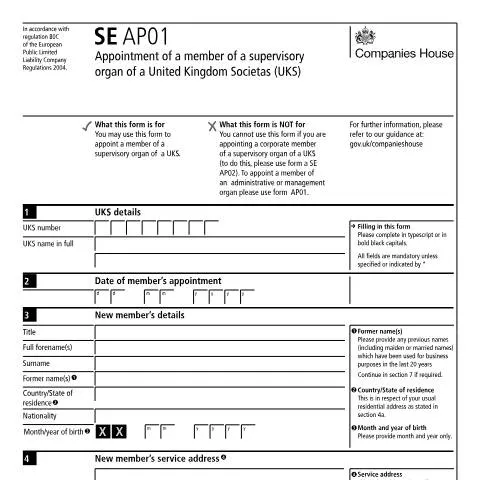
Understanding the SE AP01 Form: Navigating Appointment Procedures in the UK Societas
When managing a United Kingdom Societas (UKS), one may face the necessity of appointing a member to its supervisory organ. The SE AP01 form plays a pivotal role in this process, serving as the official mechanism to formalize such appointments. Whether you are a director of a UKS or a corporate officer in the process of restructuring, understanding the intricacies of this form is crucial for compliance and regulatory adherence.
The Importance of the SE AP01 Form in Company Governance
The SE AP01 form is integral to maintaining accurate records at Companies House, the UK's official register of companies. This form is not merely a procedural requirement; it reflects the governance structure of the company and ensures transparency in its operations. By appointing a member to the supervisory organ, the UKS indicates its commitment to adhering to regulatory standards and fostering corporate accountability.
Who Should Be Involved in the Appointment Process?
The primary parties involved in filling out and submitting the SE AP01 form typically include:
- Existing Members of the Supervisory Organ: Those already part of the organ are responsible for initiating the appointment.
- Company Secretaries: Often tasked with ensuring that forms are completed accurately and submitted on time.
- New Appointees: The individual being appointed must provide essential personal details, including their consent to act.
Breakdown of the SE AP01 Form: A Detailed Examination
Completing the SE AP01 form requires careful attention to detail. Each section has specific requirements that must be met to prevent delays or rejections. Below is a comprehensive guide to filling out each part of the form:
Section 1: Company Details
The first section requires the UKS name and registration number. It is essential to ensure that these match the information held by Companies House. Any discrepancies could lead to complications or rejection of your submission.
Section 2: Appointment Date
Here, you must input the date when the new member will officially commence their duties. This date must be accurate and formatted as dd/mm/yyyy. An incorrect date could result in confusion regarding the member's status.
Section 3: Personal Information of the New Member
This section demands comprehensive details about the individual being appointed, including:
- Full Name: Ensure the name matches identifications presented.
- Former Names: List any previous names used for business purposes within the last 20 years.
- Date of Birth: Use only the month and year format.
- Nationality and Country of Residence: These should reflect the member's current status to avoid any legal complications.
Section 4: Service Address
The service address provided will be publicly available, while the residential address remains confidential. You should provide a physical address, as P.O. boxes and DX numbers are not accepted. If the service address is the same as the registered office of the UKS, you may indicate this, but it must be clearly stated.
Section 4a: Residential Address
If the individual's residential address is different from the service address, this must be completed in full. In this case, you cannot reference the service address as "Same as service address" if it’s the registered office.
Section 5: Consent to Act
The form requires confirmation that the new member consents to act in their role. This consent is crucial, as it signifies that the individual understands their responsibilities and agrees to undertake the duties associated with the supervisory organ.
Authentication and Submission
After completing the necessary sections, the form must be authenticated. This can be done by a member of the management organ of the UKS or another authorized individual. It’s important to ensure that all details match and that the form is completed accurately.
Avoiding Common Pitfalls During Submission
To ensure a smooth process when submitting the SE AP01 form, there are several common pitfalls to be aware of:
- Incorrect Information: Double-check all names, addresses, and dates for accuracy.
- Missing Signatures: Ensure that the form is fully authenticated before submission.
- Failure to Include Former Names: Omitting past names can lead to complications; make sure all relevant names are included.
The Broader Context of Form SE AP01 in Corporate Structure
The SE AP01 form does not operate in isolation; it is part of a larger framework that includes various types of corporate documents and forms. Understanding where the SE AP01 fits within this framework can enhance your strategic approach to corporate governance.
Forms that May Be Confused with SE AP01
It’s important to differentiate the SE AP01 from similar forms:
| Form Code | Purpose |
|---|---|
| SE AP01 | Appointing a member of a supervisory organ. |
| SE AP02 | Appointment of a corporate member. |
| AP01 | Appointment of a member of a management organ. |
Post-Submission Procedures: What Happens Next?
Once the SE AP01 form has been submitted, Companies House will process the information. Typically, you can expect to receive confirmation of the appointment within a few weeks, depending on their processing times. Here’s what to keep in mind:
- Tracking Progress: You can check the status of your submission through the Companies House online services.
- Potential Queries: Be prepared to respond to any queries or requests for clarification from Companies House.
Dealing with Challenges: Errors and Resubmissions
Form processing can sometimes lead to unexpected challenges. If Companies House returns the SE AP01 form due to errors or missing information, you must address these issues promptly. Here’s a quick guide:
- Identify the Issue: Carefully review the feedback provided by Companies House.
- Make Corrections: Ensure all necessary information is provided correctly before resubmitting.
- Resubmission: Once corrections are made, submit the form again without delay.
Final Considerations: The Role of Data Protection in Submissions
Lastly, it is essential to keep in mind the implications of the Data Protection Act 2018 and UK GDPR when handling personal data within the SE AP01 form. Make sure:
- To respect any confidentiality requirements associated with personal information.
- That only necessary information is shared, particularly concerning addresses and personal details.
By staying informed and meticulous during the appointment process, you can effectively navigate the complexities of the SE AP01 form, ensuring compliance and maintaining the integrity of your UK Societas.
Understanding the Role of Supervisory Members in UK Companies
When appointing a member to the supervisory organ of a UK company, particularly when dealing with the SE AP01 form for Societas Europaea (European Company), it's essential to grasp the functions and responsibilities associated with these positions. A supervisory member plays a crucial role in overseeing the management's activities and ensuring that the company adheres to legal regulations and ethical standards. They are not directly involved in day-to-day operations but provide strategic guidance and oversight to protect the interests of shareholders and stakeholders alike.
Supervisory members can also be instrumental in risk management, compliance, and corporate governance. They are expected to hold meetings regularly, review financial reports, and assess management performance. Understanding these roles can help you select the most suitable candidates for your company’s supervisory organ, aligning their skills and experiences with the company's strategic goals.
Legal Considerations and Compliance for Appointing Supervisory Members
When appointing members to a supervisory organ, it's crucial to understand the legal framework governing these appointments. Under UK law, particularly the Companies Act 2006, there are specific requirements that must be adhered to. This includes ensuring that the appointed members meet the eligibility criteria, which generally prohibit individuals who are undischarged bankrupts or who have been disqualified from serving as directors.
Additionally, the Data Protection Act 2018 and UK GDPR must be considered when processing any personal data during this appointment process. Any information gathered about potential members must be handled in compliance with these regulations, ensuring that you have a lawful basis for processing their personal data and that you inform them of their rights regarding their data.
Furthermore, companies must ensure that they update their records promptly with Companies House, reflecting the changes in the supervisory organ. Failure to comply with these regulations can lead to penalties, including fines or a restriction on conducting business. Therefore, it is advisable to consult with a legal professional to navigate these complex requirements effectively.
Best Practices for a Smooth Appointment Process
To facilitate a smooth appointment process for supervisory members, certain best practices should be followed. First and foremost, having a clear and comprehensive selection criteria assists in identifying the right candidates for the supervisory organ. This includes assessing their qualifications, experience, and understanding of the industry landscape.
Additionally, conducting thorough background checks can help ensure that the candidates do not have any legal impediments to serving in such roles. It’s also beneficial to engage in open discussions with potential members regarding their expectations and the responsibilities associated with the supervisory role. This dialogue can foster a collaborative environment and ensure that all parties are aligned in their understanding of the commitment involved.
Once the candidates have been selected, it's crucial to document the appointment process meticulously, including meeting minutes and consents. This record will not only serve as a reference for internal tracking but will also be helpful in case of any scrutiny from regulatory bodies.
Moreover, providing an onboarding programme for newly appointed supervisory members can significantly enhance their effectiveness. This programme should cover the company's structure, governance policies, financial health, and strategic objectives. Well-informed supervisory members will be in a better position to contribute meaningfully to the company’s oversight.