The Critical Moment: When Your Company Needs a Secretary
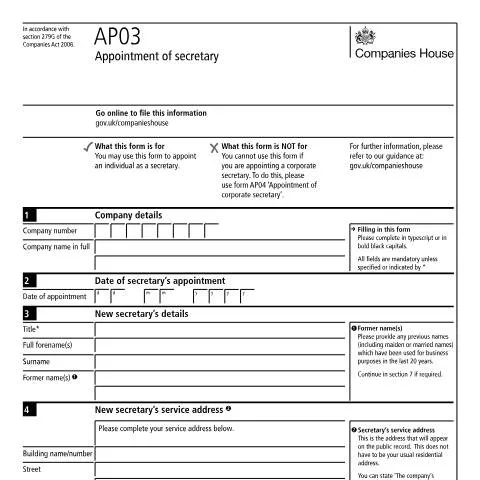
Every limited company reaches the point where appointing a secretary becomes necessary—whether to comply with statutory requirements, manage increasing administrative burdens, or prepare for significant corporate events. The AP03 form represents Companies House's dedicated pathway for appointing an individual secretary, a process that carries immediate legal implications and creates a permanent public record.
Unlike many administrative tasks that companies can delay, secretary appointments often arise from urgent circumstances: impending board meetings requiring formal minutes, statutory filings approaching their deadlines, or investors demanding enhanced corporate governance. The AP03 form serves as the official mechanism to register this appointment with Companies House, ensuring your company remains compliant with the Companies Act 2006 while establishing clear lines of administrative responsibility.
This appointment process differs fundamentally from internal hiring decisions. Once filed, the secretary's details become part of the public register, accessible to anyone conducting company searches. The individual named assumes legal responsibilities that extend beyond typical employment relationships, making the completion and submission of AP03 a significant corporate milestone rather than routine paperwork.
Distinguishing Individual from Corporate Secretary Appointments
The AP03 form serves exclusively for appointing individual secretaries—natural persons who will personally undertake secretarial duties. Companies House maintains a strict separation between individual and corporate secretary appointments, reflected in their distinct forms and processing procedures.
If your company intends to appoint another limited company or corporate entity as secretary, AP03 becomes inappropriate. Such appointments require form AP04 'Appointment of corporate secretary', which captures different information sets including corporate registration details, authorised representatives, and service addresses specific to corporate entities.
| Appointment Type | Required Form | Key Information Required | Public Record Display |
|---|---|---|---|
| Individual Secretary | AP03 | Full name, service address, former names | Personal details visible to searchers |
| Corporate Secretary | AP04 | Company name, registration number, registered office | Corporate details and service address |
This distinction matters significantly for companies weighing privacy considerations. Individual secretaries have their personal service addresses displayed on the public register, whereas corporate secretaries provide an additional layer of privacy protection. Many professional service firms offer corporate secretary services precisely to shield individual details from public view while maintaining compliance with statutory requirements.
The choice between individual and corporate appointments often reflects company size, governance complexity, and privacy preferences. Smaller companies frequently appoint directors or trusted advisors as individual secretaries using AP03, while larger enterprises or those requiring enhanced privacy typically engage corporate secretary services through AP04.
Navigating the Service Address Maze
The service address requirement on AP03 creates one of the most critical decisions in the appointment process. This address becomes permanently visible on the public register, accessible to competitors, creditors, and anyone conducting company searches. Understanding your options prevents future complications and protects personal privacy.
Companies House accepts several service address configurations, each carrying distinct implications:
- Company's registered office: The simplest option, stated as "The company's registered office" in section 4, provides maximum privacy protection while ensuring all correspondence reaches the company
- Business premises: Professional offices or business addresses maintain separation between personal and corporate affairs
- Residential address: Permitted but inadvisable due to permanent public disclosure and potential security implications
- Professional service address: Many secretaries use accountants' or solicitors' addresses to maintain privacy while ensuring reliable mail handling
The form explicitly prohibits PO Box numbers, DX addresses, or LP (Legal Post in Scotland) numbers. Companies House requires physical locations where documents can be reliably delivered during standard business hours. This requirement reflects the legal significance of the service address for formal notices, court documents, and regulatory correspondence.
Once submitted, changing a service address requires additional filings and fees. Many experienced company administrators recommend establishing a stable business address before filing AP03, avoiding the complications and costs associated with subsequent address changes. Professional service providers often offer registered address services specifically for this purpose, though such arrangements require careful consideration of ongoing costs and reliability.
The Twenty-Year Name Trail: Former Names Compliance
Section 3 of AP03 demands comprehensive disclosure of the secretary's former names used for business purposes within the preceding twenty years. This requirement extends far beyond simple maiden name changes, encompassing any name variations used in professional, business, or corporate contexts.
The twenty-year scope captures significant life and career changes that might otherwise obscure business connections or create compliance gaps. Companies House seeks to maintain transparent links between current appointments and historical business activities, preventing individuals from obscuring past corporate roles through name changes.
Qualifying former names include:
- Maiden names used in previous business roles
- Married names adopted during the twenty-year period
- Professional names or trading styles used in business contexts
- Deed poll changes affecting business identity
- Hyphenated name variations used professionally
- International name variations used in UK business activities
The form provides section 7 for additional former names when section 3 proves insufficient. Complex name histories—common among international professionals, divorced individuals, or those with extensive business backgrounds—often require careful compilation to ensure complete compliance. Omitting qualifying former names can trigger rejection or compliance queries from Companies House.
Personal name changes unconnected to business activities typically fall outside this requirement. However, the boundary between personal and business use can blur, particularly for professionals whose personal identity intertwines with their business reputation. When uncertain, erring toward disclosure generally proves safer than risking non-compliance challenges.
Authentication Pathways and Corporate Authority
AP03 authentication reflects the form's legal significance within corporate governance structures. The authentication section restricts signing authority to specific corporate officers, ensuring appointments carry proper corporate approval and preventing unauthorized secretary appointments.
Authorized authenticators include:
- Directors: The most common authenticators, reflecting their governance responsibilities
- Existing secretaries: Can authenticate successor or additional secretary appointments
- Persons authorized under sections 270 or 274: Individuals granted specific authority through board resolutions
- Insolvency practitioners: Including administrators, receivers, and judicial factors during insolvency proceedings
- Charity Commission officers: For companies under regulatory oversight
UK Societas companies require special attention, with the form requiring deletion of "director" references and insertion of specific organ membership details. This reflects the different governance structures applicable to European company forms operating under UK law.
The authentication process requires careful timing coordination. The authenticator must have authority at the time of signing, creating potential complications during periods of corporate change or director resignations. Companies experiencing governance transitions should verify authenticator authority before completing AP03 to avoid processing delays or rejections.
No physical signature appears necessary—Companies House accepts printed names as sufficient authentication. However, the named authenticator assumes legal responsibility for the appointment's accuracy and authority, making this decision significant beyond mere administrative convenience.
Consent Confirmation and Legal Responsibilities
Section 5's consent confirmation represents more than administrative formality—it establishes the appointed individual's awareness and acceptance of secretary responsibilities under company law. This consent requirement protects both companies and individuals from unwitting appointments that could create unexpected legal obligations.
The consent process should occur before AP03 completion, ensuring the prospective secretary understands their role's scope and implications. Company secretaries assume statutory duties including:
- Maintaining statutory registers and company records
- Ensuring compliance with filing deadlines and regulatory requirements
- Facilitating board meetings and maintaining accurate minutes
- Serving as primary contact for regulatory correspondence
- Managing share transfers and maintaining ownership records
The consent requirement becomes particularly significant when appointing external secretaries or professional service providers. Clear understanding of scope, responsibilities, and limitations prevents future disputes and ensures effective working relationships between companies and their secretaries.
Companies should document the consent process beyond the simple tick box on AP03. Formal consent letters or board minute records provide additional protection should questions arise about the appointment's validity or the secretary's understanding of their role. This documentation proves especially valuable during audits, regulatory inquiries, or corporate disputes involving secretary actions.
Processing Timeline and Public Record Impact
Once submitted, AP03 enters Companies House's processing system, typically completing within 8-10 working days for postal submissions or immediately for online filings. However, processing times can extend during peak periods or when forms require additional review for compliance or authentication issues.
The appointment becomes legally effective from the date specified in section 2, regardless of processing delays. This timing distinction matters significantly for companies requiring immediate secretary authority for urgent corporate actions. The specified appointment date should reflect when the secretary actually assumes responsibilities rather than when AP03 reaches Companies House.
Processing completion triggers immediate public record updates. The secretary's details become searchable through Companies House records, visible to credit agencies, business intelligence services, and anyone conducting company searches. This transparency serves legitimate business and regulatory purposes but requires careful consideration of privacy implications.
Companies should prepare internal systems and processes before AP03 processing completes, ensuring smooth transition to new administrative arrangements and avoiding disruption to ongoing corporate activities.
Failed or rejected submissions require resubmission with corrected information, potentially delaying appointments beyond critical deadlines. Common rejection triggers include incomplete former names disclosure, invalid service addresses, or authentication by unauthorized individuals. Companies facing tight deadlines should allow additional time for potential resubmission requirements.
Strategic Considerations for Modern Corporate Governance
The AP03 appointment process intersects with broader corporate governance trends affecting company administration and regulatory compliance. Modern companies increasingly recognize secretary appointments as strategic decisions rather than administrative necessities, reflecting enhanced focus on corporate governance and regulatory risk management.
Professional secretary services have evolved significantly, offering specialized expertise in regulatory compliance, board support, and corporate administration. Companies considering external secretary appointments through AP03 should evaluate:
- Regulatory expertise: Knowledge of current compliance requirements and filing obligations
- Technology integration: Compatibility with company systems and reporting requirements
- Scalability: Ability to support company growth and changing administrative needs
- Risk management: Professional indemnity coverage and error prevention procedures
The digital transformation of corporate administration affects secretary roles significantly. Modern secretaries increasingly manage electronic records, digital signatures, and online compliance systems. AP03 appointments should consider candidates' technical capabilities alongside traditional administrative skills.
International companies operating in the UK face additional complexities when appointing secretaries through AP03. Cross-border regulatory coordination, multi-jurisdictional compliance requirements, and international reporting obligations demand secretaries with specialized expertise in global corporate administration.
The appointment decision carries long-term implications extending beyond immediate administrative needs. Secretary changes require additional filings, potential service disruption, and relationship management challenges. Companies benefit from thorough evaluation before AP03 submission rather than reactive changes after appointment completion.
Digital Filing vs Paper Submission: Choosing Your Method
Companies House accepts AP03 forms through multiple channels, each with distinct advantages and considerations. The digital route via the Companies House WebFiling service remains the most popular choice, offering immediate confirmation and faster processing times. However, understanding when paper submission might be necessary—or even preferable—can save considerable time and potential complications.
Digital submission through WebFiling requires an active authentication code, which directors should have received when the company was incorporated. If this code has been misplaced, you'll need to request a replacement from Companies House, which typically takes 5-7 working days to arrive by post. The online system validates entries in real-time, flagging common errors such as invalid postcodes or National Insurance numbers before submission. This immediate feedback significantly reduces the likelihood of rejection and subsequent delays.
Paper submissions become necessary in specific circumstances, particularly when dealing with complex appointment scenarios or when digital systems are temporarily unavailable. For instance, if you're appointing multiple secretaries simultaneously with different start dates, or if the appointee has a particularly complex name that includes special characters not supported by the digital system, paper submission may prove more straightforward. Additionally, some solicitors and company formation agents prefer paper submissions for audit trail purposes, as they provide a physical record of the filing.
Processing times differ markedly between methods. Digital submissions typically appear on the public register within 8-10 working days, whilst paper applications can take 15-20 working days during normal periods, potentially extending to 25 working days during Companies House's busier periods, such as the months following the annual confirmation statement deadline.
The fee structure also varies by submission method. Digital AP03 forms incur a £13 fee, payable by debit card, credit card, or PayPal through the WebFiling system. Paper submissions cost £40, representing a significant premium for the traditional route. This fee must accompany the form as a cheque made payable to 'Companies House', and cash payments are not accepted under any circumstances.
Managing Succession Planning and Secretary Transitions
Effective secretary transitions require careful timing and documentation, particularly when the outgoing secretary holds significant institutional knowledge or manages critical compliance deadlines. The AP03 form plays a crucial role in ensuring continuity of corporate governance during these transitions, but successful handovers extend well beyond the statutory filing requirements.
When planning a secretary transition, consider the timing relative to your company's compliance calendar. Avoid scheduling secretary changes immediately before annual confirmation statements are due, as the new secretary will need time to familiarise themselves with the company's records and obligations. Similarly, if your company operates in a regulated sector requiring regular submissions to industry bodies, ensure the transition occurs during a relatively quiet period for regulatory filings.
The handover process should include transfer of all statutory books, including the register of members, register of directors, and register of people with significant control. Many companies maintain these records electronically, but legal requirements still apply regarding their accessibility and accuracy. The outgoing secretary should provide comprehensive notes on any outstanding compliance matters, pending deadlines, and relationships with professional advisers such as accountants or solicitors.
Consider the implications for banking relationships during secretary transitions. Many banks require notification when company secretaries change, particularly if the secretary is an authorised signatory on company accounts. Some financial institutions may temporarily freeze accounts pending receipt of updated mandates and confirmation of the new secretary's authority. Planning these notifications in advance prevents disruption to daily operations.
Insurance policies may also require notification of secretary changes, especially professional indemnity policies that specifically name company officers. Directors' and officers' liability insurance often extends to company secretaries, making prompt notification essential to maintain continuous coverage during the transition period.
For companies with subsidiaries or complex group structures, secretary transitions become more intricate. The parent company secretary may also serve subsidiary companies, requiring multiple AP03 filings across different company registrations. Coordinate these filings to ensure consistency in appointment dates and avoid confusion in group reporting structures.
Regulatory Implications and Sector-Specific Considerations
Whilst the AP03 form represents a straightforward administrative requirement for most companies, businesses operating in regulated sectors face additional considerations when appointing company secretaries. Financial services, healthcare, education, and legal sectors often impose specific qualifications or approval requirements for individuals holding key governance positions, including company secretaries.
Financial services companies regulated by the Financial Conduct Authority (FCA) or Prudential Regulation Authority (PRA) must consider whether their company secretary requires individual regulatory approval. Whilst secretaries don't typically need FCA authorisation, they may require approval if they perform 'significant influence functions' beyond traditional secretarial duties. This particularly applies to smaller firms where secretaries assume broader compliance responsibilities or act as money laundering reporting officers.
Companies operating in healthcare sectors, including those holding Care Quality Commission registrations, should verify that new secretaries understand the sector's specific compliance requirements. Healthcare companies face stringent record-keeping obligations, and secretaries often manage relationships with regulatory bodies that require detailed knowledge of sector-specific legislation and reporting requirements.
Legal sector companies, particularly solicitor practices and barristers' chambers operating as companies, must ensure their secretaries understand the Solicitors Regulation Authority's requirements regarding company structures and governance. The secretary role in legal practices often extends to managing compliance with professional conduct rules and client account regulations, requiring specialised knowledge beyond general company law.
Manufacturing companies, especially those handling hazardous materials or operating under Environmental Agency permits, benefit from secretaries with understanding of environmental compliance requirements. These companies often face complex reporting obligations to multiple regulatory bodies, and secretaries frequently coordinate responses to regulatory inquiries and permit applications.
International companies with UK subsidiaries face particular challenges when appointing secretaries. The secretary must be readily available to deal with UK regulatory matters and should ideally be based in the UK for practical purposes. Some multinational groups appoint local professional secretarial services to ensure compliance with UK-specific requirements whilst maintaining consistency with global governance standards.
Companies quoted on stock exchanges face additional disclosure obligations when secretary appointments occur. The London Stock Exchange requires prompt notification of changes to key management positions, and secretaries of quoted companies often manage these disclosure obligations alongside their statutory duties. The timing of AP03 submissions for quoted companies may need coordination with stock exchange announcements to ensure market transparency and prevent insider trading concerns.
Charitable companies operating under dual regulation by Companies House and the Charity Commission must ensure their secretaries understand both regulatory frameworks. These secretaries often manage annual returns to both bodies, coordinate responses to regulatory inquiries, and ensure compliance with charity-specific governance requirements that extend beyond standard company law obligations.