Understanding the Voluntary Arrangement: A Crucial Step for Companies in Crisis
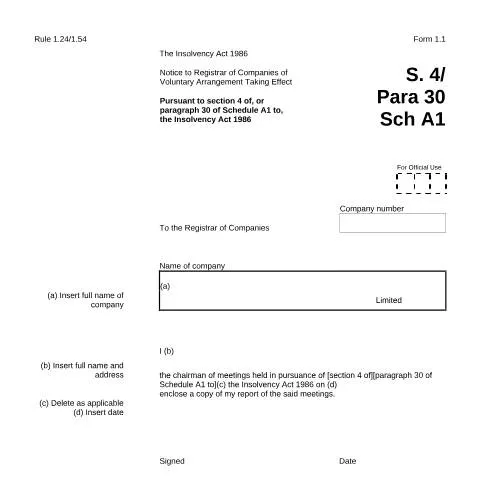
In the dynamic landscape of business, companies sometimes find themselves in financial distress. In such scenarios, a voluntary arrangement can offer a lifeline, allowing businesses to restructure their debts and continue trading. The "Notice of Voluntary Arrangement Taking Effect" (Form 1.1) is an essential document in this process, providing the necessary notification to Companies House about the agreement made between the company and its creditors.
The Core Elements of Form 1.1
Form 1.1 serves as a formal notice to the Registrar of Companies, indicating that a voluntary arrangement (VA) has been approved. It is critical to understand the components of this notice, as they play a vital role in ensuring compliance with the Insolvency Act 1986.
- Company Information: The document must include the full name of the company and its registration number, ensuring clear identification.
- Chairman's Details: The form requires the name and address of the chairman responsible for the meetings associated with the voluntary arrangement.
- Date of Approval: It's essential to enter the date when the meetings were held to ensure there is a clear timeline of events.
Purpose and Legal Foundation
The foundation of the voluntary arrangement process lies within sections of the Insolvency Act, particularly section 4 and paragraph 30 of Schedule A1. Understanding these legal underpinnings helps clarify the purpose of Form 1.1. This document not only signifies that the agreement is in effect, but it also serves to protect the interests of both the company and its creditors by formalising the arrangement.
Navigating the Process: Step by Step
For companies looking to implement a voluntary arrangement, understanding how to correctly utilise Form 1.1 is crucial. Here is a step-by-step guide to navigating this process:
- Organise the Meetings: Conduct the required meetings with creditors to discuss the proposed voluntary arrangement.
- Compile Meeting Reports: Following the meetings, prepare a detailed report outlining the discussions and decisions made.
- Complete Form 1.1: Fill out the form accurately, including all necessary details such as company name, chairman's name, and meeting date.
- Submission to Companies House: Submit the completed Form 1.1 to the Registrar of Companies within the stipulated timeframe to ensure that the arrangement is officially recognised.
Common Pitfalls During Submission
Despite its straightforward nature, companies often encounter pitfalls when submitting Form 1.1. Awareness of these challenges can mitigate risks:
- Incomplete Information: Omitting critical details such as the company number or chairman's address can lead to delays in processing.
- Failing to Meet Deadlines: The notice must be submitted promptly after the meetings; otherwise, the arrangement may not take effect as planned.
- Incorrect Legal References: Misquoting the relevant sections of the Insolvency Act can invalidate the notice.
Interconnections with Other Documentation
Form 1.1 does not stand alone in the insolvency process; it interacts with various other documents that are integral to a voluntary arrangement. Understanding these connections is pivotal:
| Document | Purpose |
|---|---|
| Proposal Document | Details the terms of the voluntary arrangement, including payment proposals. |
| Creditor Report | Summarises the outcomes of the meetings and the decisions made by creditors. |
| Insolvency Practitioner’s Report | Provides an overview of the viability of the proposed arrangement from a professional standpoint. |
Each of these documents complements Form 1.1 and contributes to establishing a comprehensive understanding of the company’s financial stance and the proposed solutions.
The Scope and Limitations of Form 1.1
While Form 1.1 is an essential tool in the voluntary arrangement process, it has its limitations. It is crucial for companies to understand what this document does—and does not—entail.
- Formal Notification: The form serves solely as a notification to Companies House and does not provide any details on the terms of the arrangement itself.
- No Legal Protections: Submitting Form 1.1 does not shield the company from creditor actions until the arrangement is fully approved and in effect.
- Dependence on Other Documents: The effectiveness of Form 1.1 hinges on the successful completion of the accompanying documentation and meetings.
Key Terminology to Grasp
Understanding the terminology used in the context of voluntary arrangements is crucial for both the company and its creditors. Here are some key terms that will aid in navigating the process:
- Voluntary Arrangement (VA): A legally binding agreement between a company and its creditors to pay back debts over time.
- Insolvency Practitioner: A qualified professional who oversees the voluntary arrangement process and ensures compliance with legal requirements.
- Creditor's Meeting: A meeting called to discuss and vote on the proposed voluntary arrangement.
Who Should Consider Using Form 1.1?
Form 1.1 is particularly relevant for companies facing cash flow issues or unable to meet their financial obligations. Situations that might necessitate the use of this document include:
- A decline in sales leading to insufficient funds to cover operational expenses.
- Unexpected expenses or liabilities that threaten the company’s ability to continue trading.
- External economic factors, such as a recession, that impact the financial stability of the business.
In these scenarios, engaging in a voluntary arrangement and utilizing Form 1.1 allows for a structured approach to resolving debt issues while maintaining the company’s operations.
Final Thoughts on Form 1.1
Successfully navigating the complexities of financial distress requires a thorough understanding of the documentation and processes involved. Form 1.1 is a critical piece of the puzzle, serving as an official communication to Companies House regarding the initiation of a voluntary arrangement. As companies face various challenges, the ability to restructure through this mechanism can be immensely beneficial. By grasping the necessities surrounding this form, businesses can take confident steps toward recovery.
Understanding the Insolvency Process: Key Concepts and Terminology
Before diving into the specifics of Form 1.1 for giving notice of a voluntary arrangement, it is essential to grasp the broader context of the insolvency process in the UK. Insolvency signifies an inability to pay debts as they fall due, which can lead to various legal proceedings. Here, we outline critical terms associated with voluntary arrangements:
- Individual Voluntary Arrangement (IVA): A legally binding agreement between an individual and their creditors to pay back debts over time.
- Creditors: Individuals or institutions that are owed money.
- Nominee: A qualified insolvency practitioner appointed to oversee the proposal of the IVA.
- Alternative Dispute Resolution (ADR): A set of processes, such as mediation, used to resolve disputes outside of court, which can be essential in negotiating voluntary arrangements.
Being familiar with these terms can aid stakeholders in navigating the complexities of the insolvency process, making it easier to understand how Form 1.1 fits into the larger framework.
The Role of an Insolvency Practitioner in the Process
An insolvency practitioner (IP) plays a pivotal role in the voluntary arrangement process. They are licensed professionals who provide expert guidance throughout the insolvency procedure, including the preparation and submission of Form 1.1. Here are some critical responsibilities and actions that an IP performs:
- Initial Assessment: The IP assesses the individual’s financial situation, evaluating how debts might be managed and proposing realistic payment strategies.
- Drafting the Proposal: They prepare the formal proposal for the IVA, which must include terms that are acceptable to the creditors while remaining feasible for the debtor.
- Meeting Facilitation: The IP arranges creditor meetings where the proposal is presented and discussed. Their objective is to reach a consensus on the proposed arrangement.
- Ongoing Management: Once the IVA is approved, the IP continues to supervise the arrangement, ensuring compliance with the terms set forth in the proposal.
Thus, engaging a qualified insolvency practitioner can significantly improve the prospects of successfully negotiating a voluntary arrangement, making their expertise invaluable at this stage.
Frequently Overlooked Aspects of Submitting Form 1.1
While the completion and submission of Form 1.1 may seem straightforward, several nuances can be easily overlooked by those unfamiliar with the process. Here are a few critical points to keep in mind:
- Accurate Information: The accuracy of the information provided in Form 1.1 is crucial. Any discrepancies or omissions can lead to delays or even rejection of the proposal. Be meticulous in checking each entry.
- Timeframes for Submission: Submitting the form promptly is vital. Ensure you are aware of any specific deadlines imposed by the creditors or the insolvency practitioner to avoid complications.
- Notification to Creditors: Form 1.1 must be accompanied by clear notifications to all creditors regarding the proposed voluntary arrangement. Failure to notify could jeopardize the arrangement's approval.
- Consideration of Creditor Interests: It’s essential to acknowledge creditors’ perspectives when drafting the proposal. Offering a realistic repayment plan that aligns with their expectations increases the likelihood of acceptance.
By keeping these aspects in mind, individuals can better prepare for the complexities of submitting Form 1.1 and enhance their chances of achieving a successful voluntary arrangement.