Navigating the Appointment of a Provisional Liquidator in Scotland
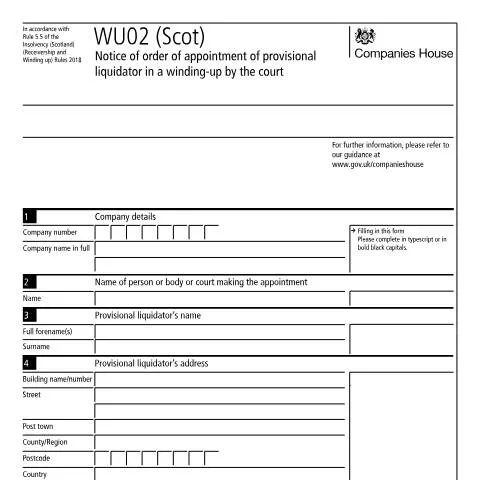
In the intricate world of corporate insolvency in Scotland, understanding the nuances of appointing a provisional liquidator is paramount. This process, guided by the Insolvency (Scotland) (Receivership and Winding Up) Rules 2018, is initiated through a court order and is crucial for companies facing financial distress. The WU02 (Scot) document not only signifies this appointment but also serves as a formal notice to Companies House.
Understanding the Context: Who Requires the WU02 (Scot) Notice?
The necessity of the WU02 notice primarily arises in situations where a Scottish company is undergoing a winding-up process by the court. This may occur due to various reasons, including:
- Financial insolvency: Companies unable to meet their financial obligations may require liquidation.
- Mismanagement: Persistent poor management can lead to the need for a provisional liquidator to safeguard assets.
- Shareholder disputes: Conflicts among shareholders may necessitate external oversight.
Notably, stakeholders such as creditors, employees, and shareholders are directly impacted by this process, making the timely filing of the WU02 notice vital. It ensures that the provisional liquidator can act swiftly to protect company assets and manage liabilities effectively.
Decoding the Components of the WU02 Notice
While the WU02 notice is straightforward, its components require careful attention. Here's a breakdown:
| Section | Description | Importance |
|---|---|---|
| 1. Company Details | Name and number of the company. | Ensures the notice is associated with the correct entity. |
| 2. Appointing Authority | Details of the person or court making the appointment. | Establishes the legitimacy of the provisional liquidator's authority. |
| 3. Provisional Liquidator's Information | Name and address of the appointed provisional liquidator. | Essential for communication and public records. |
| 4. Court Order Date | Date the court order was made. | Marks the beginning of the provisional liquidator’s duties. |
Each section plays a pivotal role in ensuring the proper execution of the liquidation process and maintaining transparency in the public record.
Implementing the WU02 Notice: A Practical Guide
Employing the WU02 notice effectively entails several steps that must be adhered to meticulously:
- Gather Required Information: Collect the necessary details pertaining to the company and the appointed provisional liquidator.
- Complete the Notice: Fill out the WU02 form accurately, ensuring all sections are addressed to avoid delays.
- Attach Court Order: A copy of the court order confirming the appointment must accompany the WU02 notice.
- Submission: Submit the completed notice to Companies House. For expedience, it is recommended to send it to the Edinburgh office.
- Monitor Confirmation: Await confirmation from Companies House regarding the filing. This may take several days.
Each of these steps is critical to ensuring compliance with legal obligations and providing a clear record of the proceedings.
Connecting to Related Documentation and Procedures
Understanding the WU02 notice is incomplete without recognizing its link to other related documents within the insolvency framework:
- Form WU01: Notice to appoint a liquidator.
- Form WU03: Notice of appointment of a liquidator by resolution.
- Form WU04: Final accounts and reports submitted by the liquidator.
Each form plays a specific role in the insolvency process, and familiarity with these documents can facilitate smoother navigation through corporate liquidation proceedings.
Common Procedural Queries and Guidance
Engaging with the WU02 notice can lead to several common queries. Here are some that stakeholders frequently encounter:
- What if the information provided is inaccurate? Misrepresentation or inaccuracies can lead to delays or the rejection of the notice. It is essential to verify all details before submission.
- How do I confirm the appointment? After submitting the notice, expect a confirmation from Companies House. They may contact you for further details if required.
- Is there a deadline for submission? The notice should be submitted promptly post-court appointment to ensure that the provisional liquidator can begin their duties without delay.
Clarifying these aspects can help mitigate risks associated with insolvency proceedings.
Avoiding Common Misinterpretations
While the WU02 notice is relatively straightforward, several common misinterpretations can lead to complications:
- Assuming the notice is optional: Some may mistakenly believe that filing the WU02 is at their discretion. In reality, it is a mandatory step following a court appointment.
- Misunderstanding the role of the provisional liquidator: The provisional liquidator's authority is significant; they not only manage assets but also oversee the winding-up process, which includes decision-making powers.
- Confusion with timelines: Understanding when the provisional liquidator officially commences their duties as per the court order is crucial to avoid lapses in the process.
Addressing these misinterpretations upfront can ensure a smoother transition into the liquidation process.
Final Considerations and Resources for Stakeholders
As stakeholders navigate the complexities of appointing a provisional liquidator, utilizing the WU02 notice effectively is crucial in the broader context of corporate insolvency. For those looking for additional resources or guidance, the following are invaluable:
- Companies House Guidance: The official guidance available on the Companies House website provides comprehensive insights into filing requirements and procedures.
- Legal Consultation: Engaging with legal professionals who specialize in corporate insolvency can provide tailored advice specific to the company’s situation.
- Industry Forums: Participating in forums and discussions can offer practical insights and shared experiences from others who have undergone similar processes.
The WU02 notice is more than just a form; it is a critical tool in the journey of corporate recovery or closure, guiding stakeholders through a structured approach to insolvency in Scotland.
Understanding the Role of a Provisional Liquidator
A provisional liquidator plays a crucial role in the winding-up process of a company facing financial difficulties in Scotland. Appointed often on an urgent basis, a provisional liquidator is responsible for safeguarding the company’s assets while the court determines the appropriate course of action. This role is particularly important as it aims to protect the interests of creditors and shareholders during a period of uncertainty.
The appointment of a provisional liquidator typically occurs when a company is deemed unable to pay its debts or is facing serious operational issues. Notably, the provisional liquidator operates under the supervision of the court and must adhere to strict legal guidelines. Their primary duties include taking possession of the company’s assets, ensuring proper valuation, and conducting a thorough assessment of the company’s financial position. This includes reviewing outstanding debts, liabilities, and any potential for recovery of funds.
Moreover, provisional liquidators have the authority to investigate the company’s affairs. This investigation can highlight any misconduct or mismanagement by the directors, which may have contributed to the company’s financial distress. As a result, the findings can lead to further legal action against individuals responsible for the company’s situation. The provisional liquidator may also make recommendations regarding the future of the company, including proposals for restructuring or, if appropriate, full liquidation.
It is essential for those involved with the company, including directors and creditors, to understand the implications of having a provisional liquidator appointed. The presence of a provisional liquidator can alter the dynamics of creditor negotiations and can impact ongoing business operations. Therefore, clear communication and legal guidance during this transitional stage are vital for all stakeholders.
The Notice Requirements for Appointing a Provisional Liquidator
When a provisional liquidator is appointed for a Scottish company, specific notice requirements must be adhered to in compliance with the relevant legal framework. Notably, the notice of appointment is an official communication that must be issued promptly to inform relevant parties, including creditors, employees, and shareholders, of the provisional liquidator’s role and authority.
The notice should clearly state the date of the appointment, the name of the provisional liquidator, and the court that made the appointment. Furthermore, it is essential to mention the grounds for the appointment and provide information on how interested parties can obtain further details regarding the company’s situation. This transparency helps mitigate uncertainties and allows stakeholders to understand their rights and obligations during the provisional liquidation process.
Additionally, the notice must comply with the requirements set forth in the Companies Act 2006 and the Insolvency Act 1986. Failure to properly serve notice can have significant consequences, including delays in proceedings or challenges from creditors who feel inadequately informed. Therefore, it is advisable for the appointing party to consult with legal professionals to ensure all procedural obligations are met accurately.
Importantly, notice must also be given to the Registrar of Companies, and it is advisable to file the notice with Companies House. This ensures that the public record reflects the internal changes within the company and that all stakeholders have access to accurate information regarding the company's status. The notification process underscores the importance of due diligence and compliance with regulatory requirements in maintaining the integrity of the insolvency process.
Implications of Provisional Liquidation on Employees and Contracts
The appointment of a provisional liquidator has several implications for employees and existing contracts of a Scottish company. For employees, the most immediate concern is job security. While the company is under provisional liquidation, the provisional liquidator may choose to continue operations or may need to implement redundancies depending on the financial situation.
If the provisional liquidator decides to continue trading, employees may be retained temporarily while efforts to restructure the company are explored. However, if the decision is made to cease operations, the employees may face redundancy. It is critical for employees to understand their rights during this period, especially regarding redundancies, outstanding wages, and claims against the company. Employees are typically classified as preferential creditors, meaning they have a higher priority in recovering owed wage and entitlement payments in the event of full liquidation.
Furthermore, contracts that the company has entered into could also be affected by the appointment of a provisional liquidator. The provisional liquidator has the authority to review and potentially affirm or reject contracts, which can lead to significant changes in business relationships. For instance, ongoing contracts may be terminated if the provisional liquidator deems them unviable for the financial recovery of the company.
This unpredictability can create a challenging environment for suppliers, customers, and other business partners. It is advisable for stakeholders to seek legal counsel to understand how their contracts are impacted and to explore options for mitigating risks involved during this period of uncertainty.
In summary, the implications of a provisional liquidator’s appointment are far-reaching. Employees must be informed of their rights, while business partners need to navigate potential disruption in contractual commitments. A proactive approach, guided by legal expertise, can help all parties manage the complexities that arise during provisional liquidation.