Transitioning from Administration: The AM22 (Scot) Form Explained
The process of moving a Scottish company from administration to creditors' voluntary liquidation is a significant step and requires precise adherence to legal protocols. At the heart of this transition is the AM22 (Scot) form, a vital document that facilitates this change in status. Understanding its nuances is essential for all involved parties, especially the administrators and creditors.
Understanding the AM22 (Scot) Form and Its Context
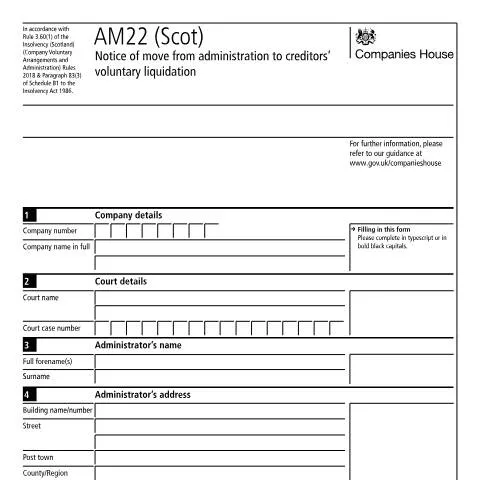
The AM22 (Scot) form represents a formal notification to Companies House regarding a company's move from administration into creditors' voluntary liquidation. This action is often taken when a company is unable to repay its debts and has exhausted all options within the administration process.
Typically, the administration period allows a company breathing space to continue trading while a resolution to its financial troubles is sought. However, if it becomes clear that the company's recovery is not feasible, a transition to liquidation may be necessary. This form serves as the official record of that decision.
The Role of the Administrator
It is the administrator who must complete and submit the AM22 (Scot) form. The administrator is usually an insolvency practitioner, and their duties include:
- Assessing the financial status of the company during administration.
- Communicating with creditors about the company's situation.
- Preparing the final progress report and ensuring all required documentation is complete.
Timeline: Critical Dates and Next Steps
Understanding the timeline involved in this process is crucial for all stakeholders. The AM22 (Scot) form must be submitted after the decision to move from administration has been resolved. Key dates include:
- The date of resolution to move to creditors' voluntary liquidation, which must be properly documented.
- The date of submission of the AM22 (Scot) form to Companies House.
- The date the creditors' voluntary liquidation officially commences.
After submission, it typically takes a few working days for Companies House to process the form. Once approved, the company will be officially entered into liquidation, and the liquidator will take over the management of the company's affairs.
Submission Channels: Navigating Your Options
There are several methods available to submit the AM22 (Scot) form, each with its own implications:
- Online Submission: This is the fastest method, allowing for immediate processing. It’s advisable to use the official Companies House online portal for swift action.
- Paper Submission: If using the paper form, it should be sent to the address specified on the form. This method may take longer due to postal delays.
- In-Person Submission: While less common, you may deliver the form by hand to Companies House in Edinburgh. This method ensures confirmation of submission but may require an advance appointment.
Deciding on the Best Method
Choosing the best submission method depends on urgency and resource availability. Online submissions are generally recommended for their speed and efficiency. However, for those unfamiliar with digital processes, paper submissions remain a viable option.
Critical Information Needed to Complete the Form
Completing the AM22 (Scot) form necessitates several key pieces of information. Ensure you have the following ready:
- Company Details: Include the full company name, company number, and court case number.
- Administrator Details: Provide full name and address, including building name/number, street, post town, county/region, and postcode.
- Proposed Liquidator's Information: Full name, address, and insolvency practitioner number of the individual proposed to liquidate the company.
- Final Progress Report: Attach a copy of the final progress report and ensure it is signed and dated.
Consequences of Submission: What Happens Next?
Once submitted, the AM22 (Scot) form triggers the transition from administration to creditors' voluntary liquidation. However, this change comes with immediate consequences:
- The appointed liquidator will take control of the company's assets and begin the process of settling creditor claims.
- The company will cease all trading activities, and employees may be made redundant.
- Creditors will be notified about the change in status, and they will have the opportunity to submit claims against the company's assets.
It is essential that all parties understand that this process is public information and will appear on the Companies House register, affecting the company's credit rating and future operations.
Addressing Potential Challenges: Mistakes and Missing Information
Submitting the AM22 (Scot) form comes with risks, particularly regarding accuracy and completeness. Companies House may return forms that are incorrectly filled out or missing required information.
To avoid complications:
- Double-check that the company name and number match the information held on the public register.
- Ensure all necessary supporting documents are attached before submitting.
- Sign and date the form before submission.
If you receive feedback indicating errors or omissions, address these promptly. Corrections can often be made through a resubmission of the form along with any additional required documentation.
Legal Framework and Regulatory Compliance
The processing of the AM22 (Scot) form is governed by the Insolvency (Scotland) (Company Voluntary Arrangements and Administration) Rules 2018 and falls under the purview of the Insolvency Act 1986. Given the legal implications of this form, it is crucial to ensure compliance with all relevant regulations.
Furthermore, personal data handling in connection to this submission must align with the Data Protection Act 2018 and UK GDPR, ensuring that all parties' data is processed securely and responsibly.
Implications of Non-compliance
Failing to comply with these regulations can lead to various repercussions, including delays in the liquidation process, potential legal challenges, and negative impacts on the company's public record. Therefore, it is advisable to consult with a legal professional or an insolvency practitioner when filling out the AM22 (Scot) form to mitigate risks.
Conclusion: The Importance of Diligence in the Process
Completing and submitting the AM22 (Scot) form is a crucial part of navigating the complexities of corporate insolvency in Scotland. Each step, from preparing the necessary information to choosing the right submission method, plays a significant role in the overall process of transitioning from administration to creditors' voluntary liquidation.
It's imperative that those involved approach this process with diligence and attention to detail, ensuring that all requirements are met and that they remain compliant with the applicable legal framework. Taking these measures will not only facilitate a smoother transition but also protect the rights and interests of all stakeholders involved.
Understanding the Process of Administration to Creditors' Voluntary Liquidation
Moving a company from administration to creditors' voluntary liquidation (CVL) involves a series of legal and procedural steps that ensure the interests of creditors and stakeholders are considered. The transition must be handled with precision to comply with the Insolvency Act 1986 (as amended) and relevant Scottish regulations. It is essential for directors to understand the implications of this move, particularly regarding their duties and liabilities.
In administration, a licensed insolvency practitioner is appointed to manage the affairs of the company with the aim of rescuing it as a going concern or realising value for creditors. If a company cannot be saved, the administrator may recommend that the company enter into CVL. This recommendation should be made after assessing the company's financial position and determining that it is unable to pay its debts.
Once the decision has been made to proceed with CVL, the administrator will convene a meeting of creditors. Notice of this meeting must be sent out at least 14 days in advance, with details about the company's financial status and the proposed liquidation process. The creditors will then vote on whether to wind up the company, and a majority must agree for the CVL to proceed. At this point, creditors also have the opportunity to appoint a liquidator of their choice, often the administrator themselves or another licensed practitioner.
Understanding the implications of entering CVL is crucial for all stakeholders involved. Creditors must be aware of their rights and the process, while directors need to ensure they are compliant with their statutory obligations. It is advisable for all parties to seek legal and financial advice throughout this process to navigate the complexities involved in the transition from administration to CVL effectively.
The Role of the Insolvency Practitioner
The insolvency practitioner (IP) plays a pivotal role in the transition from administration to creditors' voluntary liquidation. An IP has the expertise required to manage insolvency processes and ensure compliance with legal obligations. Their primary responsibility during this phase is to protect the interests of the creditors and ensure a fair and accurate liquidation process.
Upon moving from administration to CVL, the IP must conduct thorough investigations into the company's financial history, which includes scrutinising transactions that took place before the administration. This investigation helps identify any potential misconduct, such as wrongful trading or preferences, which could affect the outcome of the liquidation process. Directors need to be aware that if they are found to have acted irresponsibly prior to entering administration, they may face further consequences.
The IP is also responsible for preparing a report for creditors. This report outlines the company's financial situation, the reasons for entering CVL, and the anticipated outcomes for creditors. Transparency is key, and the IP must ensure that all relevant information is presented clearly and concisely to facilitate informed decision-making by creditors.
Moreover, the IP will take charge of managing the liquidation process itself. This involves realising the company's assets to pay off creditors, which can include selling physical assets, recovering debts owed to the company, and negotiating settlements. The effectiveness of the IP in managing these aspects can significantly impact the creditors' recoveries.
In summary, the role of the insolvency practitioner is multifaceted and critical during the transition from administration to CVL. Their expertise helps to streamline the process, maintain fairness, and ensure compliance with regulatory requirements, ultimately benefiting all parties involved.
Consequences for Directors and Shareholders
Transitioning a company from administration to creditors' voluntary liquidation is not without repercussions for directors and shareholders. Understanding these consequences is vital for anyone involved in the management of an insolvent company, particularly in a Scottish context.
Directors have a fiduciary duty to act in the best interests of creditors once they know the company is insolvent. If they fail to uphold these responsibilities, they could face personal liabilities, especially if found guilty of wrongful trading, where they continued to trade when they knew the company could not meet its financial obligations. The threshold for wrongful trading is essentially when directors fail to take steps to minimise losses to creditors once insolvency becomes apparent.
In the context of CVL, directors also lose control over the company’s assets and operations, which are transferred to the liquidator. This transition marks the end of the directors' role in the company’s ongoing affairs. They must work closely with the liquidator, providing necessary information and documentation to facilitate the liquidation process. Failure to cooperate can lead to further scrutiny and potential legal action against the directors.
For shareholders, the situation is equally complex. Shareholders may find that their investments are rendered worthless, as creditors are paid out before any returns can be distributed to them. In CVL, shareholders’ rights are subordinate to those of creditors, meaning they will only receive distributions after creditors have been satisfied. This outcome can be particularly frustrating for shareholders who previously had an expectation of return on their investments.
Therefore, it is crucial for directors and shareholders to engage with professional advisors throughout the process to ensure they understand their rights and obligations, as well as potential ramifications stemming from the liquidation of the company. Engaging proactively can help mitigate risks and prepare for any future challenges that may arise.