When Company Directors Face the Reality of Voluntary Liquidation
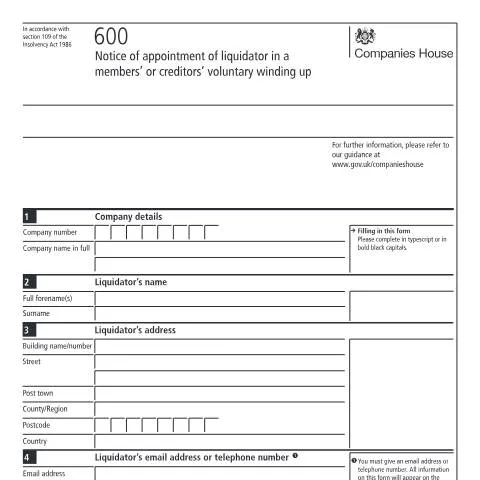
The moment a company's directors acknowledge that their business cannot continue trading, they enter a complex legal process that demands precise documentation. Form 600CH represents a critical milestone in this journey—the formal notification to Companies House that a licensed insolvency practitioner has been appointed to oversee the company's voluntary winding up. Unlike compulsory liquidation imposed by the courts, voluntary winding up allows companies to maintain some control over their closure, but only when properly executed through the correct statutory procedures.
This notification requirement stems from section 109 of the Insolvency Act 1986, which mandates that the appointment of a liquidator must be formally registered with Companies House within prescribed timeframes. The form serves as the official bridge between the company's internal decision-making process and the public record, ensuring transparency for creditors, shareholders, and other stakeholders who may be affected by the liquidation.
Distinguishing Members' from Creditors' Voluntary Liquidation
Form 600CH accommodates two fundamentally different scenarios, each with distinct legal implications and procedural requirements. Understanding this distinction is crucial for completing the form accurately and avoiding potential complications.
Members' Voluntary Liquidation: The Solvent Company Route
In a members' voluntary liquidation, the company's directors have determined that whilst the business cannot continue, it remains solvent—capable of paying all debts in full within twelve months. This process requires the directors to make a statutory declaration of solvency before appointing the liquidator. The shareholders, not the creditors, control the appointment process through a special resolution passed at a general meeting.
The liquidator in this scenario typically focuses on realising assets, settling debts, and distributing any surplus to shareholders according to their shareholdings. The process tends to be more straightforward, with fewer conflicts of interest and generally cooperative stakeholders.
Creditors' Voluntary Liquidation: Managing Insolvency
A creditors' voluntary liquidation acknowledges the company's inability to pay its debts as they fall due. Here, whilst shareholders may initiate the process through a resolution to wind up, the creditors ultimately control the appointment of the liquidator. This typically occurs at a meeting of creditors, where they may confirm the shareholders' choice or appoint their preferred insolvency practitioner.
The creditors' meeting must be held within fourteen days of the shareholders' resolution, and creditors' claims take priority over shareholders' interests. The liquidator's primary duty shifts to maximising returns for creditors, investigating the company's affairs, and potentially pursuing director misconduct if evidence emerges.
Navigating the Form's Essential Components
Form 600CH demands precision in every field, as errors can delay the registration process and potentially expose directors to additional legal risks. The form's structure reflects the statutory requirements while accommodating practical variations in liquidation scenarios.
Company Identification and Verification
The opening section requires the company name in full exactly as it appears on the Companies House register, along with the eight-digit company number. This seemingly straightforward requirement often causes delays when applicants use abbreviated names, trading names, or outdated company names following recent changes. The system will reject applications where the details don't match the current register exactly.
Directors should verify these details against the most recent confirmation statement or by checking the live register at Companies House before completing the form. Companies that have recently changed their name must use the current registered name, not the name under which they may have been trading.
Liquidator Credentials and Contact Details
The form provides space for up to two liquidators, with additional liquidators requiring the continuation page. Each liquidator must be properly qualified under the Insolvency Act 1986, holding a current licence from one of the recognised professional bodies—typically the Insolvency Practitioners Association, the Institute of Chartered Accountants in England and Wales, or equivalent Scottish or Irish bodies.
| Required Information | Key Considerations | Common Errors |
|---|---|---|
| Full name | Must match IP licence exactly | Using abbreviated or informal names |
| Business address | Professional office, not residential | Incomplete postcodes or regions |
| IP licence number | Current and valid licence | Using expired or suspended numbers |
| Contact details | Email OR telephone mandatory | Providing neither contact method |
The insolvency practitioner number serves as a crucial verification tool. Companies House may cross-reference this against the relevant professional body's register to confirm the practitioner's authorisation. Using an incorrect, expired, or suspended licence number will result in form rejection and potential delays in the liquidation process.
Appointment Mechanics and Timing
Section 10 of the form captures the critical details of how and when the liquidator was appointed. The distinction between appointment by the company (members) versus creditors determines the legal framework governing the liquidation and affects the liquidator's duties and powers.
The appointment date must reflect the actual date when the liquidator accepted the appointment, not when the resolution was passed or when the form is submitted. In members' voluntary liquidation, this typically coincides with the shareholders' meeting date. In creditors' voluntary liquidation, the appointment date may be the creditors' meeting date, which could be up to fourteen days after the initial shareholders' resolution.
Timing Requirements and Statutory Deadlines
The Insolvency Act 1986 imposes strict timeframes for notifying Companies House of a liquidator's appointment, with potential penalties for late filing. Understanding these deadlines is crucial for ensuring compliance and avoiding unnecessary complications.
The liquidator must file Form 600CH within fourteen days of their appointment. This deadline is calculated from the date the liquidator accepted the appointment, not from when they began work or when payment was received. The fourteen-day period includes weekends and bank holidays, making prompt action essential.
Late filing can result in penalties for both the liquidator and potentially the company's former directors. More significantly, the liquidator's appointment may not be legally effective for certain purposes until properly registered, potentially affecting their ability to take control of company assets or represent the company in legal proceedings.
Consequences of Delayed Registration
Beyond financial penalties, delayed registration can create practical complications that extend the liquidation process and increase costs. Creditors may question the liquidator's authority, banks may refuse to recognise account transfer instructions, and legal proceedings may face challenges regarding proper representation.
In extreme cases, significant delays might prompt creditors to petition for compulsory liquidation, potentially replacing the voluntary process with court supervision and different fee structures. This scenario typically results in higher costs and less flexibility for all stakeholders.
Documentation Requirements and Supporting Evidence
While Form 600CH itself requires no supporting documents, the underlying liquidation process generates substantial paperwork that must be properly maintained and may be referenced during the registration process.
For members' voluntary liquidation, the supporting framework includes the directors' statutory declaration of solvency, shareholders' special resolution, and evidence of the liquidator's acceptance of appointment. The declaration of solvency, in particular, carries significant legal weight—directors who make false declarations face potential criminal liability.
In creditors' voluntary liquidation, the documentation trail includes the initial shareholders' resolution, notices to creditors, minutes of the creditors' meeting, and formal acceptance by the appointed liquidator. The creditors' meeting minutes become particularly important if disputes arise regarding the appointment process or the liquidator's authority.
Professional Qualification Verification
Although not submitted with Form 600CH, the liquidator's professional credentials form a critical backdrop to the appointment. Companies House maintains the right to verify insolvency practitioner licences with the relevant professional bodies, and any discrepancies can invalidate the appointment.
Liquidators must ensure their professional indemnity insurance remains current and adequate for the appointment. Most professional bodies require minimum coverage levels, and some complex liquidations may demand enhanced insurance arrangements before appointment acceptance.
Submission Channels and Processing Expectations
Companies House provides multiple submission routes for Form 600CH, each with different processing times and cost implications. The choice of submission method can significantly impact the speed at which the appointment becomes publicly registered.
The standard postal route involves sending the completed form to the Cardiff office, with processing typically taking five to ten working days from receipt. Electronic submission through the Companies House WebFiling service offers faster processing, usually within 24 to 48 hours, though this option may not always be available for all form variants.
Same-Day Registration Services
For urgent situations, Companies House offers same-day registration services for an additional fee. This service requires advance arrangement and submission before specified cut-off times, typically mid-afternoon. Same-day processing can be crucial when liquidators need to take immediate action to preserve company assets or prevent creditor enforcement actions.
The urgency provisions become particularly relevant in creditors' voluntary liquidations where asset preservation is critical. Delays in formal registration might prevent the liquidator from taking control of bank accounts, stopping ongoing contracts, or preventing asset disposal by remaining directors.
Public Record Implications and Stakeholder Notification
Once processed, Form 600CH creates immediate and permanent changes to the company's public record, triggering various notification obligations and legal consequences that extend far beyond the Companies House filing.
The appointment notice appears on the company's public file within hours of processing, alerting credit reference agencies, suppliers, customers, and other stakeholders to the changed status. This public notification often triggers contractual clauses, insurance policy reviews, and supplier account suspensions that can accelerate the liquidation timeline.
Creditors typically monitor Companies House filings closely, and the appearance of Form 600CH often prompts immediate contact with the appointed liquidator. This initial surge of creditor communications requires careful management to ensure all claims are properly recorded and validated.
Banking and Financial Implications
Banks routinely monitor their commercial customers' Companies House filings, and the registration of a liquidator appointment typically triggers immediate account reviews. Most banks will freeze company accounts upon notification, requiring the liquidator to provide formal authority documentation before accessing funds.
The liquidator must often provide certified copies of their appointment documentation, professional indemnity insurance certificates, and formal instructions for account management. This process can take several days, during which time urgent payments may be delayed unless alternative arrangements are made.
Post-Registration Responsibilities and Ongoing Compliance
Form 600CH represents the beginning, not the conclusion, of the liquidator's formal reporting obligations to Companies House. The successful registration triggers a cascade of additional requirements that continue throughout the liquidation process.
Within three months of appointment, the liquidator must submit their first progress report to creditors and members, with copies filed at Companies House. These reports continue at six-monthly intervals until the liquidation concludes, providing ongoing transparency regarding asset realisations, creditor payments, and investigation findings.
The liquidator must also notify Companies House of any changes to their contact details, professional status, or circumstances that might affect their ability to continue the appointment. Failure to maintain current registration details can result in administrative penalties and potential challenges to the liquidator's authority.
The liquidation concludes with final reporting requirements, including the submission of final accounts and the liquidator's final report. Only when these concluding documents are properly filed and accepted can the company be dissolved and removed from the Companies House register, bringing the formal process to its legal conclusion.
Throughout this extended process, Form 600CH remains the foundational document establishing the liquidator's authority and the legal framework governing the company's dissolution. Its accurate completion and timely submission therefore represent critical success factors in achieving an orderly and compliant voluntary winding up process.
Understanding the Legal Framework and Statutory Requirements
The appointment of a liquidator in voluntary winding up operates within a comprehensive legal framework that companies must navigate carefully. Under the Insolvency Act 1986, the process differs significantly depending on whether you're pursuing a members' voluntary liquidation (MVL) or creditors' voluntary liquidation (CVL), each carrying distinct statutory obligations and procedural requirements.
For members' voluntary liquidations, directors must first make a statutory declaration of solvency using Form 600CH alongside the declaration itself. This sworn statement confirms the company can pay its debts in full within 12 months of the winding-up resolution. The declaration must be made by all directors, or if more than two directors exist, by the majority of the board. Crucially, this declaration cannot be made more than five weeks before the special resolution for winding up is passed, and making a false declaration constitutes a criminal offence punishable by fine or imprisonment.
In creditors' voluntary liquidations, the statutory framework becomes more complex. The Insolvency Act 1986 requires that creditors' meetings be properly convened, with at least seven clear days' notice given to all known creditors. The meeting notice must include a statement of the company's affairs, prepared by the directors and verified by affidavit. This statement provides creditors with essential information about the company's financial position, including asset valuations, creditor details, and estimates of potential returns.
The statutory requirements extend to the liquidator's ongoing duties once appointed. They must maintain detailed records of their actions, prepare regular reports to creditors and members, and ensure compliance with the Insolvency Rules 2016. These rules specify the format and timing of various notifications, the conduct of meetings, and the procedures for asset realisation and distribution.
Companies House filing requirements remain active throughout the liquidation process. Beyond Form 600CH, you'll need to submit regular updates including liquidator's reports, notices of meetings, and ultimately, the final account and return when the liquidation concludes. Each document carries specific deadlines, with penalties for late filing continuing to apply despite the company being in liquidation.
Qualifying Criteria and Eligibility Assessment for Liquidators
Not everyone can serve as a liquidator in voluntary winding up proceedings. The Insolvency Act 1986 establishes strict qualification requirements that potential appointees must meet, with different criteria applying depending on the type of liquidation and the proposed liquidator's professional status.
Insolvency practitioners must hold appropriate authorisation from one of the recognised professional bodies: the Institute of Chartered Accountants in England and Wales (ICAEW), the Institute of Chartered Accountants of Scotland (ICAS), the Association of Chartered Certified Accountants (ACCA), the Insolvency Practitioners Association (IPA), or the Secretary of State directly. Each authorising body maintains its own continuing professional development requirements and monitoring procedures, ensuring practitioners remain competent throughout their careers.
The qualification process involves passing the Joint Insolvency Examination (JIE), demonstrating relevant experience, and meeting fitness and propriety tests. Candidates must typically complete a minimum period of employment or training with a licensed insolvency practitioner, gaining hands-on experience across different types of insolvency proceedings. The authorising body then conducts regular monitoring visits and requires annual returns demonstrating continued compliance with professional standards.
Certain individuals are automatically disqualified from acting as liquidators. These include undischarged bankrupts, persons subject to disqualification orders under the Company Directors Disqualification Act 1986, and anyone lacking the necessary professional qualifications. Additionally, connected persons—including company officers, employees, and their associates—cannot serve as liquidators in most circumstances, though limited exceptions exist for members' voluntary liquidations where creditors' interests aren't at risk.
For members' voluntary liquidations specifically, companies may appoint any qualified insolvency practitioner, with shareholders typically making the decision by ordinary resolution at a general meeting. However, the chosen liquidator must confirm their willingness to act and provide evidence of their professional indemnity insurance coverage, which must meet minimum levels specified in the Insolvency Rules 2016.
In creditors' voluntary liquidations, the appointment process becomes more nuanced. While directors may nominate a liquidator, creditors retain the ultimate right to appoint their preferred candidate if they disagree with the directors' choice. This can lead to competing nominations, resolved through creditor voting where decisions are made by reference to the value of debts rather than simple majority rule. Creditors holding more than 50% of the total debt value can effectively determine the appointment outcome.
Post-Appointment Compliance and Ongoing Regulatory Obligations
Once appointed, liquidators face extensive ongoing compliance requirements that extend far beyond the initial Form 600CH submission. These obligations encompass regular reporting to multiple stakeholders, maintaining detailed records, and ensuring transparent communication throughout the liquidation process.
The liquidator must prepare and circulate progress reports at prescribed intervals, typically every six months for creditors' voluntary liquidations and annually for members' voluntary liquidations. These reports detail the liquidator's actions, asset realisations, distributions made, and estimated timescales for completion. The format and content requirements are specified in the Insolvency Rules 2016, with specific provisions for electronic distribution where creditors have consented to this method.
Asset realisation procedures require careful documentation and often court approval for significant transactions. Liquidators must obtain the best price reasonably obtainable for company assets, which may involve formal marketing processes, independent valuations, or specialist auction procedures depending on the asset type. When selling to connected parties or where potential conflicts of interest exist, additional safeguards apply, including creditor approval requirements and independent expert opinions.
The liquidator's remuneration requires careful handling, with different approval mechanisms applying depending on the liquidation type and the basis of charging. In creditors' voluntary liquidations, creditors must approve the liquidator's fees, either as a percentage of asset realisations, time-based charging, or a fixed fee arrangement. The approval process involves detailed disclosure of the liquidator's charging rates, estimated time requirements, and comparison with similar cases.
Regulatory supervision continues throughout the appointment, with the liquidator's authorising body conducting periodic monitoring reviews. These may include file inspections, interviews with the liquidator and their staff, and detailed examination of case records. The Insolvency Service also maintains oversight powers, including the ability to investigate complaints and take enforcement action where necessary.
Tax compliance obligations remain active during liquidation, with the liquidator responsible for completing final corporation tax returns, settling outstanding liabilities, and claiming available reliefs. HMRC must be notified of the liquidation commencement, and the liquidator may need to apply for clearances confirming no outstanding tax obligations before making final distributions to shareholders. Capital gains tax implications may arise on asset disposals, requiring careful calculation and potentially affecting distribution timing.
The final stages of liquidation involve preparing detailed accounts showing all receipts and payments, obtaining necessary approvals for the liquidator's final remuneration, and making concluding distributions to creditors and shareholders according to the statutory priority order. The liquidator must then file final returns with Companies House and the relevant court, leading to the company's dissolution and removal from the register. This process typically takes several months to complete, even after all assets have been realised and distributed.