Understanding the Role of the AM11 (Scot) Form in Company Administration
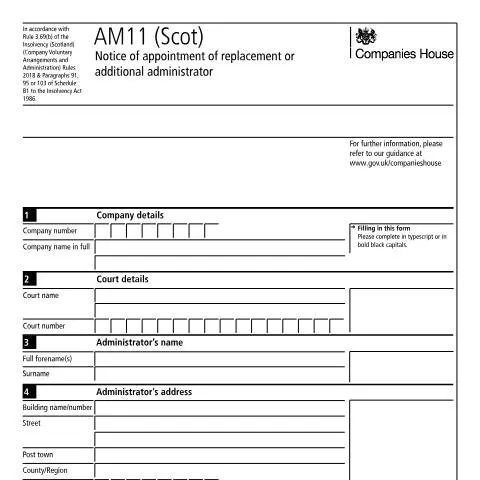
In the realm of company management in Scotland, the AM11 (Scot) form plays a pivotal role, particularly in the context of insolvency. When a company finds itself in financial distress, appointing an administrator becomes crucial. This administrator is responsible for managing the company's affairs, business, and property. However, there may be instances where a replacement or additional administrator is required. This can happen due to various reasons, such as the resignation of the current administrator or the need for additional expertise.
The AM11 (Scot) form is the official document used to notify Companies House of such appointments, ensuring that the registered details of administrators are kept current. The necessity of maintaining accurate records cannot be overstated, as they help creditors and stakeholders understand who is managing the company's affairs.
The Context of Appointing Administrators
The AM11 form is grounded in bankruptcy law as outlined in the Insolvency Act 1986, specifically through the Insolvency (Scotland) (Company Voluntary Arrangements and Administration) Rules 2018. Its significance arises within the broader framework of corporate insolvency, which aims to provide a structured process for dealing with failing businesses while attempting to protect the interests of creditors.
When a company enters administration, the appointment of an administrator does not only reflect the company's status but also influences the subsequent actions regarding its assets, liabilities, and potential recovery strategies. Thus, the AM11 form serves not just as a bureaucratic necessity but as a critical step in protecting the interests of all stakeholders involved.
Filling Out the AM11 Form: Essential Sections
Completing the AM11 (Scot) form correctly is crucial, as inaccuracies can lead to delays or rejections from Companies House. Below are the key sections of the form, along with pointers to ensure proper completion:
1. Company Details
Company Name: Provide the full registered company name. Ensure it matches exactly as per the public register, as discrepancies can result in complications.
Company Number: This unique identifier for the company must be included without error.
Court Number: If applicable, include the court number where the administration process is being handled.
2. Court Details
- Court Name: Specify the name of the court involved in the administration process. This detail is important as it ties the administration to the correct legal proceedings.
3. Administrator’s Name and Details
Full Name: Enter the administrator’s full forename(s) and surname. This is vital, as the identity of the administrator is central to the form.
Address: A complete address must be provided, including building name/number, street, town, county, country, and postcode. Omitting any part of this address can lead to processing issues.
4. Administrator’s Contact Information
- Email Address or Telephone Number: It's mandatory to provide either an email address or a telephone number for the administrator. This information is critical for any follow-up queries from Companies House. Be cautious; this information will be part of the public record.
5. Insolvency Practitioner Number
The insolvency practitioner number is essential as it identifies the professional overseeing the administration. This information provides an additional layer of credibility and accountability for the administrator's actions.
6. Signature and Date
A section is provided for the administrator to sign and date the form. This signature indicates that the individual is officially appointed and acknowledges their responsibilities.
Timeline: When and What to Expect After Submission
Understanding the timeline of the AM11 (Scot) process is crucial for both administrators and stakeholders.
Submission Timing
The AM11 form should be submitted promptly following the appointment of the new administrator. The efficiency of this process can help mitigate any potential issues arising from delays. Companies House recommends sending the form as soon as the appointment is official, ideally on the same day.
Processing Duration
Once submitted, Companies House aims to process the AM11 form within a few working days. However, this can vary based on their workload and the accuracy of the submitted information. It’s wise to allow for some flexibility in timelines.
Following Up: Tracking the Progress of Your Submission
After submitting the AM11 (Scot), stakeholders may want to track the progress and ensure the appointment has been recorded accurately.
Verification Steps
- Checking the Public Register: You can verify whether the new appointment has been reflected in the public records by searching the Companies House online register. This is a straightforward way to confirm that the administrator's details are updated.
Handling Queries from Companies House
If there are any issues with your form, Companies House may reach out via the contact details provided. It is essential to respond to any queries promptly to avoid delays in processing. Having the administrator’s contact information readily available can facilitate smoother communication.
Preparing Supporting Documents: Contextual Considerations
While the AM11 form is primarily about notifying the appointment, there might be additional documents required depending on the specific circumstances surrounding the administration.
1. Evidence of Appointment
When appointing a replacement administrator, it often helps to include documents that indicate the reasons for the change. This might include:
Resignation Letter: If the previous administrator resigned, provide a copy of their resignation letter.
Court Orders or Notices: If the appointment was mandated by a court, including relevant orders can strengthen the submission.
2. Credentials and Qualifications
For the new administrator, it might be beneficial to include evidence of their qualifications, such as:
- Insolvency Practitioner License: A copy of their license can reassure stakeholders about the administrator's credentials.
Distinguishing the AM11 from Similar Forms
In the landscape of company administration, the AM11 (Scot) form is often confused with other documentation. It’s important to understand the nuances that set it apart from similar forms.
Comparison with Other Forms
| Form | Purpose | Key Differences |
|---|---|---|
| AM11 (Scot) | Appointment of replacement/additional administrator | Specifically for Scottish companies; focuses on administrator changes. |
| AM2 (Scot) | Notice of appointment of a new director | Concerns directorship rather than administration. |
| AM14 (Scot) | Change of registered office | Pertains to the company’s registered address. |
| AM22 (Scot) | Notice of cessation of appointment | Used when an administrator is removed, not appointed. |
Understanding these distinctions can help ensure that the correct documentation is submitted at any point during the administration process.
Demystifying the AM11 (Scot) for Future Administrators
For those navigating the complexities of company administration in Scotland, familiarity with the AM11 (Scot) form is essential. Not only does it streamline the administrative processes, but it also enshrines accountability and transparency in corporate governance.
As a replacement or additional administrator, being well-versed in your responsibilities and the implications of your appointment can significantly influence the outcomes for the company in administration. Adherence to the guidelines laid out in the form, combined with proactive communication with Companies House and stakeholders, can pave the way for a smoother transition and potentially more favorable outcomes for all parties involved.
In conclusion, as the landscape of corporate insolvency continues to evolve, those responsible for filling out the AM11 (Scot) must maintain a keen understanding of its nuances, ensuring that every detail is accurately captured to reflect the dynamic nature of company management in Scotland.
Understanding the Role and Responsibilities of an Administrator
When appointing a replacement or additional administrator for a Scottish company, it is essential to fully understand the responsibilities and powers associated with the role. An administrator essentially takes charge of the company's affairs, especially in circumstances where financial challenges arise. Their primary goal is to rescue the company as a going concern or achieve a better outcome for the creditors than would be achieved through liquidation.
The administrator's duties include managing company assets, maintaining communication with creditors, and ensuring compliance with relevant legal frameworks, particularly the Insolvency Act 1986. They must diligently document their actions and decisions to provide transparency and accountability. It's crucial that those considering appointing an administrator evaluate candidates based on their experience, qualifications, and past performance in similar roles.
When evaluating potential administrators, you can look for those who are licensed and regulated by recognised bodies such as the Insolvency Practitioners Association (IPA) or the Association of Chartered Certified Accountants (ACCA). Furthermore, an administrator must act impartially and put the interests of creditors as a priority while ensuring the company's best practices are followed.
Procedure for Appointing an Administrator in Scotland
The process of appointing an administrator involves several key steps that must be followed to comply with legal requirements under Scottish law. It's important to be meticulous during this procedure to ensure that the appointment is valid and recognised by the courts.
Initially, the appointment can be initiated by the company, the directors, or qualifying floating charge holders. If the company is in financial distress, the directors may opt for a voluntary arrangement. Alternatively, if a creditor holds a qualifying floating charge, they can appoint an administrator directly. This is done by filing the appropriate forms, including the AM11 (Scot), with the Companies House.
The AM11 (Scot) form must be completed accurately. The document requires details about the company, the proposed administrator, and confirmation of their consent to act. Once the form is filled out, it should be submitted, along with a notice of the appointment to Companies House, ensuring it is lodged within the required timeline, typically within 5 business days post-appointment.
Following the submission, the administrator will take over the management of the company and will notify stakeholders about the appointment. It is also essential to communicate clearly with employees and creditors to maintain trust through the transition.
Potential Challenges in the Appointment Process
Appointing an administrator, whether as a replacement or an addition, can be fraught with challenges that require careful navigation. One common issue is ensuring that the appointed administrator has the necessary skills and experience to address the specific challenges facing the company.
Another significant challenge may arise from the need for stakeholder consensus, particularly if there are differing interests among shareholders, creditors, or directors. In some cases, stakeholders may oppose the appointment, leading to conflicts that could hinder the process. It is advisable to engage in discussions early on to gauge any potential objections and address them proactively.
Additionally, the reputation of the administrator selected can impact the overall perception and effectiveness of the appointment. A well-regarded administrator can inspire confidence among creditors and employees, while a negative reputation may exacerbate existing tensions and complicate the recovery process.
Legal hurdles may also pose challenges. Administrators must ensure compliance with all statutory requirements to avoid any legal repercussions that could invalidate their appointment or lead to further complications. Thorough preparation and a clear understanding of the legal landscape are essential for a smooth appointment process.