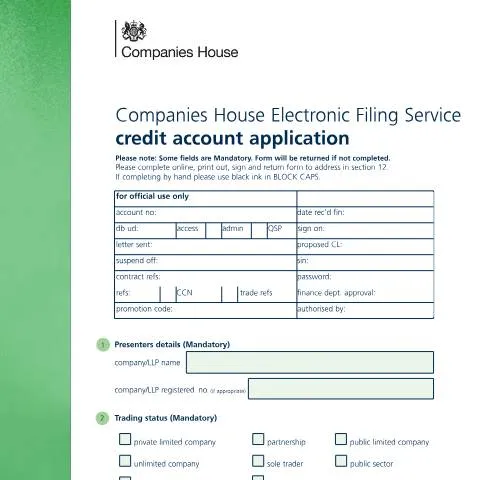
The Electronic Gateway to Companies House: Setting Up Your Credit Account for Digital Filing
In the digital age of corporate administration, Companies House has transformed the landscape of statutory filing through its Electronic Filing Service. This comprehensive system enables businesses to submit their mandatory documents—from annual returns to confirmation statements—electronically, replacing the traditional paper-based approach that once dominated UK company administration. The Companies House credit account application serves as the gateway to this digital ecosystem, providing authorised users with streamlined access to both WebFiling and Software Filing platforms.
The significance of establishing a credit account extends beyond mere convenience. For companies filing ten or more annual returns per annum, this system offers substantial cost savings and operational efficiency. The electronic submission process reduces processing times from weeks to minutes, whilst the credit facility eliminates the need for individual transaction payments, creating a seamless monthly billing cycle that aligns with business cash flow requirements.
Corporate Eligibility Framework and Entity Classifications
The Companies House Electronic Filing Service accommodates a diverse spectrum of business entities, each with distinct requirements and access levels. Private limited companies represent the largest user base, benefiting from the full range of electronic filing capabilities including annual returns, confirmation statements, and statutory accounts submission. These entities must provide their company registration number during the application process, enabling immediate verification against the Companies House register.
Public limited companies access identical functionality but face additional scrutiny during the approval process, reflecting their enhanced regulatory obligations. The system recognises the complex filing requirements these entities face, particularly regarding market-sensitive information and accelerated reporting deadlines.
Limited liability partnerships occupy a unique position within the framework. The LLP designation on the application form triggers specific validation protocols, as these entities operate under distinct regulatory requirements compared to traditional companies. Their filing obligations encompass confirmation statements and accounts, but exclude certain company-specific returns.
| Entity Type | Registration Required | Trade References | Annual Filing Volume |
|---|---|---|---|
| Private Limited Company | Company Number | 2 Required | Minimum 10 for credit account |
| Public Limited Company | Company Number | 2 Required | No minimum threshold |
| LLP | LLP Number | 2 Required | Variable based on partnership deed |
| Sole Trader | Not applicable | Individual assessment | Limited filing requirements |
Partnerships and sole traders face different considerations. Traditional partnerships rarely require extensive Companies House interaction, limiting their need for credit accounts. However, those managing multiple entities or providing filing services to clients may benefit from the system's efficiency gains.
The public sector category encompasses government departments, local authorities, and statutory bodies. These entities often receive expedited processing due to their regulatory status, though they must still demonstrate legitimate filing requirements and provide appropriate authorisation documentation.
Decoding the Application Process: Section-by-Section Navigation
The application form's structure reflects Companies House's systematic approach to risk assessment and customer verification. Section 1 (Presenter Details) establishes the primary relationship between the applicant and Companies House. The company or LLP name must match exactly with registered records—even minor variations in punctuation or spacing can trigger verification delays.
The registered number field serves dual purposes: verification and fraud prevention. Companies House cross-references this information against their database, flagging any discrepancies for manual review. Applicants representing recently incorporated entities should ensure their company appears on the public register before submitting their credit account application.
Section 2 (Trading Status) requires careful consideration of business classification. The "number of years in business" field influences credit assessment, with established entities receiving preferential treatment. Start-ups and recently incorporated companies face additional scrutiny, often requiring enhanced trade references or guarantees.
The annual turnover declaration directly impacts credit limits and monthly invoicing arrangements. Companies House employs risk-based pricing models, with higher-turnover entities typically receiving enhanced credit facilities. However, this information must align with filed accounts—discrepancies trigger compliance reviews that can delay account activation.
Business activity descriptions should reflect the company's primary Standard Industrial Classification (SIC) code. Generic descriptions like "business services" provide insufficient detail for risk assessment purposes. Specific activities such as "chartered accountancy services" or "property investment and development" enable more accurate credit evaluation.
Electronic Communication Preferences and Technical Requirements
Section 6 (Electronic Invoice Delivery) represents a critical decision point for account management. The specified email address becomes the primary channel for all billing communications, including monthly invoices, payment reminders, and service notifications. Companies House recommends using shared mailboxes or departmental addresses rather than individual accounts to prevent communication disruption during staff changes.
The email validation process includes format checking and deliverability testing. Addresses containing non-standard characters or outdated domain extensions may trigger verification delays. Corporate email systems with aggressive spam filtering should whitelist Companies House communications to ensure reliable delivery.
Trade References and Financial Verification Protocols
The two trade references requirement serves as Companies House's primary credit risk mitigation strategy. These references undergo rigorous verification, with Companies House contacting each provider directly to confirm trading relationships and payment histories. Acceptable reference providers include banks, major suppliers, professional service providers, and established business customers with whom regular trading occurs.
Reference quality significantly impacts approval outcomes. High-street banks and recognised financial institutions carry greater weight than smaller trade creditors. Similarly, references from companies with strong Companies House filing histories demonstrate operational credibility and regulatory compliance awareness.
The reference verification process typically requires 5-10 working days. Companies House seeks confirmation of trading duration, transaction volumes, and payment performance. Late payments or disputed accounts can result in application rejection or reduced credit limits.
Individual applicants filing on behalf of single companies may qualify for alternative verification procedures. However, this route involves enhanced personal credit checks and may require additional documentation including proof of professional qualifications or regulatory authorisation.
Service Selection and Technical Integration
The choice between WebFiling and Software Filing fundamentally shapes the user experience and technical requirements. WebFiling operates through standard web browsers, requiring no software installation or technical integration. This browser-based approach suits occasional users and smaller practices with limited IT infrastructure.
Software Filing demands greater technical sophistication but offers enhanced functionality for high-volume users. The service integrates with third-party software packages, enabling automated filing workflows and bulk submission capabilities. Companies processing multiple returns simultaneously benefit from the efficiency gains, though implementation requires technical expertise and ongoing maintenance.
The monthly business volume estimate influences service recommendations and credit arrangements. Companies anticipating fewer than ten monthly submissions typically receive guidance toward WebFiling, whilst higher-volume users benefit from Software Filing's automation capabilities.
Payment Mechanisms and Direct Debit Advantages
Companies House strongly promotes Direct Debit payment arrangements through integrated application processing. The attached Direct Debit mandate streamlines payment collection whilst reducing administrative overhead for both parties. Monthly invoicing cycles align with standard business accounting periods, with invoices generated on the first working day of each month for payment by month-end.
Credit and debit card facilities provide alternative payment routes, though these incur additional processing charges and lack the automatic collection benefits of Direct Debit arrangements. Companies House reserves the right to suspend accounts with outstanding balances, potentially disrupting critical filing deadlines.
The payment terms reflect standard commercial practices: 30 days from invoice date with interest charges applied to overdue amounts. However, Direct Debit users benefit from enhanced payment flexibility and rarely face suspension actions due to administrative delays.
Application Processing and Account Activation Timelines
Once submitted to the Cardiff Finance Section, applications enter a structured review process encompassing document verification, reference checks, and credit assessment. Standard processing timelines range from 10-15 working days for straightforward applications, though complex cases or incomplete submissions can extend this period significantly.
The verification process begins with basic compliance checks: company registration status, director authorisation, and application completeness. Companies House then initiates trade reference verification, typically the longest component of the approval process. Reference providers receive formal verification requests requiring written confirmation of trading relationships.
Approved applications generate welcome communications including account numbers, authentication codes, and access instructions. The Presenter Identifier and Authentication Code serve as primary security credentials, enabling access to the electronic filing platforms. These credentials require secure storage and should be shared only with authorised personnel.
Managing Application Complications and Appeal Procedures
Application rejection typically stems from inadequate trade references, credit concerns, or documentation deficiencies. Companies House provides written rejection notifications detailing specific concerns and potential remediation steps. Common issues include unverifiable references, insufficient trading history, or mismatched company information.
Reapplication procedures allow companies to address identified deficiencies and resubmit enhanced applications. However, multiple rejections may trigger enhanced scrutiny requirements including personal guarantees or advance payment arrangements. Professional advice from accountants or company formation specialists can prove valuable during complex application scenarios.
The appeals process provides recourse for companies disputing rejection decisions. Formal appeals must cite specific procedural concerns or provide additional evidence supporting creditworthiness. However, appeals based solely on business necessity rarely succeed without addressing underlying credit or verification concerns.
Integration with Existing Companies House Services
Established Companies House customers benefit from streamlined application processing through account linking procedures. Companies House Direct subscribers can reference existing account numbers, enabling accelerated verification and potentially enhanced credit terms based on proven payment histories.
The integration extends beyond simple account linking to encompass service migration and upgrade pathways. Customers transitioning from postal services to electronic filing often qualify for promotional pricing or enhanced features reflecting their established relationship with Companies House.
Information Centre account holders and Directory Products subscribers similarly benefit from established customer status, though these services primarily involve information retrieval rather than document submission. The cross-referencing process helps Companies House assess overall relationship value and tailor service offerings accordingly.
Multi-service integration enables comprehensive account management through unified billing and support channels. Customers utilising multiple Companies House services receive consolidated invoicing and benefit from dedicated customer support teams familiar with their complete service portfolio. This holistic approach reduces administrative complexity whilst ensuring consistent service delivery across all interaction points.
Understanding Credit Account Billing Cycles and Payment Terms
Companies House operates a monthly billing cycle for credit accounts, with invoices typically generated on the last working day of each month. Your first invoice will cover the period from when your account becomes active until the end of that calendar month, which means if you open your account mid-month, your initial bill may be proportionally smaller.
Payment terms are strictly 30 days from the invoice date, and Companies House does not offer extended payment periods or instalment arrangements for credit accounts. This differs significantly from their approach to late filing penalties, where payment plans may sometimes be considered. The 30-day period is calculated as calendar days, not working days, so weekends and bank holidays are included in the count.
If your payment is received after the due date, Companies House will typically send a reminder notice within 7-10 days. Should the account remain unpaid after 14 days beyond the original due date, they may suspend your credit facilities immediately. This suspension affects not only future filings but can also prevent you from accessing certain online services, even those that might normally be free.
The billing process itself is automated, with invoices sent to the primary email address registered on your account. Companies House strongly recommends using a generic company email address rather than personal addresses, as staff changes can otherwise disrupt the billing process. You can update your billing email address at any time through the online account management system, though changes may take up to 48 hours to take effect.
For companies with high-volume filing requirements, it's worth noting that credit limits are reviewed monthly based on your payment history and usage patterns. Consistent on-time payments may lead to automatic credit limit increases, while late payments will likely result in reduced limits or account restrictions.
Managing Multiple Company Filings Under One Credit Account
A single Companies House credit account can handle filings for multiple companies, making it particularly valuable for accountancy practices, corporate service providers, and business groups with several subsidiaries. However, the setup and management of multi-company arrangements requires careful attention to authorisation procedures and billing allocation.
When filing on behalf of multiple companies, you must ensure you have proper authorisation for each entity. This typically means being listed as an authorised person on each company's record at Companies House, or having appropriate powers of attorney. The authorisation process varies depending on your relationship with each company – if you're a director or company secretary, the process is straightforward, but external agents need to follow more rigorous verification procedures.
For accounting firms and corporate service providers, Companies House offers bulk authorisation processes that can streamline the setup for multiple clients. This involves submitting a master list of companies you're authorised to represent, along with supporting documentation proving your professional relationship with each entity. The verification process for bulk authorisations typically takes 5-10 working days, compared to the standard 2-3 days for individual company authorisations.
Billing allocation becomes crucial when managing multiple companies under one credit account. While Companies House provides detailed transaction reports showing which filings relate to which company numbers, you'll need robust internal systems to allocate costs accurately to your clients or subsidiaries. The monthly invoice includes company numbers and filing types for each transaction, but doesn't provide company names, so maintaining your own cross-reference system is essential.
Some larger users find it beneficial to establish separate credit accounts for different client sectors or business divisions, despite the administrative overhead. This approach can simplify billing reconciliation and provides clearer audit trails, particularly important for regulated professions where client money handling is subject to strict rules.
Troubleshooting Common Credit Account Issues and Technical Problems
Technical difficulties with Companies House credit accounts often stem from browser compatibility issues or outdated system configurations. The Companies House online system works optimally with recent versions of Chrome, Firefox, Safari, and Edge, but can encounter problems with Internet Explorer or heavily restricted corporate networks that block certain scripts or cookies.
Authentication failures represent the most frequent technical issue users encounter. These typically occur when multiple users attempt to access the same credit account simultaneously, or when session timeouts aren't handled properly. Companies House implements strict session management – your login expires after 60 minutes of inactivity, and attempting to continue transactions after this period will generate error messages that aren't always clearly worded.
If you encounter persistent "insufficient funds" messages despite having adequate credit, this often indicates a temporary synchronisation issue between the payment processing system and the credit account database. Such problems usually resolve within 2-4 hours, but if urgent filings are required, you may need to process them using direct payment methods while the technical issue is resolved.
Document upload failures frequently occur when PDF files exceed the 10MB size limit or contain security restrictions that prevent Companies House systems from processing them. Scanned documents should be optimised for web delivery – high-resolution scans intended for printing often create files too large for the upload system. Additionally, password-protected PDFs or documents with digital rights management restrictions will be rejected by the system.
For users experiencing repeated technical difficulties, Companies House offers a technical support line separate from their general enquiry service. This specialised team can access detailed logs of your account activity and identify specific error patterns that may not be apparent from standard error messages. They can also provide guidance on network configuration requirements for organisations with restrictive IT policies.
Payment processing issues occasionally arise, particularly with corporate credit cards that have strict merchant category restrictions. Some cards issued by certain banks automatically decline transactions categorised as "government services" or require additional authorisation for recurring billing arrangements. If your usual payment method is declined, trying an alternative card or payment method often resolves the issue immediately.
When contacting Companies House about technical problems, having specific details readily available significantly speeds resolution. This includes your credit account reference number, the exact time and date when problems occurred, any error messages received (screenshot if possible), and details of your browser and operating system. The more precise information you can provide, the more effectively their technical team can diagnose and resolve issues.