Understanding the Ontario Courts Motion Form (Form 14B)
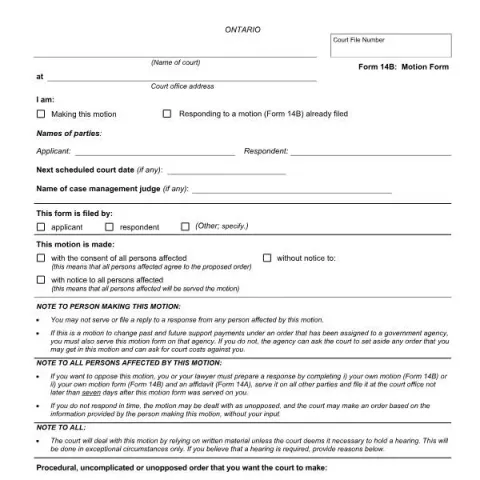
If you are involved in a legal case in Ontario and need to request a court order or respond to a request made by another party, you will likely need to complete the Form 14B: Motion Form. This official document is essential for initiating or responding to motions within the Ontario court system, particularly in family law and civil proceedings. This article provides a clear overview of the form’s purpose, how to prepare and submit it, and important considerations to keep in mind during the process.
What is the Purpose of the Motion Form 14B?
The Form 14B is used primarily to:
- Make a motion: Request the court to issue an order on a specific issue in your case, such as modifications to support payments, custody arrangements, or other legal matters.
- Respond to a motion: Reply to a motion already filed by another party, presenting your stance or objections.
In family law cases, for example, this form might be used to seek a change to child or spousal support, or to address enforcement issues. For civil cases, it could involve requesting injunctions or other interim relief.
Preparing Your Motion: Key Steps
Gather Essential Information
Before filling out the form, ensure you have the following details:
- Court file number: The unique identifier for your case.
- Parties involved: Names of the applicant and respondent.
- Next scheduled court date (if any).
- Name of the case management judge (if assigned).
Completing the Form
The form requires you to specify whether you are making or responding to a motion, and whether all affected parties are notified or have consented to the order. Be precise and clear about the procedural basis for your motion, citing relevant laws or rules, such as specific sections of the Family Law Act or Rules of Civil Procedure.
Notices and Consent
You must indicate if the motion is made with the consent of all parties or if notice has been given to all affected persons. If you omit notice, the other parties may oppose the motion, and the court may decide to hold a hearing.
Filing and Service Procedures
How to File
The completed Form 14B can be filed in person at the court office or, in some cases, through the Ontario Court’s digital platform, if available. It is important to keep a copy for your records and to ensure proper service on all affected parties.
Serving the Motion
- All persons affected by the motion must be served with a copy of the filed form, unless the court orders otherwise.
- If your motion involves support payments that have been assigned to a government agency, you must also serve that agency.
- The deadline for service is generally within a specified period, often seven days after the motion is served.
Responding to a Motion
If you are served with a Form 14B filed by another party, you have the opportunity to oppose the motion. To do so, you must prepare a response, which may include:
- Your own motion (using Form 14B),
- An affidavit (Form 14A),
- And serve these documents on all parties within the prescribed time, typically seven days.
If no response is filed in time, the court may proceed based on the documents filed by the moving party, potentially issuing an order without a hearing.
Fill in your form directly online
No printing: type your details into the boxes of the official form, tick, then download the PDF ready to send.
- 1Type into the form boxes
- 2Tick in one click
- 3Save and download the PDF
Important Considerations
Most motions are dealt with based on written submissions unless the court deems a hearing necessary. When submitting your motion, include reasons why a hearing is required if you believe one is necessary. Additionally, ensure that your legal references are accurate, citing relevant statutes, regulations, or rules to support your request.
Contact and Legal Support
For assistance in completing or filing the Form 14B, consider consulting a lawyer or legal clinic familiar with Ontario family and civil law procedures. The court clerk can also provide guidance on procedural steps and document submission requirements.
In summary, the Form 14B is a vital tool for managing motions within Ontario courts. Proper preparation, timely service, and clear legal reasoning are key to effectively navigating this process and achieving your legal objectives.