Understanding the Purpose of Form 10: Answer in Family Law Cases
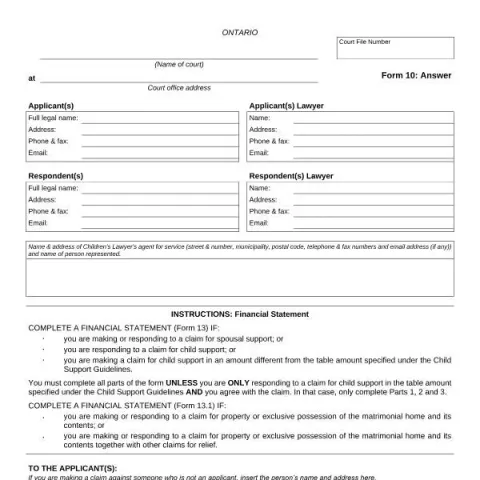
Form 10, known as the "Answer" form, is an official legal document used within the Ontario Court system. It plays a crucial role in family law proceedings, particularly in divorce, child support, spousal support, and property disputes. This form allows respondents—those who are defending against a claim— to formally respond to allegations made by the applicant, who initiates the case.
The primary purpose of Form 10 is to provide a structured way for respondents to admit, deny, or dispute specific claims made in the initial application. It also allows respondents to outline their own claims or requests for relief. By completing this form accurately, respondents ensure their side of the story is officially recorded and considered by the court.
Who Needs to Fill Out Form 10?
This form must be completed by any respondent in a family law case where a formal application has been filed with the Ontario Court. Whether you are responding to a divorce, child support, or property claim, you are required to fill out Form 10 if you wish to participate actively in the case and present your position.
If you agree with all the claims made against you and do not wish to dispute any points, you may only need to complete certain sections of the form, such as Parts 1, 2, and 3. However, if you have additional claims or wish to contest specific allegations, you should complete the entire form and attach any supplementary pages necessary to detail your position.
How to Complete Form 10 Correctly
Completing Form 10 involves several key steps:
- Identify the Court and Parties: Fill in the court file number, court name, and address. Provide the full legal names, addresses, phone, fax, and email contact details for both the applicant(s) and respondent(s). If applicable, include details of any legal representative or agent for service.
- Respond to Claims: Clearly indicate which claims you agree with and which you dispute by checking the appropriate boxes. Use numbered references to correspond with claims made in the application form.
- State Your Position: Use Part 6 to outline the key facts supporting your position. Attach additional sheets if necessary, ensuring each paragraph is numbered for clarity.
- Make Your Own Claims: If you have claims against the applicant or other parties, complete a separate claim page and attach it to your answer. This could include requests for property, custody, or support orders.
- Family History and Other Details: Confirm whether the family history as set out in the application is accurate. If not, attach your own version and underline the differences.
It is essential to be truthful, complete, and precise when filling out Form 10. Inaccurate or incomplete responses could impact your case negatively or delay proceedings.
Where and How to Submit the Form
Once completed, the original signed form must be filed with the court office where the case is being heard. It is advisable to keep copies for your records. You can submit the form in person, by mail, or through any electronic filing system accepted by the Ontario Court, depending on local procedures.
Fill in your form directly online
No printing: type your details into the boxes of the official form, tick, then download the PDF ready to send.
- 1Type into the form boxes
- 2Tick in one click
- 3Save and download the PDF
Make sure to serve a copy of your completed Form 10 on all other parties involved in the case, including the applicant and their legal representative, if applicable. Service requirements are important to ensure that all parties are properly informed and that the court proceedings proceed fairly.
Common Errors to Avoid When Filling Out Form 10
- Incomplete Responses: Failing to answer all relevant sections or leaving claims unaddressed can result in your responses being considered incomplete, which may weaken your position.
- Incorrect Claim References: Not referencing claims correctly using the provided numbering system can lead to confusion and delays.
- Omitting Attachments: Forgetting to attach necessary supplementary sheets or claim pages can result in your claims not being considered.
- Late Filing: Missing deadlines for filing and serving the answer can adversely affect your legal rights.
Additional Support and Resources
If you are unsure about how to complete Form 10 or need assistance, consider consulting a legal professional experienced in family law. The Ontario Court and related legal aid services may also provide guidance or resources to help you navigate the process effectively.