Understanding the Notice of Intention to Enforce a Security (Form 86) in Canada
If you are involved in a situation where a secured creditor intends to enforce their security on your property, it’s crucial to understand the purpose and process of the Notice of Intention to Enforce a Security, formally known as Form 86. Issued by the Office of the Superintendent of Bankruptcy Canada, this legal document serves as an official notification in the context of insolvency proceedings and secured transactions.
What Is the Purpose of Form 86?
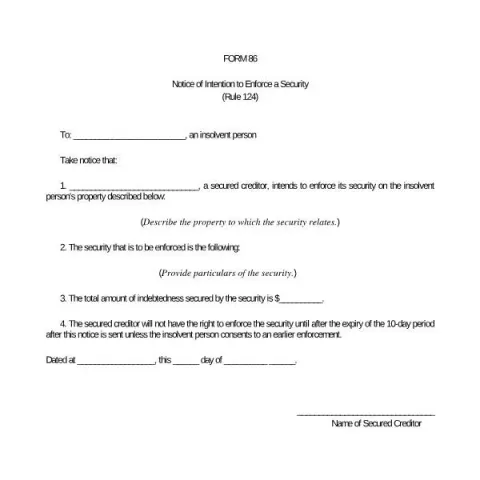
Form 86 is a formal notice that a secured creditor plans to enforce their security interests against an insolvent individual or entity. Its primary function is to inform the debtor that the creditor intends to take specific actions to recover the secured amount by seizing the property described in the notice. This process is governed by the Bankruptcy and Insolvency Act (BIA) and related rules, ensuring transparency and fairness in the enforcement process.
Who Uses Form 86 and When?
This form is typically used by secured creditors, such as banks or financial institutions, when they believe that a debtor has defaulted on a secured loan or credit agreement. Before proceeding with enforcement actions like seizing assets, the creditor must serve this notice to the debtor, providing a clear timeline and details of the security interest.
Key Elements of the Form 86
Identifying the Parties and Property
- Recipient: The insolvent person or entity against whom enforcement is contemplated.
- Creditor’s Details: Name and title of the secured creditor or their authorized signing officer.
- Property Description: Precise description of the property subject to security, which could include tangible assets or specific rights.
Details of the Security and Debt
- Type of Security: Specifics of the security interest, such as a mortgage, lien, or other collateral.
- Secured Amount: Total amount of debt secured by the security, including principal and interest.
Notice Period and Enforcement Rights
The form specifies that the secured creditor cannot enforce the security until at least 10 days have passed from the date the notice is sent, unless the debtor consents to earlier enforcement. This period provides the debtor with an opportunity to respond or negotiate.
Step-by-Step Guide to Filling Out Form 86
When completing Form 86, accuracy and completeness are essential. Here’s a simplified outline:
- Identify the debtor: Fill in the name of the insolvent person or entity.
- Describe the property: Clearly specify the property subject to security, including location, description, or registration details.
- Detail the security: Provide particulars of the security interest, such as the type of security and relevant registration numbers.
- State the total secured debt: Enter the exact amount secured by the security.
- Set the enforcement date: Indicate the date and location where the notice is issued.
- Sign and date: The creditor or authorized officer must sign and date the form.
Important Deadlines and Next Steps After Filing
Once the notice is sent, the debtor has a minimum of 10 days to respond or object to the enforcement. If no objection is raised, the secured creditor can proceed with enforcement actions after this period. It’s crucial to keep records of the notice mailing and any responses received, as these may be required in subsequent legal proceedings.
Fill in your form directly online
No printing: type your details into the boxes of the official form, tick, then download the PDF ready to send.
- 1Type into the form boxes
- 2Tick in one click
- 3Save and download the PDF
Legal Context and Compliance
Filing and serving Form 86 must comply with the rules set out under Rule 124 of the Bankruptcy and Insolvency Rules. Failure to adhere to these procedures can result in delays or invalidation of enforcement actions. It’s advisable for creditors to consult legal professionals experienced in insolvency law to ensure proper handling of the process.
Summary
Form 86 is a vital document in the enforcement of security interests within Canada’s insolvency framework. It ensures that debtors are properly informed of imminent enforcement actions, respecting their rights while allowing secured creditors to recover debts efficiently. Accurate completion, timely service, and adherence to legal deadlines are essential components of a successful enforcement process.