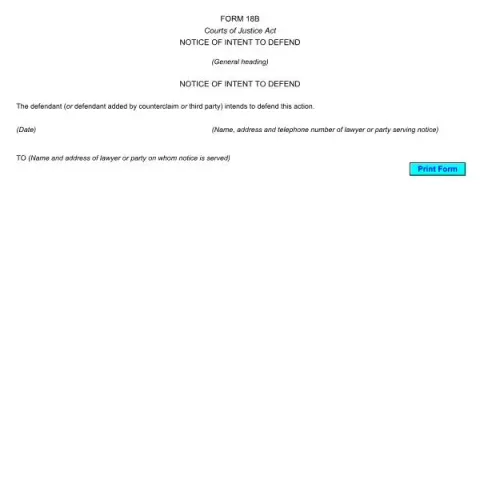
Understanding the Notice of Intent to Defend (Form RCP-18B-E)
The Notice of Intent to Defend is a formal legal document used within the framework of the Courts of Justice Act in Canada. Its primary purpose is to inform the court and the opposing party that a defendant (or a party added by counterclaim or third-party claim) intends to actively defend the legal action brought against them. This form is a crucial step in the litigation process, signaling the defendant’s formal participation and commitment to contest the claim.
When Should You Use the Notice of Intent to Defend?
This form is typically used in civil litigation cases where a defendant has received a statement of claim or similar legal document initiating proceedings. Filing a Notice of Intent to Defend indicates that the defendant does not admit liability or agrees with the claim but intends to dispute it through the legal process. It is essential to submit this notice within the prescribed timeframe, which is usually specified in the originating documents or by the court’s rules.
Failure to serve a proper notice within the deadline may result in a default judgment against the defendant, meaning they could lose the case without further opportunity to defend.
What Information is Required on the Form?
The Form RCP-18B-E requires the following key details:
- Date of filing: The date when the notice is being submitted.
- Name and contact details of the defendant or defendant’s lawyer: Including address and telephone number.
- Identification of the party serving the notice: Whether the defendant or their legal representative.
- Recipient’s details: Name and address of the party or lawyer on whom the notice is served.
It is important to ensure accuracy in this information to prevent delays or disputes regarding service.
How to Properly Serve the Notice of Intent to Defend
Once completed, the notice must be served on the opposing party or their legal representative. Service can typically be done through personal delivery, mail, or other methods accepted by the court rules. It is advisable to keep proof of service, such as a signed acknowledgment or affidavit of service, to demonstrate compliance if the matter proceeds to court.
Points of Attention and Practical Tips
- Timeliness is key: Ensure the notice is filed and served within the deadline specified by the court or the originating claim.
- Complete and accurate information: Double-check all details to avoid administrative delays or disputes.
- Legal advice: Consider consulting a lawyer to confirm the appropriateness of your defense strategy and proper completion of the form.
- Keep records: Maintain copies of the completed form and proof of service for your records and future reference.
Legal Significance and Next Steps
Filing a Notice of Intent to Defend is a formal step that signifies your intention to participate actively in the case. After serving this notice, the case will typically proceed to the next stages, such as exchange of pleadings, discovery, or pre-trial procedures. It also preserves your right to contest the claim and present evidence in court.
Fill in your form directly online
No printing: type your details into the boxes of the official form, tick, then download the PDF ready to send.
- 1Type into the form boxes
- 2Tick in one click
- 3Save and download the PDF
Remember that failing to serve this notice properly may result in losing your opportunity to defend the case, so adherence to procedural rules is crucial.
Summary
The Form RCP-18B-E is an essential document for defendants in civil proceedings under the Courts of Justice Act. It formally communicates your intent to defend and must be completed accurately and served timely. Understanding when and how to use this form can significantly impact the outcome of your legal case.