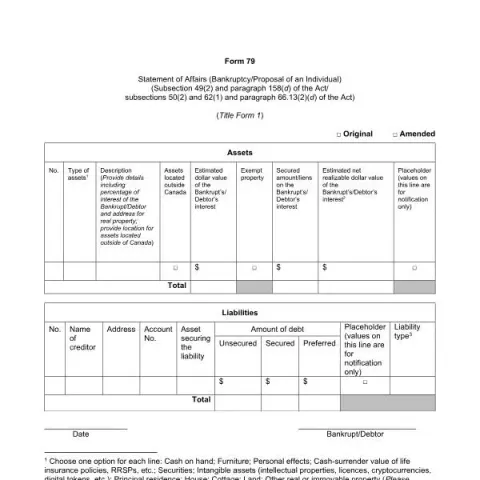
Understanding Form 79: Statement of Affairs (Bankruptcy/Proposal of an Individual)
Form 79 is an official document issued by the Office of the Superintendent of Bankruptcy Canada. It serves as a comprehensive declaration of an individual's financial situation when filing for bankruptcy or proposing a debt settlement plan under the Bankruptcy and Insolvency Act. This form is crucial for individuals seeking legal relief from debt and must be completed accurately and thoroughly to ensure proper processing by the trustee and the court.
Purpose and Scope of the Form
The primary objective of Form 79 is to provide a detailed snapshot of the debtor’s assets, liabilities, income, and expenses. It enables the trustee and the court to assess the debtor’s financial position, determine the viability of a proposal, and facilitate equitable distribution among creditors. The form covers a broad spectrum of financial information, including assets located both within and outside Canada, and details of previous insolvency proceedings.
Who Should Complete Form 79?
This form is mandatory for individuals who are declaring bankruptcy or submitting a proposal under the Bankruptcy and Insolvency Act. Debtors must fill out the form with precise details about their assets, liabilities, and personal circumstances. It is essential that the information provided is truthful and complete, as inaccuracies can lead to legal consequences or delays in the insolvency process.
Step-by-Step Procedure for Filling Out Form 79
1. Asset Disclosure
Begin by listing all assets owned at the time of filing. This includes tangible assets such as real estate, vehicles, and personal effects, as well as intangible assets like securities, intellectual property, and digital assets. For each asset, provide a detailed description, location (including outside Canada), and an estimated dollar value. Specify any exempt property and secured interests or liens.
2. Liabilities Listing
Next, itemize all debts owed to creditors. Include the creditor’s name, address, account number, and details of the asset securing the liability. Categorize each debt as unsecured or secured, and specify the amount owed. Common liabilities include mortgages, bank loans, credit card debts, taxes, and personal loans.
3. Personal and Financial Information
Provide your full name, date of birth, address, marital status, and details about your spouse or common-law partner if applicable. Include employment status, occupation, employer details, and the period of employment. Outline household composition, including the number of dependents and their ages.
4. Previous Financial Advice and Insolvency History
If you have received financial advice in the past six months, list the providers and amounts paid. Also, disclose any prior bankruptcy or proposals under the Act, including estate numbers, proceedings, and discharge dates.
5. Budget and Financial Planning
Attach Form 65 to provide a detailed budget, including income and expenses. This helps determine the debtor’s ability to propose a repayment plan or the necessity of bankruptcy.
Fill in your form directly online
No printing: type your details into the boxes of the official form, tick, then download the PDF ready to send.
- 1Type into the form boxes
- 2Tick in one click
- 3Save and download the PDF
Important Deadlines and Post-Filing Considerations
Once completed, Form 79 must be submitted to a Licensed Insolvency Trustee. It is essential to adhere to deadlines for filing and providing supplementary documents. After submission, the trustee reviews the information, and a meeting of creditors may be scheduled. The debtor must cooperate fully during this process, including providing additional documentation if requested.
Legal and Confidential Aspects
The information provided in Form 79 is confidential and used solely for insolvency proceedings. Accurate disclosure is mandated by law, and failure to do so can result in legal penalties or the dismissal of the insolvency process. The form’s completion is a critical step towards resolving debt issues legally and ethically.
Conclusion
Filling out Form 79 accurately is vital for individuals seeking bankruptcy protection or proposing a debt settlement plan in Canada. It ensures transparency and fairness in the insolvency process, ultimately facilitating a fresh financial start. If you are unsure about how to complete the form, consulting a Licensed Insolvency Trustee is highly recommended to ensure compliance with legal requirements and to protect your interests.