Understanding the Purpose of Form 78: Statement of Affairs (Corporate Bankruptcy/Proposal)
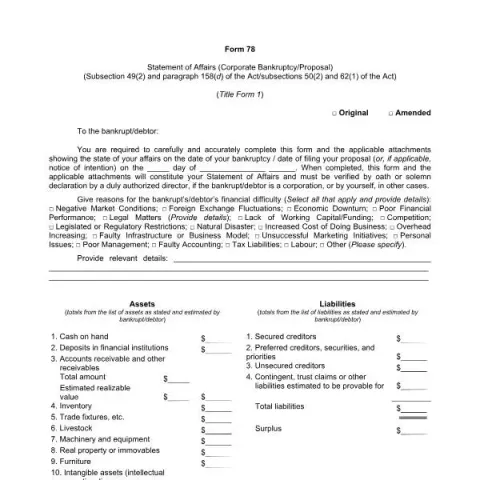
Form 78, officially titled Statement of Affairs (Corporate Bankruptcy/Proposal), is a critical document required by the Office of the Superintendent of Bankruptcy Canada. It serves as a comprehensive snapshot of a company's financial situation at the time of bankruptcy or when filing a proposal under the Bankruptcy and Insolvency Act. This form is essential for both the debtor and the bankruptcy trustee to assess the company's assets, liabilities, and overall financial health.
When and Why to Use Form 78
This form must be completed when a corporation or individual files for bankruptcy or proposes a restructuring plan. It provides a detailed account of assets and liabilities, reasons for financial difficulties, and the company's financial position as of the filing date. The form is used to:
- Facilitate the bankruptcy or proposal process by providing a clear financial overview.
- Assist the trustee and creditors in evaluating the company's assets and claims.
- Ensure transparency and compliance with legal requirements under the Bankruptcy and Insolvency Act.
Key Sections of Form 78 and Their Significance
Declaration and Filing Details
The form begins with instructions for the debtor to accurately complete and verify the information under oath or solemn declaration. It specifies the date of the filing and requires the debtor's or director’s signature, affirming the accuracy of the provided information.
Reasons for Financial Difficulties
The form requests the debtor to select all applicable reasons contributing to their financial trouble, such as economic downturn, poor management, legal issues, or market conditions. Providing detailed explanations helps creditors and trustees understand the context of the insolvency.
Assets and Their Valuation
The form requires a detailed listing of assets, including cash, receivables, inventory, real estate, machinery, intangible assets, and other property. Each asset must be estimated in terms of its total value and realizable value, which reflects the amount that could be obtained if sold.
| Asset Type | Estimated Value | Realizable Value |
|---|---|---|
| Cash on hand | $____ | $____ |
| Accounts receivable | $____ | $____ |
| Inventory | $____ | $____ |
| Real property | $____ | $____ |
| Machinery and equipment | $____ | $____ |
| Intangible assets | $____ | $____ |
Liabilities and Creditors
The form also calls for a detailed listing of liabilities, including secured, preferred, and unsecured creditors. Each creditor's name, address, nature of claim, and amount owed must be provided. It also distinguishes claims with priority rights, such as taxes or wages owed.
| Creditor Name | Type of Claim | Amount | Security |
|---|---|---|---|
| Creditor A | Unsecured | $____ | None |
| Creditor B | Secured | $____ | Mortgage |
| Creditor C | Priority (e.g., wages) | $____ | None |
How to Complete and Submit Form 78
Completing Form 78 requires careful attention to detail to ensure accuracy, as it forms the basis for the insolvency proceedings. Debtors or their authorized representatives must:
Fill in your form directly online
No printing: type your details into the boxes of the official form, tick, then download the PDF ready to send.
- 1Type into the form boxes
- 2Tick in one click
- 3Save and download the PDF
- Fill out all sections comprehensively, including reasons for financial difficulties, assets, and liabilities.
- Verify the information by signing under oath or solemn declaration, depending on the legal status of the filer.
- Attach supporting documents where necessary, such as appraisals or financial statements.
Transmission and Legal Considerations
The completed form must be filed with the Office of the Superintendent of Bankruptcy Canada, typically through the official electronic platform or by submitting physical copies where required. It is a legal document, and any false statements or omissions can have serious legal consequences, including penalties or charges of bankruptcy fraud.
Points of Attention and Practical Advice
- Accuracy is crucial: Ensure all asset valuations and creditor claims are current and supported by documentation.
- Complete all sections: Omitting information can delay proceedings or lead to legal complications.
- Consult a professional: It is advisable to work with a licensed insolvency trustee or legal advisor when preparing this form.
- Keep copies: Maintain copies of the completed form and attachments for your records.
In summary, Form 78 is a fundamental document in the Canadian insolvency process, providing a transparent view of a company's financial state at the time of bankruptcy or proposal. Proper completion and submission of this form are essential steps toward resolving financial difficulties and moving toward a structured resolution.