Understanding the Ontario Courts Form 17F: Confirmation of Conference
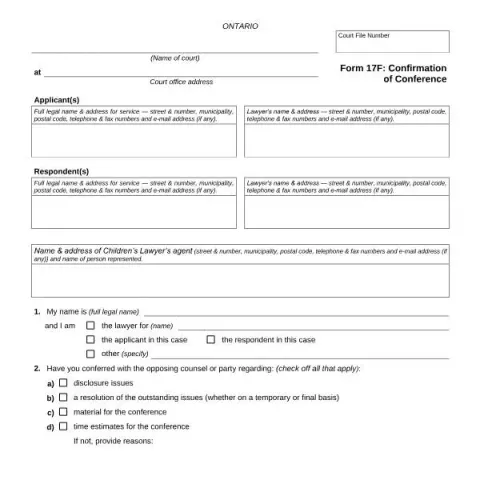
If you're involved in a family law case within Ontario, you may encounter the need to complete Form 17F, known as the Confirmation of Conference. This official document is a crucial part of the case management process, serving to confirm details about scheduled conferences, issues to be discussed, and the parties' preparations. Proper understanding and completion of this form can help ensure your case proceeds smoothly and in compliance with Ontario's Family Law Rules.
When and Why to Use Form 17F
Form 17F is used in the context of family law proceedings to confirm the details of a scheduled case conference, settlement conference, or trial management conference. It is typically filed by legal counsel or parties themselves before the conference date. The main purpose of this form is to provide the court with an update on the status of the case, including the issues to be addressed, the readiness of the parties, and any adjournments or special arrangements.
Filing this form is mandatory under the Family Law Rules, unless the court orders otherwise. It helps the court manage its docket efficiently and encourages parties to prepare adequately for their conference. Failure to file or update the form as required may result in costs or other court sanctions.
Key Sections and Information Required
Parties and Legal Representation
The form begins by identifying the parties involved, including the applicant(s) and respondent(s), along with their full legal names, addresses, and contact details. If legal counsel is involved, their names and contact information must also be provided. This ensures clarity about who is participating in the conference and who represents each side.
Details of the Conference
- Date and time: The scheduled date and time for the conference are recorded here.
- Case management judge: The name of the judge overseeing the case.
- Type of conference: Whether it is a settlement, trial management, or other conference.
- Adjournments or rescheduling: If the conference is postponed or rescheduled, reasons and new dates are specified.
Issues to Be Resolved
Parties must list the most important issues they expect to address during the conference. These could include custody arrangements, financial disclosures, or other substantive matters. Clearly identifying these issues helps the judge and parties focus their discussions and work toward resolution.
Preparation and Time Estimates
Parties are asked to estimate how much time they will need for the conference, both individually and collectively. This helps the court allocate appropriate time slots and manage its schedule efficiently.
Discussion of Costs and Additional Notes
The form includes a section where parties confirm whether they have discussed the issue of costs related to the case, which can be an important factor in settlement discussions. Parties are also required to update the form if circumstances change before the conference.
Fill in your form directly online
No printing: type your details into the boxes of the official form, tick, then download the PDF ready to send.
- 1Type into the form boxes
- 2Tick in one click
- 3Save and download the PDF
How to Complete and Submit the Form
Complete the form accurately, ensuring all relevant sections are filled out, especially the scheduled date, issues, and any adjournments. The form must be signed by the lawyer or party responsible for its submission. It is essential to deliver a copy of the completed form to the opposing party or their lawyer prior to submitting it to the court clerk. This can be done via email, fax, or other approved methods, as per the Family Law Rules.
Points of Attention and Practical Tips
- Timeliness: File and serve the form well before the conference date to avoid delays or sanctions.
- Accuracy: Keep the information current; if circumstances change, promptly update the form.
- Preparation: Use the form to clarify issues and prepare for productive discussions during the conference.
- Legal Assistance: If you are unsure about how to complete the form or the implications of certain entries, consider consulting legal counsel or legal aid services.
Conclusion
Form 17F is an essential tool in Ontario's family law proceedings, facilitating efficient case management and encouraging early resolution of issues. By understanding its purpose, completing it carefully, and adhering to filing requirements, parties can contribute to a smoother legal process and better outcomes for all involved.