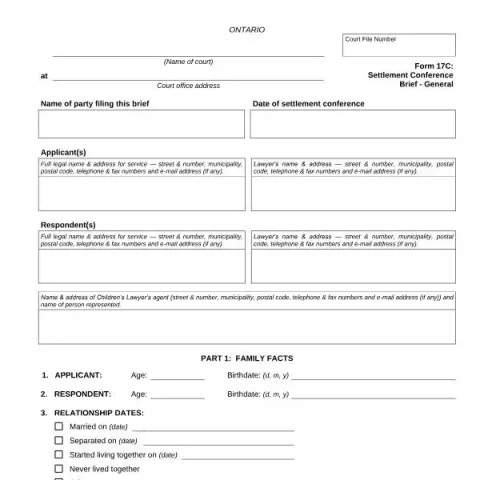
Understanding the Ontario Courts Form 17C: Settlement Conference Brief - General
If you are involved in a family law proceeding in Ontario, you may be required to prepare a Form 17C: Settlement Conference Brief - General. This official court document is essential for outlining the key facts, issues, and procedural details of your case prior to a settlement conference. Its purpose is to facilitate productive negotiations between parties and help the court understand the core matters at hand.
What is the Purpose of Form 17C?
The primary goal of the Form 17C is to provide the court with a comprehensive overview of the family dispute, including relevant facts, issues that are settled or unsettled, and procedural matters. It serves as a roadmap for the upcoming settlement conference, which aims to resolve or narrow down unresolved issues without the need for a full trial.
Who Should Fill Out the Form?
This form is typically completed by the party who has filed the case, often with assistance from legal counsel. Both applicants and respondents must provide detailed information, including personal details, family facts, issues in dispute, and procedural steps taken so far. Accurate and complete responses are crucial to ensure the court can effectively facilitate the settlement process.
Key Sections of Form 17C
Part 1: Family Facts
This section gathers basic information about the parties involved, including:
- The full legal names and contact details of the applicant and respondent.
- Details about any children involved, such as names, ages, and current living arrangements.
- Relationship history, including marriage and separation dates, and whether the parties ever cohabited.
Part 2: Issues
This part distinguishes between issues that have been settled and those that remain unresolved. It covers matters such as:
- Decision-making responsibility for children.
- Spousal support and child support amounts.
- Ownership of property, possession of the family home, and parenting time.
- Other issues like restraining orders or property equalization.
Particular attention is given to the financial details, including income information, which influences support calculations.
Part 3: Procedural Matters
This section addresses the procedural status of the case, including:
- Completion of parenting assessments or reports from experts.
- Disclosure of documents and witness questioning.
- Involvement of Children’s Lawyers and their positions.
- Compliance with automatic court orders and procedural deadlines.
It also allows parties to specify if any issues are urgent or if additional procedural orders are needed.
Filling Out the Form: Step-by-Step Guide
To complete the Form 17C, gather all relevant information and documents beforehand. Ensure accuracy in personal details, family facts, and financial information. When describing issues, be concise but thorough, highlighting what has been resolved and what remains contested. Attach any supporting reports or valuations not already filed in the court record.
Fill in your form directly online
No printing: type your details into the boxes of the official form, tick, then download the PDF ready to send.
- 1Type into the form boxes
- 2Tick in one click
- 3Save and download the PDF
Important Deadlines and Submission
The form must be filed before the scheduled settlement conference date. It is advisable to submit the completed form well in advance to allow the court and the opposing party sufficient time to review the information. Check with the court registry for specific filing procedures and deadlines.
After Filing the Form
Once submitted, the Form 17C becomes part of the court record and guides the settlement conference process. It helps the judge or master facilitate negotiations and may influence the scope of issues addressed during the conference. If parties reach agreements or resolve issues, these can be formalized through court orders or written agreements, which should be filed accordingly.
In summary, the Form 17C is a vital tool in Ontario family law proceedings that promotes transparency, efficiency, and settlement. Proper completion ensures that the court has a clear understanding of the case, paving the way for meaningful resolution without unnecessary trial delays.