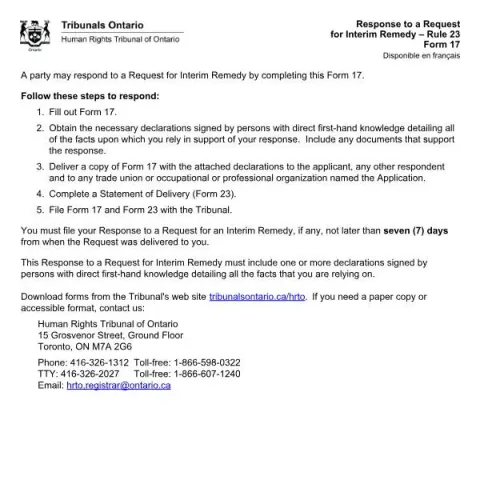
Understanding the Response to a Request for Interim Remedy – Rule 23 (Form 17) of the Human Rights Tribunal of Ontario
If you are involved in a human rights case before the Human Rights Tribunal of Ontario (HRTO), you may encounter situations where one party requests an interim remedy under Rule 23. This request aims to prevent harm or preserve rights while the main case is ongoing. As a respondent, you have the opportunity to respond to this request by completing and submitting Form 17, titled "Response to a Request for Interim Remedy." This article explains the purpose of the form, the eligibility criteria, and the step-by-step process to prepare and file your response effectively.
Purpose and Scope of Form 17
Form 17 is a formal legal document that allows a respondent to present their position regarding an interim remedy requested by the applicant. An interim remedy might include actions such as orders to prevent discrimination, harassment, or other ongoing harm. The form provides a structured way to respond to allegations, present supporting facts, and argue whether granting or denying the interim relief is appropriate.
The form is designed to ensure that the Tribunal has all relevant information to make an informed decision about whether the requested interim remedy should be granted. It is essential to submit a comprehensive and timely response, as the Tribunal requires responses within seven (7) days of receiving the request.
Eligibility and Conditions for Filing
Any party involved in a human rights application before the HRTO can file a response using Form 17. This includes respondents, who could be individuals, organizations, or government bodies named in the application. To be eligible, you must have received the request for an interim remedy and be prepared to provide supporting declarations and documents.
It is important to note that the response must be filed within the specified deadline—seven days from the date the request was delivered to you. Failure to respond within this timeframe may result in the Tribunal making a decision without your input, potentially affecting your rights or interests.
Step-by-Step Guide to Completing the Form
- Obtain the Form: Download Form 17 from the Tribunal's website or request a paper or accessible copy by contacting the HRTO at the provided contact details.
- Fill Out Basic Information: Provide your contact details, including your name, organization (if applicable), address, phone numbers, and email. If you are acting as a representative, specify the party you represent.
- Consent to the Request: Indicate whether you consent to the interim remedy requested by checking "Yes" or "No."
- Attach Supporting Declarations: Prepare declarations signed by persons with direct, first-hand knowledge of the facts supporting your response. These declarations are crucial and should detail all relevant facts and evidence.
- Respond to the Applicant’s Claims: Address each aspect of the applicant’s request, including the merits of their application, the potential harm if the remedy is denied, and whether the balance of harm favors granting the relief.
- Position on the Request: Clearly state your position regarding whether granting the interim remedy is just and appropriate under the circumstances.
- Sign and Date: Complete the form by signing (or typing your name if submitting electronically) and dating it to certify the accuracy and completeness of your response.
Submitting Your Response
Once completed, you must deliver the original Form 17 along with all supporting declarations to the applicant, any other respondent, and any relevant trade union or professional organization named in the application. Additionally, you need to complete and submit a Statement of Delivery (Form 23) to the Tribunal.
All documents should be filed within the seven-day deadline. You can submit your response via mail, email, or fax, depending on what is most suitable. Ensure you keep copies of everything submitted for your records.
Fill in your form directly online
No printing: type your details into the boxes of the official form, tick, then download the PDF ready to send.
- 1Type into the form boxes
- 2Tick in one click
- 3Save and download the PDF
After Filing
Following submission, the Tribunal will review your response and supporting documents. The Tribunal may schedule a hearing or make a decision based on the written submissions. It is advisable to stay informed of any further procedural steps or deadlines communicated by the HRTO.
Responding effectively to a request for an interim remedy is vital to protecting your rights and interests during the human rights process. Carefully preparing your response with relevant facts and supporting evidence will help the Tribunal make a fair and informed decision.