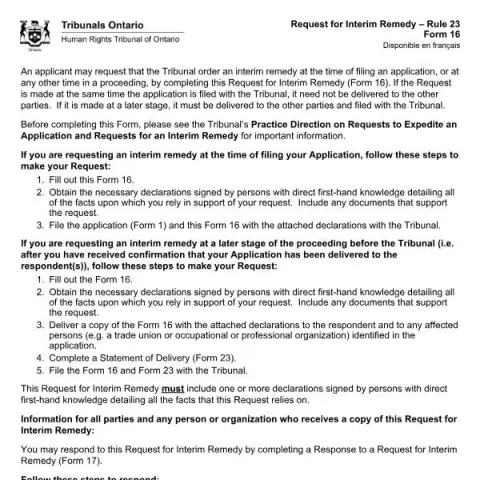
Understanding the Request for Interim Remedy – Rule 23 (Form 16) of the Human Rights Tribunal of Ontario
If you are involved in a human rights dispute before the Human Rights Tribunal of Ontario (HRTO), you may find yourself in a situation where urgent action is necessary to prevent irreparable harm. The Request for Interim Remedy (Form 16) provides a formal process to seek such urgent relief during your case. This article explains when and how to use this form, what information it requires, and key points to consider to ensure your request is properly prepared and submitted.
When to Use the Request for Interim Remedy
The Form 16 is designed for applicants who believe that immediate intervention by the Tribunal is necessary to prevent significant harm or to preserve the status quo while their case is ongoing. You can file this request either at the time of submitting your initial application or at any later stage of the proceeding. The timing depends on when you recognize the need for urgent relief.
If your request is made concurrently with your application, it does not need to be served on the respondents. However, if you submit it later, you must serve a copy of the form and supporting declarations on all respondents and affected parties, then file the original with the Tribunal, along with a formal Statement of Delivery.
Key Components of the Form 16
1. Filing Details and Parties Involved
The form requires basic information including:
- Your contact details (name, address, phone numbers, email)
- The Tribunal file number assigned to your case
- The names of all respondents and any relevant organizations
2. Description of the Requested Interim Remedy
You must clearly describe the specific relief you are seeking. This could include orders to prevent certain actions, require specific conduct, or preserve evidence. The description should be detailed enough to inform the Tribunal and other parties of the urgency and nature of your request.
3. Supporting Facts and Evidence
This section is crucial. You must attach declarations signed by persons with direct, first-hand knowledge of the facts supporting your request. These declarations serve as sworn statements that underpin the urgency and necessity of the interim remedy. Supporting documents can also be included to strengthen your case.
4. Legal and Factual Arguments
Explain why your application has merit and why granting the interim remedy is justified. You should outline the potential harm if relief is not granted and why the balance of harms favors your request. Additionally, articulate why it is just and appropriate for the Tribunal to intervene at this stage.
Fill in your form directly online
No printing: type your details into the boxes of the official form, tick, then download the PDF ready to send.
- 1Type into the form boxes
- 2Tick in one click
- 3Save and download the PDF
Steps to Submit the Request
At the Time of Application
- Complete the Form 16 with all required details.
- Gather and sign declarations from witnesses with firsthand knowledge.
- File the completed form and declarations with the Tribunal, along with your initial application (Form 1).
At a Later Stage of the Proceeding
- Fill out the Form 16.
- Obtain signed declarations supporting your request.
- Serve copies of the form and declarations on respondents and affected parties.
- Complete and submit a Statement of Delivery (Form 23) to confirm service.
- File the original Form 16 and Form 23 with the Tribunal.
Responding to an Interim Remedy Request
If you are on the receiving end of a request for interim relief, you have seven days from the date of service to respond using the Response to a Request for Interim Remedy (Form 17). Your response must include supporting declarations and documents, and be filed with the Tribunal along with a Statement of Delivery.
Important Tips for Success
- Be precise and thorough: Clearly describe the urgent harm and your supporting facts.
- Use credible evidence: Attach signed declarations from witnesses with direct knowledge.
- Follow procedural steps: Serve copies correctly and file all required forms promptly.
- Consult the Practice Direction: Review the Tribunal’s guidelines on requests to expedite or for interim remedies to ensure compliance.
In summary, the Request for Interim Remedy (Form 16) is a vital tool for applicants needing urgent intervention in human rights cases. Proper preparation, timely filing, and detailed supporting evidence are essential to increase your chances of success in obtaining the relief you seek.