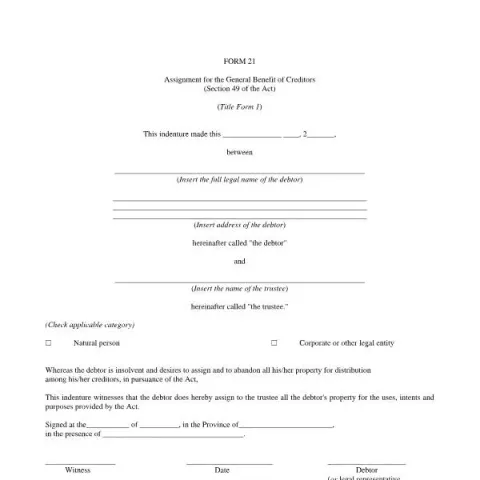
Understanding the Purpose of Form 21: Assignment for the General Benefit of Creditors
The Form 21, known as the Assignment for the General Benefit of Creditors, is an official legal document issued by the Office of the Superintendent of Bankruptcy Canada. It is used in insolvency proceedings when a debtor (either an individual or a corporation) is unable to meet their financial obligations and wishes to voluntarily assign all their property to a trustee for distribution among creditors.
This form serves as a formal declaration of the debtor's intent to relinquish ownership of their assets to facilitate an equitable distribution process. It is a key step in the insolvency process under the Bankruptcy and Insolvency Act, allowing creditors to recover a portion of what they are owed through the administration of the debtor’s property.
Who Should Complete Form 21?
Form 21 must be filled out and signed by the debtor—whether an individual or a corporate entity—who is insolvent and seeking to initiate a formal assignment for the benefit of creditors. This form is typically prepared and submitted when the debtor has determined that they cannot pay their debts and wishes to proceed voluntarily with the insolvency process.
If the debtor is a corporation, the form requires an attached certified copy of the resolution passed by the board of directors authorizing the assignment. In cases where the debtor is deceased, a court order confirming the insolvency or appointment of a trustee must be attached.
How to Complete Form 21
Completing Form 21 involves several key steps to ensure all legal requirements are met:
- Enter the date of the assignment at the top of the form.
- Provide the full legal name and address of the debtor. For individuals, this is their full name and residential address; for corporations, the registered business name and address.
- Identify the trustee who will manage the estate and distribute assets among creditors. The trustee's full legal name must be included.
- Indicate the category of debtor, either a natural person or a legal entity.
- Sign the document in the presence of a witness, including the date and location of signing.
For corporate debtors, ensure that the resolution authorizing the assignment is attached. For deceased debtors, include the relevant court order. If the form is submitted electronically, the sender's contact details must be included as per the instructions.
What Documents Must Be Attached?
Supporting documentation is essential for the validity of Form 21. These include:
- A certified copy of the resolution of the board of directors (for corporations).
- A court order confirming insolvency or appointment of a trustee (if applicable).
- Any other relevant legal documents that substantiate the debtor’s insolvency status and authority to assign property.
Where and How to Submit the Form
Form 21 must be filed with the Office of the Superintendent of Bankruptcy Canada. Submission can be made in person, by mail, or through electronic means as prescribed by the Office. It is important to ensure that all supporting documents are included and that the form is correctly completed to prevent delays.
Fill in your form directly online
No printing: type your details into the boxes of the official form, tick, then download the PDF ready to send.
- 1Type into the form boxes
- 2Tick in one click
- 3Save and download the PDF
Upon receipt, the Office reviews the documentation, and if everything is in order, the assignment is officially registered. The trustee then takes over the management of the debtor's property for distribution among creditors.
Common Errors to Avoid When Filling Out Form 21
- Incomplete or incorrect debtor information: Ensure the name and address match official records.
- Omitting required attachments: Always include the necessary resolutions or court orders.
- Signature issues: The form must be signed by the debtor or legal representative, with a witness present.
- Submitting an outdated or unsigned form: Verify all details and signatures before submission.
By carefully completing and submitting Form 21, debtors facilitate a transparent and lawful process for the distribution of their assets, ultimately helping to resolve insolvency issues in accordance with Canadian bankruptcy law.