Understanding the "Statement of Claim (General)" Form under the Courts of Justice Act
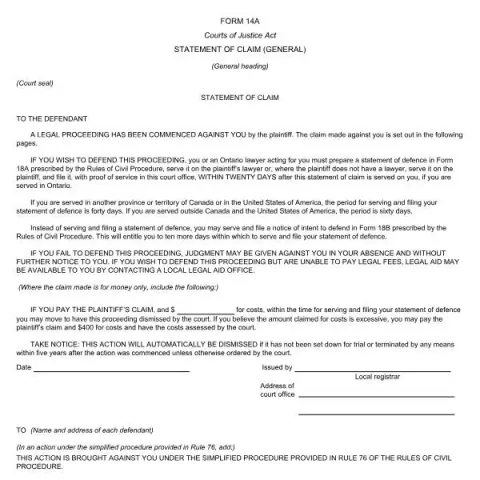
The Statement of Claim (General) form, identified by the code RCP-14A-E, is a fundamental document used in civil legal proceedings within Ontario courts. This official form, issued under the Courts of Justice Act, serves as the initial step in initiating a lawsuit against a defendant. Its primary purpose is to outline the plaintiff’s allegations and the relief they seek from the court.
Who Needs to Fill Out the Statement of Claim?
This form must be completed and filed by the plaintiff, the party initiating the legal action. It is essential for anyone seeking to enforce a right or claim damages through the Ontario court system. Whether you are an individual, a corporation, or an organization, the Statement of Claim provides a structured way to present your case officially to the court.
How to Complete the Form
1. Identifying Information
Begin by filling out the heading, including the court seal, and specify the name and address of the plaintiff and defendant. Ensure that all names are accurate and current, as this information is crucial for proper service and court records.
2. Statement of the Claim
Clearly state the relief you are seeking from the court in the section labeled "Claim." This could include damages, specific performance, or other remedies. Follow with numbered paragraphs that detail the material facts supporting your claim. Each paragraph should be concise, factual, and relevant to the case.
3. Service Details
Indicate how and where the claim will be served, especially if serving outside Ontario. The form allows for specific provisions under Rule 17 if service is to be made outside the province without a court order.
4. Date and Signature
Finally, include the date of issue and the contact details of the lawyer or plaintiff responsible for the claim. This ensures accountability and provides a point of contact for any subsequent correspondence.
Supporting Documents and Filing Procedures
Along with the Statement of Claim, you may need to attach relevant documents that support your allegations, such as contracts, receipts, or correspondence. These should be clearly referenced in your claim and submitted as part of the court record.
Once completed, the form must be filed at the appropriate court office in Ontario. Filing can often be done in person or through authorized electronic platforms, depending on the court’s procedures. Be aware of the applicable deadlines for service and filing:
Fill in your form directly online
No printing: type your details into the boxes of the official form, tick, then download the PDF ready to send.
- 1Type into the form boxes
- 2Tick in one click
- 3Save and download the PDF
- Within 20 days if served in Ontario
- Within 40 days if served in another Canadian province or the United States
- Within 60 days if served outside Canada and the U.S.
Common Mistakes to Avoid
When filling out the Statement of Claim, watch out for typical errors such as:
- Vague or inaccurate descriptions of facts or relief sought
- Omitting necessary details or supporting documents
- Incorrect service addresses or failure to comply with service deadlines
- Failure to sign or date the form properly
Next Steps After Filing
After filing, the defendant will be served with a copy of the Statement of Claim. They then have a specified period to respond with a Statement of Defence, typically within twenty days if served in Ontario. If they choose not to defend, a default judgment may be entered against them.
In summary, the Statement of Claim (General) form is a vital document that initiates civil proceedings in Ontario. Proper completion, timely filing, and adherence to service rules are essential to ensure your case proceeds smoothly through the legal system.