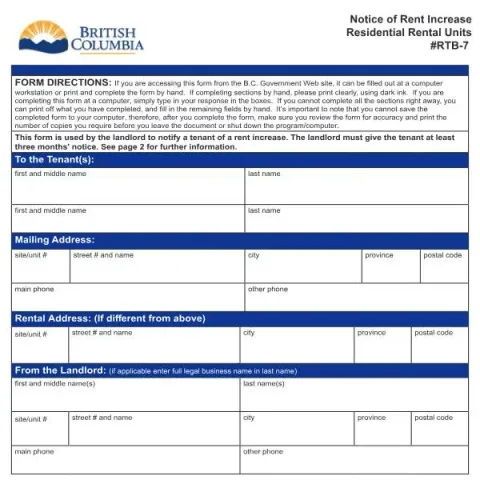
Understanding the Notice of Rent Increase for Residential Rental Units in British Columbia
If you are a landlord or a tenant in British Columbia, you may encounter the Notice of Rent Increase form issued by the Residential Tenancy Branch. This official document, identified as RTB-7, is essential for legally notifying tenants of upcoming rent adjustments. Knowing how to properly complete, serve, and interpret this form ensures compliance with the Residential Tenancy Act (RTA) and helps prevent disputes.
When and Why to Use the Notice of Rent Increase
This form is used exclusively by landlords to inform tenants of a planned rent increase. According to the RTA, landlords can only raise rent once every 12 months for an existing tenancy, and only after the rent has been in effect for at least a year. The notice must be provided in writing at least three full months before the increase takes effect. For example, if a rent increase is to start on May 1, the notice must be given by February 28 or earlier.
It is important to note that rent increases must adhere to the limits set by the Residential Tenancy Regulation. If a landlord attempts to increase rent beyond the allowable amount, tenants can seek dispute resolution through the Residential Tenancy Branch.
Key Sections of the Form and Their Purpose
Tenant and Landlord Information
The form requires detailed contact information for both parties:
- Tenant(s): Full names, mailing address, and contact numbers.
- Rental Address: The physical address of the rental unit, which may differ from the mailing address.
- Landlord: Full legal name or business name, along with contact details.
Details of the Rent Increase
This section captures the history and specifics of the rent adjustment:
- Last rent increase date or initial rent establishment date.
- Current rent amount, specified in weekly, monthly, or other terms.
- The amount of the proposed increase, again in the appropriate time frame.
- The new rent amount and the date it will become payable.
Legal Declarations and Signatures
The landlord must certify that the information provided is accurate by signing and dating the form. This declaration affirms the landlord’s compliance with the legal requirements for notifying tenants of rent increases.
How to Properly Serve the Notice
The RTA mandates that the landlord serve the notice at least three months before the increase begins. Acceptable methods include personal delivery or mailing. If mailed, the notice is deemed received five days after mailing, so the timing of mailing is critical to ensure the increase starts on the intended date.
For example, to have the rent increase effective on May 1, the notice should be mailed on or before April 26. It is advisable to keep records of how and when the notice was served, as proof of delivery may be required in case of disputes.
Fill in your form directly online
No printing: type your details into the boxes of the official form, tick, then download the PDF ready to send.
- 1Type into the form boxes
- 2Tick in one click
- 3Save and download the PDF
Important Considerations and Tips
- Accuracy: Fill out all sections clearly and accurately, whether completing the form electronically or by hand using dark ink.
- Timeliness: Ensure the notice is given at least three full months prior to the effective date of the rent increase.
- Legal Limits: Confirm that the proposed rent increase complies with the allowable amount under the Residential Tenancy Regulation.
- Record Keeping: Maintain copies of the completed notice and proof of service for your records.
Additional Resources and Contact Information
For questions about completing this form or the rent increase process, landlords and tenants can contact the Residential Tenancy Branch at the following:
- Phone: 604-660-1020 in Greater Vancouver; 250-387-1602 in Victoria; 1-800-665-8779 elsewhere in BC.
- Email: [email protected] (note that evidence cannot be submitted via email).
- Website: www.gov.bc.ca/landlordtenant
In-person services are available at the Lower Mainland location or Service BC offices outside the Lower Mainland. Remember, following the proper procedures helps ensure that rent increases are lawful and enforceable, avoiding unnecessary disputes or legal issues.