Understanding the "Notice of Rent Increase — Unit Partially Exempt" (Form N2)
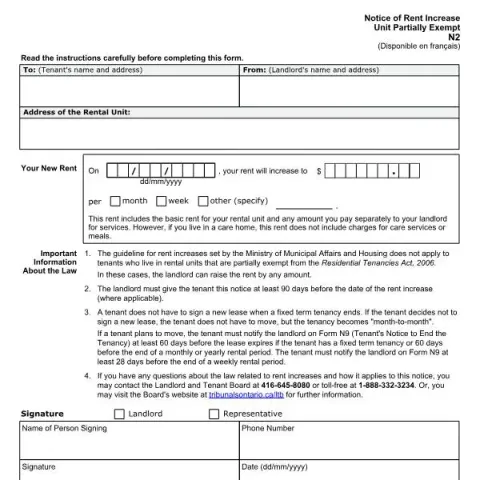
If you are a tenant in Ontario and receive a "Notice of Rent Increase — Unit Partially Exempt" (Form N2), it's important to understand what this document means, your rights, and the procedures involved. This official form is used by landlords to notify tenants about rent increases in specific situations where the Residential Tenancies Act, 2006, does not limit the amount of rent increase due to partial exemption. Here’s a comprehensive guide to help you interpret and respond to this notice.
Purpose of the Form
The primary goal of the Form N2 is to inform tenants of an upcoming rent increase in units that are partially exempt from the rent regulation guidelines set by the Ministry of Municipal Affairs and Housing. Unlike typical rent increases, which are subject to caps and guidelines, landlords of these exempt units can raise rent by any amount. This form ensures tenants are officially notified at least 90 days before the increase takes effect, complying with legal requirements.
Key Information Provided by the Notice
Details of the Rent Increase
- Tenant's Name and Address: The notice specifies the tenant's details and the rental unit's address.
- Effective Date: The date when the new rent will begin, formatted as dd/mm/yyyy.
- New Rent Amount: The updated rent amount, which may be specified as monthly, weekly, or other periods.
What the Rent Includes
The rent outlined in the notice includes the basic rent and any separate charges paid for services. However, if the tenant resides in a care home, charges for care services or meals are not included in this rent.
Legal Context and Tenant Rights
When the Rent Guideline Does Not Apply
This form applies when the rental unit is partially exempt from the Residential Tenancies Act, 2006. In such cases, the landlord is not bound by the rent increase guidelines, and they may raise the rent by any amount. It is crucial for tenants to recognize that this exemption could lead to significant increases without the usual restrictions.
Notice Period and Timing
The landlord must provide this notice at least 90 days before the rent increase takes effect. This advance notice allows tenants to prepare financially or consider other options.
Lease and Moving Rights
- End of Fixed-Term Tenancy: Tenants are not required to sign a new lease at the end of a fixed-term agreement. If they choose not to, the tenancy transitions to a month-to-month arrangement.
- Moving Notices: If tenants plan to move, they must notify the landlord using Form N9 (Tenant’s Notice to End the Tenancy) within specific timeframes depending on their rental period.
Responding to the Notice
Review and Verify
Carefully check the details of the rent increase, effective date, and the unit address. If you believe the increase is incorrect or if you have questions about your rights, contact the Landlord and Tenant Board (LTB) at 416-645-8080 or toll-free at 1-888-332-3234. You can also visit their website at tribunalsontario.ca/ltb for more information.
Fill in your form directly online
No printing: type your details into the boxes of the official form, tick, then download the PDF ready to send.
- 1Type into the form boxes
- 2Tick in one click
- 3Save and download the PDF
Taking Action
- If you agree with the increase, no action is needed other than preparing for the new rent amount starting on the specified date.
- If you wish to dispute the increase or need legal advice, consider seeking assistance from tenant advocacy groups or legal clinics.
Signature and Contact Information
The notice is signed by the landlord or their authorized representative, including their contact details such as name, phone number, and mailing address. This ensures transparency and accountability in the communication process.
Conclusion
Receiving a Form N2 can be concerning, especially when rent increases are not regulated. However, understanding your rights and the legal context helps you make informed decisions. Always review the notice carefully, verify the details, and seek assistance if needed to ensure your tenancy rights are protected.