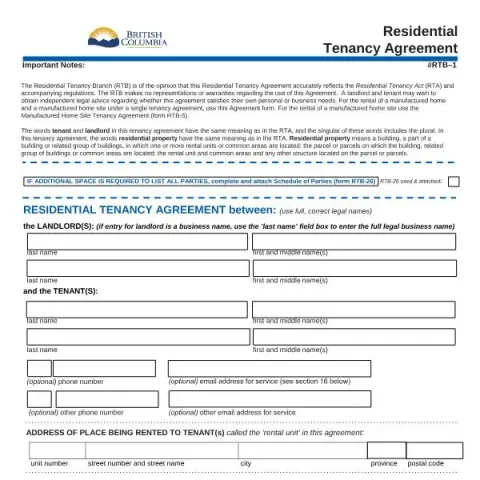
Understanding the Residential Tenancy Agreement (Form RTB-1) in Canada
The Residential Tenancy Agreement, known as form RTB-1, is a crucial document used in Canada’s housing sector to formalize the relationship between landlords and tenants. Managed by the Residential Tenancy Branch (RTB), this agreement ensures that both parties understand their rights and obligations under the Residential Tenancy Act (RTA). Whether you are renting a residential property or preparing to become a landlord, understanding this form is essential for a smooth tenancy experience.
Objectives of the RTB-1 Form
The primary purpose of the RTB-1 is to create a clear, legally binding record of the terms agreed upon by both parties at the start of a tenancy. It specifies details such as the rental property, rent amount, payment schedule, and the duration of the agreement. This helps prevent disputes by establishing transparent expectations from the outset.
The RTB-1 also reflects the requirements of the Residential Tenancy Act and accompanying regulations, ensuring compliance with provincial legal standards. While the RTB provides this template, it is recommended that both landlords and tenants seek independent legal advice to confirm that the agreement suits their specific needs.
Preparing Your Residential Tenancy Agreement
Gathering Necessary Information
Before filling out the RTB-1, ensure you have all relevant details at hand:
- Legal names of the landlord(s) and tenant(s)
- Full address of the rental property and service address for the landlord or agent
- Start date and duration of the tenancy (fixed term or periodic)
- Agreed rent amount and payment schedule
- List of included utilities and services (e.g., water, electricity, internet)
Completing the Form
The RTB-1 form is divided into sections that cover all essential elements of the tenancy:
- Parties involved: Full legal names of landlord(s) and tenant(s), including contact information.
- Rental property details: Complete address, unit number, and service address.
- Start and end dates: Specify whether the tenancy is ongoing (month-to-month) or fixed-term.
- Rent specifics: Amount payable, due date, and included utilities or amenities.
- Additional terms: Any special conditions, rules, or notices relevant to the tenancy.
Submitting and Filing the Agreement
The RTB-1 can be submitted either in person or online through the official digital platform of the Residential Tenancy Branch. When submitting online, ensure all sections are completed accurately and that both parties keep copies for their records.
It is advisable for both landlord and tenant to sign and date the agreement to acknowledge their understanding and acceptance of the terms. Keep copies of the signed agreement in a safe place, as it may be needed for future reference or in case of disputes.
Follow-Up and Managing Your Tenancy
Monitoring Changes and Updates
Any modifications to the original agreement, such as rent increases or changes in utility services, must be made in writing and initialed by both parties. This helps maintain clarity and legal enforceability.
Fill in your form directly online
No printing: type your details into the boxes of the official form, tick, then download the PDF ready to send.
- 1Type into the form boxes
- 2Tick in one click
- 3Save and download the PDF
Dispute Resolution
If disagreements arise, the RTB offers resources and processes for resolving tenancy disputes. Both parties should refer to the Residential Tenancy Act and consult the RTB’s guidelines or contact their local office for assistance.
Useful Contacts and Resources
- Residential Tenancy Branch (RTB): For forms, guidelines, and dispute resolution
- Legal advice services: For personalized legal support regarding tenancy agreements
- Local housing authorities: For additional information on tenant rights and responsibilities
In summary, the RTB-1 Residential Tenancy Agreement is a vital document that helps establish a clear legal framework for renting residential properties in Canada. Properly completing and understanding this form ensures a fair and transparent relationship between landlords and tenants, fostering a positive rental experience.