Understanding the Landlord and Tenant Board's N1 Notice of Rent Increase in Ontario
If you are a tenant or a landlord in Ontario, understanding the Notice of Rent Increase (Form N1) is essential for ensuring compliance with the Residential Tenancies Act, 2006. This official document serves as the formal notification from a landlord to a tenant about upcoming rent adjustments. It provides clarity on when and how rent increases can be communicated and what legal rules govern these changes.
When Should the N1 Notice Be Used?
The N1 form is used by landlords to inform tenants of a rent increase. According to Ontario law, landlords must give this notice at least 90 days prior to the proposed increase date. This period allows tenants sufficient time to understand the change and prepare accordingly.
Rent increases can only occur if:
- At least 12 months have passed since the last rent increase or since the tenant moved in.
- The increase does not exceed the rent increase guideline set annually by the Ontario government, unless an exception applies.
It is important to note that if both parties agree to a rent increase above the guideline, they can sign an agreement using the Form N10. Otherwise, the landlord must follow the legal procedures outlined here.
Key Information Included in the N1 Form
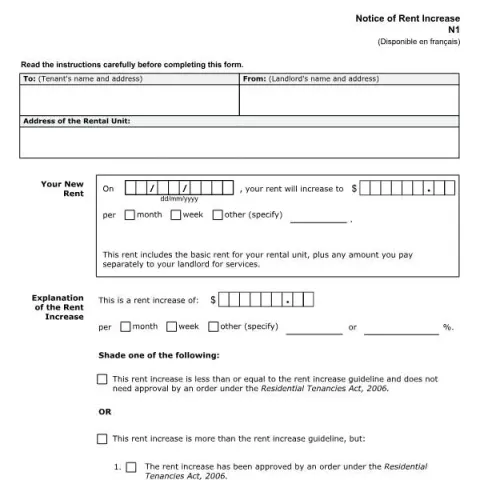
Details of the Rent Increase
- Effective Date: The date when the new rent amount will start.
- New Rent Amount: The adjusted rent, specified in dollars or percentage.
- Type of Increase: Whether the increase is a fixed dollar amount or a percentage.
Explanation of the Increase
The form clarifies whether the rent increase is within the Ontario rent increase guideline or exceeds it. It also indicates whether the increase has been approved by the Landlord and Tenant Board or if an application has been made for an above-guideline increase.
Legal Considerations and Tenant Rights
Ontario law stipulates several important points regarding rent increases:
- The landlord must provide this notice at least 90 days before the increase takes effect.
- Rent can only be increased if at least 12 months have passed since the last increase or since the tenant moved in.
- If the rent increase exceeds the guideline, the landlord must seek approval from the Landlord and Tenant Board, and the tenant is not obligated to pay more than the guideline amount until approval is granted.
- Tenants are not required to sign a new lease at the end of a fixed-term tenancy; if they choose not to, the tenancy continues on a month-to-month basis.
- Tenants planning to move must provide notice using Form N9 at least 60 days before the lease ends or before the end of a rental period, depending on the tenancy type.
How to Transmit the Notice
The N1 form can be delivered to the tenant in person, by mail, or through other legally accepted methods. It is advisable to keep proof of delivery, such as a signed acknowledgment or mailing receipt, to demonstrate compliance with legal requirements.
Fill in your form directly online
No printing: type your details into the boxes of the official form, tick, then download the PDF ready to send.
- 1Type into the form boxes
- 2Tick in one click
- 3Save and download the PDF
Points of Attention and Practical Tips
- Timing: Ensure the notice is sent at least 90 days before the proposed increase date.
- Accuracy: Double-check the new rent amount, effective date, and explanations provided.
- Legal Limits: Confirm whether the increase is within the guideline or if an application for above-guideline increase has been filed.
- Communication: Clear and timely communication helps prevent disputes and misunderstandings.
Additional Resources and Support
If you have questions about how rent increases work under Ontario law, you can contact the Landlord and Tenant Board at 416-645-8080 or toll-free at 1-888-332-3234. The Board’s website, tribunalsontario.ca/ltb, also offers detailed information and guidance on rent increase procedures and tenant rights.
Understanding your rights and obligations related to rent increases ensures a smooth and lawful rental process, whether you are a landlord or a tenant in Ontario.