Understanding the "Tenant Agreement to Pay Directly for Electricity Costs" Form in Ontario
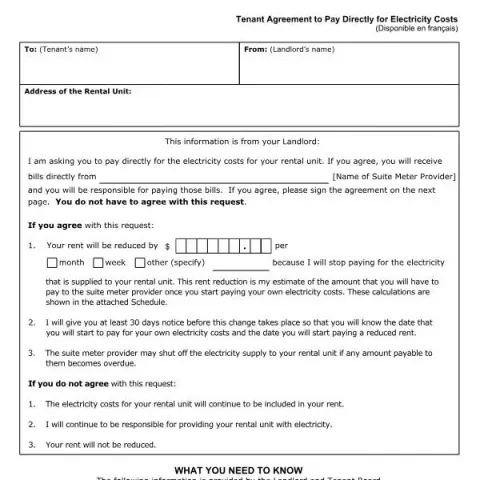
The "Tenant Agreement to Pay Directly for Electricity Costs" is an official form issued by the Landlord and Tenant Board in Ontario. This document facilitates a clear understanding between landlords and tenants regarding the payment responsibilities for electricity in rental units. It is particularly relevant in situations where the landlord proposes shifting the electricity payment obligation directly onto the tenant.
When Should You Use This Form?
This form is typically used when a landlord wishes to have tenants pay their electricity bills directly to the utility provider rather than including electricity costs in the rent. It is a voluntary agreement, meaning tenants are not obliged to sign it. The form is especially useful in cases where:
- The rental unit has a separate meter for electricity, allowing individual billing.
- The landlord wants to avoid the administrative burden of paying electricity bills on behalf of tenants.
- Tenants prefer to manage their electricity usage and payments independently.
Key Elements of the Form
Parties Involved and Property Details
The form begins by identifying the tenant and landlord, including their names and the address of the rental unit. This ensures clarity about who is involved and which property is affected.
Agreement to Pay Electricity Costs
The core of the document states that the tenant agrees to pay the electricity costs directly to the suite meter provider, such as a local utility company. The landlord indicates that, upon agreement, the rent will be reduced by an estimated amount to reflect the electricity costs that the tenant will now cover. This reduction is based on the landlord's estimate, which is detailed in an attached schedule.
Notice Period and Payment Responsibilities
The landlord commits to providing at least 30 days’ notice before the change takes effect, giving tenants sufficient time to prepare for the new payment arrangement. The form also notes that if the tenant does not agree, the landlord will continue to include electricity in the rent and be responsible for paying the utility bills.
Legal and Practical Considerations
It is important to understand that the suite meter provider may disconnect electricity if payments are overdue. Additionally, the landlord must provide tenants with contact information for the utility provider and details about any fees, deposits, or potential increases related to the separate billing arrangement.
Points of Attention and Advice
Before signing this agreement, tenants should carefully review the estimated rent reduction and the attached schedule, which details past electricity use and potential costs. It’s advisable to verify the accuracy of these estimates and understand that actual costs may vary. If tenants are unsure, consulting with a legal advisor or tenant support organization can be beneficial.
Tenants should also be aware that signing the form is voluntary. If they choose not to sign, the landlord must continue to include electricity costs in the rent and manage the utility payments themselves.
Fill in your form directly online
No printing: type your details into the boxes of the official form, tick, then download the PDF ready to send.
- 1Type into the form boxes
- 2Tick in one click
- 3Save and download the PDF
How to Complete and Submit the Form
Tenants must sign and date the agreement if they consent to paying their electricity directly. Multiple tenants occupying the same unit should all sign the form. It is recommended to keep a copy for personal records. The landlord is responsible for providing the tenant with a copy of the signed agreement and any related schedules.
Additional Details in the Schedule
The attached Schedule A allows landlords to calculate a rent reduction based on actual past electricity usage. This involves detailed calculations of electricity costs over the previous 12 months, considering periods when the unit was vacant, and estimating future costs accordingly. Accurate record-keeping and honest reporting are essential for fair calculations.
In summary, this form provides a structured way for landlords and tenants in Ontario to agree on a clear division of electricity costs, promoting transparency and avoiding potential disputes over utility payments.