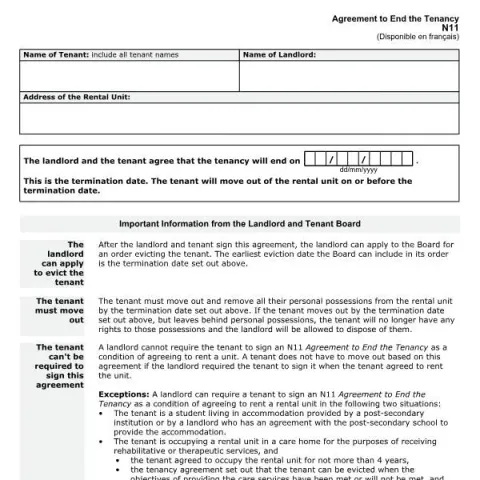
Understanding the N11 Form: Agreement to End the Tenancy in Ontario
The Agreement to End the Tenancy, known by its form code N11, is an official document used in Ontario's housing sector, managed by the Landlord and Tenant Board (LTB). This form facilitates a mutual understanding between landlords and tenants when ending a tenancy. Whether you are a landlord seeking to legally terminate a rental agreement or a tenant planning to move out, understanding how to properly complete and use this form is essential to ensure your rights are protected and the process complies with Ontario’s tenancy laws.
What is the Purpose of the N11 Form?
The N11 form serves as a formal, written agreement confirming that both parties agree to end the tenancy on a specified date. It acts as a legal record that the tenant will vacate the rental unit by the agreed-upon date, and it allows the landlord to apply to the Landlord and Tenant Board for an eviction order based on this mutual agreement. Importantly, this form is not a one-sided eviction notice but a consensual document that both parties sign voluntarily.
Who Should Fill Out the N11?
The N11 form should be completed by both the landlord and the tenant once they have mutually agreed to end the tenancy. It is not mandatory for tenants to sign this agreement; they are free to refuse if they do not wish to move out on the specified date. Conversely, landlords cannot require a tenant to sign the form as a condition of renting the unit, except in specific circumstances such as student accommodations or care homes under certain conditions.
How to Fill Out the N11 Form
Step-by-Step Process
- Tenant Names: Include all tenants' full names on the form to ensure clarity.
- Landlord Name: Write the full name of the landlord or property manager.
- Rental Address: Provide the complete address of the rental unit.
- Termination Date: Specify the date when both parties agree the tenancy will end, in day/month/year format.
- Signatures: Both the tenant(s) and landlord must sign and date the form. Include contact phone numbers for record-keeping.
Important Notes When Filling Out
Ensure all information is accurate and legible. Both parties should keep a signed copy of the completed form for their records. Remember, the tenant must vacate the property by the agreed date, and any personal possessions left behind after that date may be disposed of by the landlord.
What Happens After Signing the N11?
Once signed, the landlord can submit the form to the Landlord and Tenant Board to request an eviction order if necessary. The earliest eviction date that the Board can include in its order is the termination date specified in the agreement. It is important to note that the tenant's obligation to move out is based on this signed agreement, but the tenant retains the right to refuse signing if they do not agree with the terms.
Fill in your form directly online
No printing: type your details into the boxes of the official form, tick, then download the PDF ready to send.
- 1Type into the form boxes
- 2Tick in one click
- 3Save and download the PDF
Key Considerations and Exceptions
- Tenant Rights: Tenants are not obligated to sign the N11 form. Signing should be voluntary, and tenants should understand their rights before doing so.
- Restrictions on Requiring Signing: Landlords cannot require tenants to sign the N11 as a condition of renting, except in specific cases such as student accommodations or certain care facilities.
- Legal Implications: Both parties should be aware that signing this form is a legal commitment to vacate the property by the specified date.
Additional Resources and Support
For further information about the N11 form or tenant rights in Ontario, you can contact the Landlord and Tenant Board. They can be reached by phone at 416-645-8080 or 1-888-332-3234. The Board’s website at tribunalsontario.ca/ltb offers guidance and resources to help both tenants and landlords navigate the process correctly.