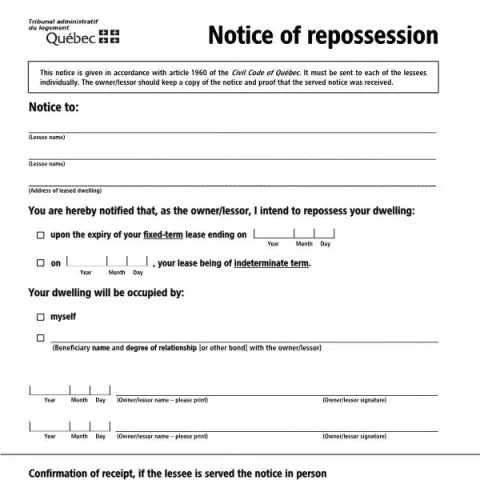
Understanding the Notice of Repossession from the Tribunal administratif du logement
The Notice of Repossession (form code: TAL-809A-E) is a formal document used in Quebec to notify a tenant that the landlord intends to reclaim the rental dwelling. This notice is a critical step in the legal process for ending a lease, whether it’s for a fixed-term lease or an indefinite agreement. It’s essential for both landlords and tenants to understand when and how this notice should be used, what information it must contain, and the subsequent steps involved.
When to Use the Notice of Repossession
This notice is applicable in situations where a landlord wishes to repossess a rental unit for personal use or for specific relatives, such as a spouse, parent, or child, under conditions outlined in the Civil Code of Quebec. It can also be used if the landlord intends to occupy the dwelling themselves or for another eligible relative, provided certain legal criteria are met.
It is important to note that the landlord must send this notice to each tenant individually. The process varies depending on the length of the lease:
- For leases longer than six months, the notice must be sent at least six months before the lease ends.
- For leases of six months or less, the notice must be sent at least one month before the lease terminates.
- For indefinite leases, the notice should be sent six months before the expected repossession date.
Key Information Required in the Notice
The notice must include specific details to be valid:
- The full name of the lessee(s)
- The address of the leased dwelling
- The planned date of repossession, which must align with the lease type and timing
- The name of the person who will occupy the dwelling after repossession (often the owner or a related person)
- The signature of the owner or lessor, along with the date of signing
Additionally, the notice should specify whether the lease is fixed-term or indefinite, and the exact date when the tenant must vacate the premises.
How to Serve and Confirm Receipt of the Notice
The notice must be served personally to the tenant. The landlord or owner should keep a copy of the signed notice and proof of service, such as a signed acknowledgment of receipt from the tenant. If the tenant refuses or does not respond, the landlord can request authorization from the Tribunal administratif du logement to proceed with repossession.
In cases where the tenant receives the notice in person, the tenant must sign a confirmation of receipt, indicating the date they received the document. This acknowledgment can be crucial if the case proceeds to legal action.
Legal Considerations and Restrictions
The law provides protections for tenants, especially those over 65 years of age who have occupied the dwelling for at least ten years and have low income. Such tenants cannot be repossessed unless specific conditions are met, such as the owner’s age or other legal exceptions.
Furthermore, the landlord must demonstrate genuine intent to repossess the dwelling for personal use or for eligible relatives. Repossession cannot be used as a pretext for eviction or other purposes. If the Tribunal grants authorization, it may impose conditions, such as payment of moving expenses to the tenant.
Fill in your form directly online
No printing: type your details into the boxes of the official form, tick, then download the PDF ready to send.
- 1Type into the form boxes
- 2Tick in one click
- 3Save and download the PDF
Next Steps After Sending the Notice
If the tenant responds within the specified timeframe and agrees to vacate, the process proceeds smoothly. However, if the tenant refuses or does not respond, the landlord must apply to the Tribunal administratif du logement within one month of the refusal or expiry of the response period. The Tribunal will then review the case and decide whether to authorize the repossession.
It’s also important to note that the Tribunal may impose conditions, including compensation to the tenant for moving expenses or other just and reasonable measures, before granting approval for repossession.
Conclusion
The Notice of Repossession is a legal requirement designed to ensure transparency and fairness in the process of ending a tenancy for personal reasons. Both landlords and tenants should carefully follow the legal procedures, keep thorough documentation, and respect the deadlines to avoid disputes or delays in the repossession process.