Understanding the "Response to a Notice of Repossession" Form from the Tribunal administratif du logement
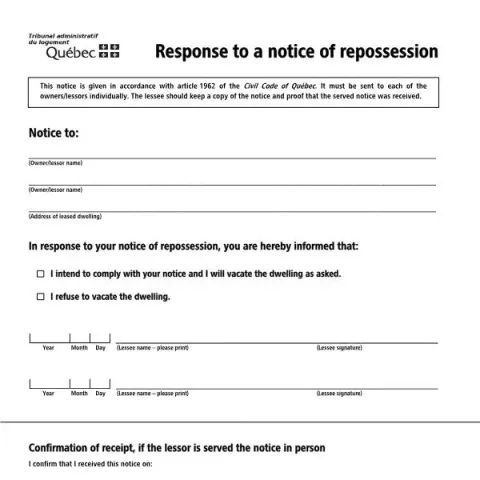
If you receive a notice of repossession from your landlord or owner, it is crucial to understand the steps you need to take and the options available to you. The form titled "Response to a notice of repossession" (form code: TAL-811A-E) is designed to help tenants formally communicate their intentions regarding the repossession process. This article provides a detailed overview of the purpose of this form, how to fill it out correctly, the deadlines involved, and what happens after submission.
Purpose and Scope of the Form
This official form is used by tenants to respond to a repossession notice issued by their landlord or lessor. Under the Civil Code of Québec, specifically article 1962, landlords are required to serve each affected tenant with a notice of repossession, informing them of the landlord’s intention to regain possession of the dwelling. The tenant then has a one-month window to reply using this form, indicating whether they agree to vacate or refuse to do so.
The form is mandatory and must be completed in duplicate—one copy for the tenant and one for the landlord. It ensures that both parties have a documented record of the tenant’s response, which is essential should the matter proceed to the Tribunal administratif du logement (TAL).
Who Should Use This Form?
- Tenants: Those who have received a formal notice of repossession and wish to officially respond.
- Landlords: To confirm receipt of the tenant’s response if served in person, or to maintain records of communication.
Step-by-Step Guide to Filling Out the Form
1. Identifying Information
Begin by clearly printing the name of the owner or lessor, along with the address of the leased dwelling. This information ensures the form is correctly linked to the specific rental unit and landlord.
2. Responding to the Notice
There are two options for tenants:
- I intend to comply: Indicate your intention to vacate the dwelling as requested. If you choose this option, sign and date the form.
- I refuse to vacate: Declare your decision to stay. Again, sign and date to formalize your response.
3. Signature and Date
Ensure the tenant’s name is printed clearly, and the signature is authentic. The date of response must be included to establish the timeline.
4. Confirmation of Receipt (for landlords)
If the landlord personally serves the notice, they must also complete the section confirming the date of receipt, with their printed name, signature, and the date.
Important Deadlines and Legal Considerations
According to the Civil Code of Québec, tenants have one month from the date they receive the notice to respond using this form. If no response is provided within this period, the tenant is presumed to refuse to vacate the dwelling.
In cases where the tenant refuses to leave, the landlord can apply to the Tribunal administratif du logement within one month after the refusal or after the deadline to seek authorization for repossession. The Tribunal will then decide whether to approve the repossession, considering whether the landlord’s request aligns with legal criteria and whether just conditions are met.
Fill in your form directly online
No printing: type your details into the boxes of the official form, tick, then download the PDF ready to send.
- 1Type into the form boxes
- 2Tick in one click
- 3Save and download the PDF
Post-Submission Procedures
Once the tenant submits the completed response, the landlord must respect the decision. If the tenant agrees to vacate, the landlord can proceed with the repossession process. If the tenant refuses, the landlord needs to seek approval from the Tribunal, which may impose conditions such as compensation for moving expenses.
It is important to note that the Tribunal’s authorization is required before the dwelling can be leased again or used for purposes other than repossession. Additionally, tenants may seek damages if they believe the repossession was carried out in bad faith.
Summary
The "Response to a notice of repossession" form is a critical document in the Québec housing legal process. It provides tenants with a formal way to communicate their intentions and ensures that landlords follow the proper legal procedures. Understanding how to complete this form accurately and within the specified deadlines is essential to protecting your rights as a tenant or landlord involved in a repossession situation.