Understanding the Landlord's Notice to a New Tenant About an Order Prohibiting a Rent Increase
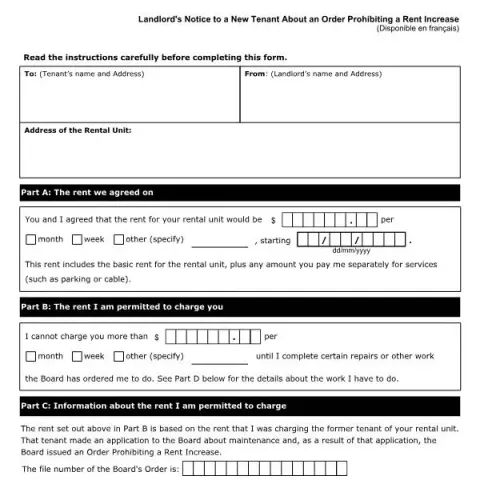
If you are a new tenant in Ontario, it's important to understand how your rent can be affected by orders issued by the Landlord and Tenant Board (LTB). The Landlord's Notice to a New Tenant About an Order Prohibiting a Rent Increase is a formal document that your landlord may provide to inform you about restrictions on rent increases due to ongoing legal or maintenance issues. This article explains the purpose of this form, how it works, and what your rights are as a tenant.
Purpose of the Form
This official form serves as a notice from your landlord that, because of an order from the Landlord and Tenant Board, they are temporarily prohibited from increasing your rent beyond a certain amount. It is used to communicate specific legal restrictions resulting from a Board order, often related to maintenance or repair issues that impact the rent level. As a tenant, understanding this document helps you know why your rent remains unchanged and what conditions may allow for future increases.
When and Why Your Landlord Provides This Notice
Your landlord is required to give you this notice if:
- The Board has issued an order preventing a rent increase for your unit.
- The order specifies that rent cannot be increased until certain repairs or work are completed.
This notice informs you of the current rent amount, the restrictions imposed by the Board, and what work must be completed before a future rent increase can be considered. It is an important document that ensures transparency about your rent obligations and the legal restrictions affecting your tenancy.
Key Sections of the Notice
Part A: The Agreed Rent
This section states the rent you and your landlord initially agreed upon, including any additional charges for services like parking or cable. It also indicates the start date of this rent amount.
Part B: The Permitted Rent
The landlord declares the maximum rent they are allowed to charge during the restriction period, which may be lower than the original rent, due to the Board’s order.
Part C: Basis of the Rent Restriction
This part explains that the rent restriction is based on a previous tenant’s application related to maintenance issues, leading to the Board’s order. It also details the file number of the order for reference.
Part D: Work to Be Completed
The landlord must specify the repairs or work ordered by the Board that must be completed before they can charge a higher rent. This section is crucial for understanding the conditions for future rent adjustments.
Fill in your form directly online
No printing: type your details into the boxes of the official form, tick, then download the PDF ready to send.
- 1Type into the form boxes
- 2Tick in one click
- 3Save and download the PDF
Part E: Future Rent After Work Completion
Once the required work is finished, the landlord can begin charging the original rent amount agreed upon initially. The notice specifies when this new rent can take effect, typically starting from the first rental period after the work is completed.
Implications for Tenants
This notice clarifies that:
- The rent cannot be increased until the specified work is completed.
- The rent increase prohibition does not affect the annual rent increase date. After the work is done, the landlord can increase rent following the usual process, including providing proper notice at least 90 days before the increase takes effect.
If you have questions or concerns about this notice or your rights, you can contact the Landlord and Tenant Board directly by phone or visit their website for more information. This ensures you are fully informed about your rent and legal protections under Ontario tenancy laws.