Understanding the Application to End a Tenancy and Evict a Tenant or Collect Money (Form L2) in Ontario
If you're a landlord in Ontario facing issues with a tenant, you may need to formally end the tenancy or recover unpaid rent or damages. The Application to End a Tenancy and Evict a Tenant or Collect Money, known as Form L2, is the official document used for these purposes. This article guides you through when and how to use this form, what information you'll need to provide, and important points to consider during the process.
When Should You Use Form L2?
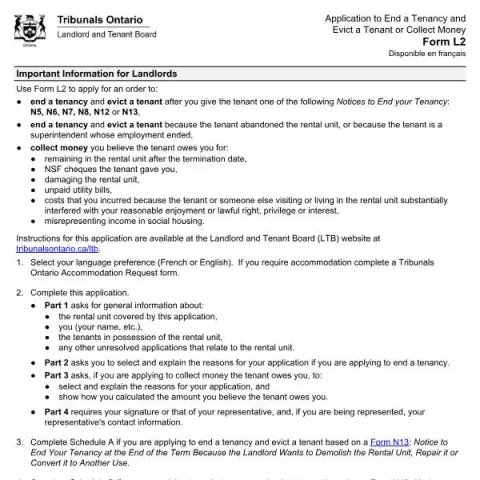
This form is applicable in several situations, including:
- Applying to end a tenancy and evict a tenant after serving a valid notice such as N5, N6, N7, N8, N12, or N13.
- Ending a tenancy due to tenant abandonment or if the tenant's employment as a superintendent has ended.
- Recovering money owed by the tenant for various reasons, such as:
- Remaining in the rental unit after the lease ended
- NSF (non-sufficient funds) cheques
- Damages to the rental unit
- Unpaid utility bills
- Costs incurred due to interference with your enjoyment or lawful rights
- Misrepresentation of income in social housing
Key Information Required When Filling Out Form L2
The form is divided into several parts, each requesting specific details:
Part 1: General Information
- Rental Unit Address: Complete the street number, name, unit or suite, municipality, province, and postal code.
- Landlord Details: Provide your full name, mailing address, email, and phone number. If there are multiple landlords, a Schedule of Parties must be submitted.
- Tenants in Possession: List all tenants involved, including their names, emails, and phone numbers. Additional tenants require a Schedule of Parties.
- Related Applications: Mention any unresolved applications related to the rental unit.
Part 2: Reasons for Ending the Tenancy
Specify and explain the grounds for ending the tenancy, such as notice served or tenant abandonment. Supporting documentation, like copies of notices, should be included when applicable.
Part 3: Collecting Money
If you are seeking to recover money owed, clearly state the reasons and provide calculations detailing how the amount was determined. This includes unpaid rent, damages, or other costs.
Part 4: Signatures and Representation
Sign the form yourself or through your authorized representative. Include contact details for your representative if applicable.
Additional Schedule Attachments
- Schedule A: Required if applying based on a Form N13, which involves notices to end tenancy due to demolition, repairs, or conversion.
- Schedule B: Needed if ending tenancy because of a Form N12, where the landlord or a family member requires the unit.
Filing and Payment Process
Once completed, you must file the entire application with the Landlord and Tenant Board (LTB) within 30 days of the termination date specified in your notice to the tenant. Ensure you include:
Fill in your form directly online
No printing: type your details into the boxes of the official form, tick, then download the PDF ready to send.
- 1Type into the form boxes
- 2Tick in one click
- 3Save and download the PDF
- A copy of the Notice to End your Tenancy
- A Certificate of Service showing how and when the notice was delivered
The application fee is $201, payable at the time of filing. If you choose to use the Tribunals Ontario Portal, the fee is $186. Payment methods include money order, certified cheque, or credit card (cash and debit are not accepted for mailed or couriered applications). If the fee presents a hardship, a Fee Waiver Request can be submitted.
Important Tips and Points of Attention
- Timeliness: File your application promptly—within 30 days of the notice's termination date.
- Complete Documentation: Attach all relevant notices, schedules, and proof of service to support your application.
- Accurate Calculations: Clearly outline how you arrived at the amount owed to avoid delays or disputes.
- Seek Assistance: Contact the LTB if you have questions or require guidance during the process.
Conclusion
The Form L2 is a crucial document for Ontario landlords needing to formally end a tenancy, evict tenants, or recover unpaid rent or damages. Understanding the form's structure, the necessary supporting documents, and the filing procedures can help streamline the process and ensure compliance with provincial regulations. Always consult the official Landlord and Tenant Board website or contact their offices for the most current instructions and legal advice.