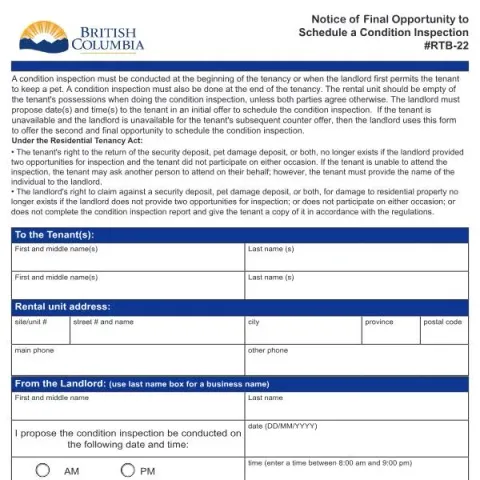
Understanding the "Notice of Final Opportunity to Schedule a Condition Inspection" Form
If you are a landlord or tenant involved in a residential tenancy in British Columbia, the Notice of Final Opportunity to Schedule a Condition Inspection (form code: RTB-22) is an essential document governed by the Residential Tenancy Act. This form ensures that both parties have a fair chance to assess the condition of the rental unit at key moments during the tenancy, particularly at move-in and move-out. Proper use of this form helps prevent disputes over damages and deposit claims and complies with provincial regulations.
The Purpose of the RTB-22 Form
The primary goal of this form is to formally propose a date and time for a condition inspection of the rental unit. This inspection is crucial at the start of a tenancy, upon the landlord’s first permission for the tenant to keep a pet, and at the end of the tenancy. It provides an opportunity for both landlord and tenant to document the state of the property, which can be used later to resolve any damage or deposit disputes.
By offering a final chance to schedule this inspection, the form aims to ensure that both parties participate in the process, thereby promoting transparency and fairness. If the tenant or landlord is unavailable at the proposed time, the form also facilitates rescheduling and confirms the final opportunity to agree on an inspection date.
How to Complete and Submit the Form
Filling Out the Details
- Tenant Information: Include the full names of all tenants and the address of the rental unit, including unit or site number, street, city, province, and postal code. Contact details such as main and other phone numbers should also be provided.
- Landlord Information: Enter the landlord’s full name or business name and provide the proposed date and time for the inspection. The date should be written in DD/MM/YYYY format, and the time should fall between 8:00 a.m. and 9:00 p.m.
- Signature: The landlord must sign the form to confirm the proposed inspection schedule.
Submission Process
This form can be submitted either in person, by mail, or through the designated online platform if available. It is essential to keep a copy for your records. If the tenant cannot attend at the proposed time, they may appoint a representative, but the landlord must be informed of this arrangement.
Legal Implications and Tenant Rights
Under the Residential Tenancy Act, participating in the condition inspection is a tenant’s right, and failing to do so can affect the tenant’s ability to dispute damage claims or recover deposits later. Specifically:
- If the tenant does not participate in two scheduled inspections, their right to the return of the security or pet damage deposit may be forfeited.
- The landlord must also provide two opportunities for inspection. If either party misses both opportunities, the landlord’s ability to claim damages against deposits is limited.
Additionally, tenants can appoint someone else to attend the inspection on their behalf, but they must inform the landlord of this person’s identity.
Fill in your form directly online
No printing: type your details into the boxes of the official form, tick, then download the PDF ready to send.
- 1Type into the form boxes
- 2Tick in one click
- 3Save and download the PDF
Important Considerations for Landlords and Tenants
Both parties should aim to agree on a mutually convenient date and time for the inspection to avoid disputes. It is recommended to conduct the inspection when the unit is empty of tenant possessions, unless otherwise agreed. Documenting the condition of the property through this inspection can help prevent disagreements over damages and deposits at the end of the tenancy.
For further information or assistance, individuals can contact the Residential Tenancy Branch or visit the official government website dedicated to landlord and tenant resources.