Understanding the Application for Abandonment at the Tribunal administratif du logement
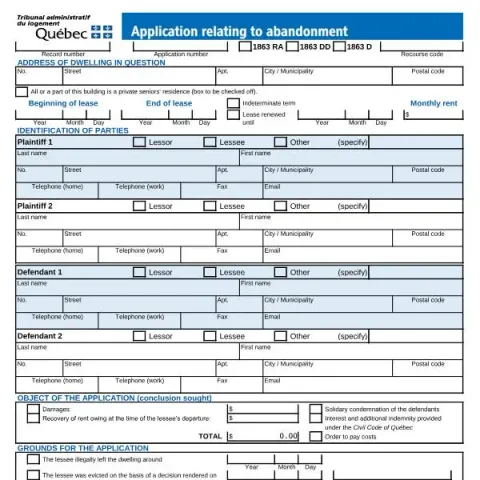
If you are a landlord or a tenant dealing with a situation where a tenant has abandoned a rental property, the Application relating to abandonment form (code: TAL-066A-E) is an essential legal document to initiate or respond to proceedings before the Tribunal administratif du logement (TAL). This guide provides an overview of the purpose of the form, how to prepare your case, submission procedures, and what to expect during the process.
Purpose of the Form and When to Use It
The primary objective of this application is to address situations where a tenant has left the rental unit without notice, leaving unpaid rent or causing damages. It allows landlords to seek remedies such as:
- Claiming damages through a solidary condemnation of the tenant(s) and any other involved parties
- Recovering unpaid rent at the time of abandonment, including interest and additional indemnities as provided under the Civil Code of Québec
- Requesting an order to pay costs associated with the abandonment, such as advertising or screening expenses
Landlords or property managers should use this form when they have evidence that the tenant has illegally vacated, was evicted, or did not take possession of the dwelling, resulting in financial losses or damages.
Preparing Your Case
Gathering Supporting Documents
Before completing the application, ensure you have all relevant evidence, such as:
- Lease agreements indicating the terms and duration of tenancy
- Proof of unpaid rent, including bank statements or rent receipts
- Correspondence with the tenant regarding abandonment or eviction notices
- Advertising or screening costs incurred to re-rent the unit
- Photographs or reports documenting damages or degradation of the property
Completing the Application
The form requires detailed information about the property, the parties involved, and the specifics of the abandonment. Key sections include:
- Address of the dwelling in question
- Identification of the lessor and lessee(s)
- Object of the application, specifying whether damages, rent recovery, or costs are sought
- Grounds for the application, including dates of abandonment, unpaid rent, and damages suffered
- Details of damages, costs, and losses incurred
- Whether the landlord wishes to participate in a conciliation session
Submitting the Application
Methods of Filing
The TAL encourages electronic submissions through their official digital platform, but paper submissions are also accepted. When filing, ensure that:
- The application is signed and dated
- All supporting exhibits are attached or available upon request
- Contact information for both parties is complete and accurate
Notification and Service
Once filed, the Tribunal will serve the application to the defendant(s). It is essential to verify the address details provided in the application to ensure proper notification.
Following Up and Participating in Conciliation
The TAL offers a free conciliation service to help resolve disputes before a formal hearing. During the process, parties can negotiate with the assistance of a neutral conciliator, which can often lead to quicker and mutually agreeable resolutions.
Fill in your form directly online
No printing: type your details into the boxes of the official form, tick, then download the PDF ready to send.
- 1Type into the form boxes
- 2Tick in one click
- 3Save and download the PDF
Participation in Conciliation
Indicate your interest in participating by checking the relevant box on the form. If both parties agree, a conciliation session will be scheduled at either the TAL offices or via videoconference or telephone. Remember that participation is voluntary, and you can withdraw at any time.
What to Expect After Filing
Following submission, the TAL will review your application and supporting documents. If the case proceeds to a hearing, both parties will be notified of the date and location. The Tribunal’s decision may include orders for damages, rent recovery, or costs, depending on the evidence presented.
It is advisable to keep copies of all documents submitted and received throughout the process, and to stay informed about any updates or requirements from the Tribunal.