Understanding the Application for Unpaid Rent at the Tribunal administratif du logement
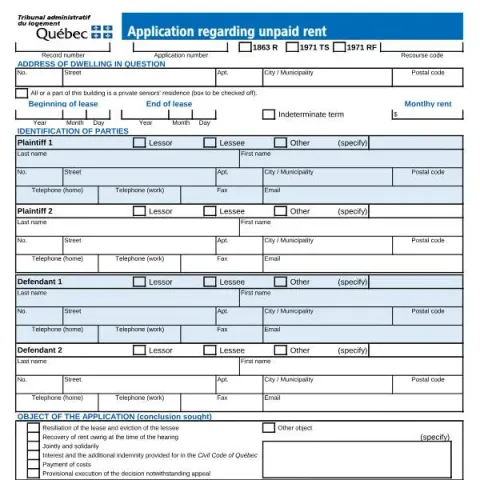
If you are a landlord or a tenant in Quebec and are facing issues with unpaid rent, the Application regarding unpaid rent form (code: TAL-065A-E) is an essential document to initiate or respond to legal proceedings before the Tribunal administratif du logement. This form is specifically designed to address disputes related to rent arrears and to seek appropriate legal remedies. Here, you will find a detailed overview of when and how to use this form, the information it requires, and important points to consider during its completion and submission.
When to Use the Application for Unpaid Rent
This form is primarily used by landlords who wish to recover unpaid rent or seek eviction of a tenant due to non-payment. It can also be used by tenants to contest claims or to respond to a landlord’s application. The form is applicable in situations where the rent has not been paid for a specified period, such as when the tenant is more than three weeks late, or if late payments have caused significant harm to the landlord.
Additionally, the form can be used to request the resiliation of the lease and eviction, or to recover rent owed at the date of the hearing. It also allows for claims related to interest, additional indemnities, or costs associated with the dispute. Participation in a conciliation session may be offered to facilitate a mutually agreeable resolution before the hearing.
Key Sections and Required Information
Identification of Parties
The form requires detailed identification of all involved parties, including:
- Names and addresses of the plaintiff(s) and defendant(s)
- Contact details such as telephone numbers, emails, and fax numbers
- Identification of the property in question, including whether it is a private seniors’ residence
Details of the Lease
Information about the lease is crucial, including:
- Start and end dates of the lease or whether it is of an indeterminate term
- Monthly rent amount
- Lease number or record number if applicable
Nature of the Application
This section specifies the objectives of the application, such as:
- Seeking eviction and lease termination
- Recovering unpaid rent
- Claiming interest or additional indemnities
- Requesting payment of costs
Grounds for the Application
Applicants must clearly state the reasons for their claim, which may include:
- The tenant is more than three weeks late in paying rent
- Repeated late payments causing serious harm
- Lease clauses, such as solidarity clauses, that support the claim
- Other specific grounds relevant to the case
Submitting and Notifying the Application
Once completed, the application must be signed and filed with the Tribunal. The notification process involves serving copies of the application, along with any exhibits, to the other parties involved. The Tribunal provides options for participating in a conciliation session, which is a voluntary process aimed at resolving disputes amicably and efficiently.
Parties can choose to participate in person, by phone, or via videoconference, depending on availability and circumstances. The Tribunal emphasizes the importance of being available at the scheduled time to ensure a smooth process. Participation in conciliation does not imply admission of liability and is confidential, fostering a respectful environment for negotiation.
Fill in your form directly online
No printing: type your details into the boxes of the official form, tick, then download the PDF ready to send.
- 1Type into the form boxes
- 2Tick in one click
- 3Save and download the PDF
Points of Attention and Practical Tips
When filling out the form, ensure all information is accurate and complete, as incomplete or incorrect data can delay proceedings. Pay special attention to the grounds for the application and clearly specify the unpaid rent period, including the amount owed. Keep copies of all relevant documents, such as lease agreements and payment records, as these will be essential during the hearing.
Participation in the Tribunal’s processes, including conciliation, is voluntary. However, engaging in these procedures can often lead to quicker resolutions and reduce the need for lengthy hearings. If you are unsure about how to complete the form or the best course of action, consider seeking legal advice or assistance from the Tribunal’s information services.
Remember, this form is a formal legal document, and false or misleading information can have serious legal consequences. Always review your application carefully before submission to ensure compliance with Tribunal requirements.