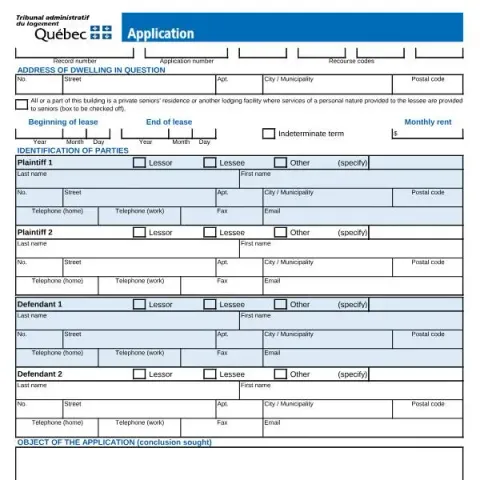
Understanding the Application Form for the Tribunal administratif du logement
The Tribunal administratif du logement (TAL) offers a standardized application form, identified by the code TAL-001A-E, designed to facilitate disputes related to housing. This official document serves as a crucial step for landlords, tenants, or other parties involved in housing-related conflicts to formally submit their case for resolution. This article provides a comprehensive overview of the form’s purpose, how to fill it out, and important considerations for applicants.
Purpose and Scope of the Application Form
The TAL-001A-E form is used to initiate a legal proceeding before the Tribunal administratif du logement concerning various housing issues such as rent disputes, lease termination, maintenance, or other contractual disagreements. Its primary audience includes landlords, tenants, or other interested parties who seek official intervention to resolve their housing conflicts.
This form is mandatory for submitting a formal complaint or application to the Tribunal. It ensures that all relevant information is collected systematically, allowing the Tribunal to process the case efficiently. Additionally, the form offers the possibility to participate in voluntary conciliation sessions aimed at resolving disputes amicably before proceeding to a formal hearing.
How to Complete the Application Form: Step-by-Step Guide
1. Identifying the Parties and the Address of the Dwelling
- Address of the dwelling: Clearly specify the full address, including apartment number if applicable.
- Parties involved: Indicate whether the applicant is the lessor, lessee, or another party. Provide full names, addresses, and contact information such as telephone numbers and email addresses.
- Parties' signatures: Each party must sign the form to validate the application, confirming the accuracy of the information provided.
2. Providing Details of the Lease and the Nature of the Dispute
- Lease start date: Specify the beginning of the lease term.
- End of lease or dispute date: Indicate if the lease is indefinite or specify the end date.
- Monthly rent: State the amount of rent paid or owed.
- Grounds for the application: Clearly describe the reasons for your dispute, such as non-payment, maintenance issues, or lease termination.
3. Participating in Conciliation
The form includes a section where applicants can opt to participate in a voluntary conciliation session. This process aims to facilitate an amicable resolution without proceeding directly to a hearing. Applicants can choose in-person, by phone, or via videoconference participation, with specific locations specified for in-person sessions.
4. Submitting Exhibits and Additional Information
When submitting the application, any relevant documents or evidence (exhibits) should be available upon request. The form notes that these will be provided to the other parties once notified, at no cost. If additional space is needed for explanations or evidence, an appendix can be attached.
Key Deadlines and Notifications
Once the application is filed, the Tribunal will notify all involved parties. It is important to adhere to any specified timelines, especially regarding participation in conciliation sessions, which are scheduled based on the availability of the parties and the Tribunal’s calendar. The form indicates that the process is designed to be quick and straightforward, but timely responses are essential to avoid delays.
Post-Submission Procedures and Final Steps
After submitting the application, the Tribunal may schedule a conciliation session if all parties agree. This session is confidential and aims to reach an agreement without a formal hearing. If an agreement is reached, the parties must sign the document, and the Tribunal can ratify it, making it legally binding.
Fill in your form directly online
No printing: type your details into the boxes of the official form, tick, then download the PDF ready to send.
- 1Type into the form boxes
- 2Tick in one click
- 3Save and download the PDF
If no agreement is reached or if the parties opt out of conciliation, the case proceeds to a formal hearing. The application record remains open until a resolution is finalized, unless a party requests to suspend proceedings.
Conclusion
The TAL-001A-E application form is a vital tool for resolving housing disputes within the framework of the Tribunal administratif du logement. Properly completing the form ensures that your case is accurately represented and processed efficiently. Be sure to provide all required information, participate actively in conciliation if possible, and adhere to deadlines to facilitate a smooth resolution process.