Understanding the Ontario Landlord and Tenant Board Form A1: Application about Whether the Act Applies
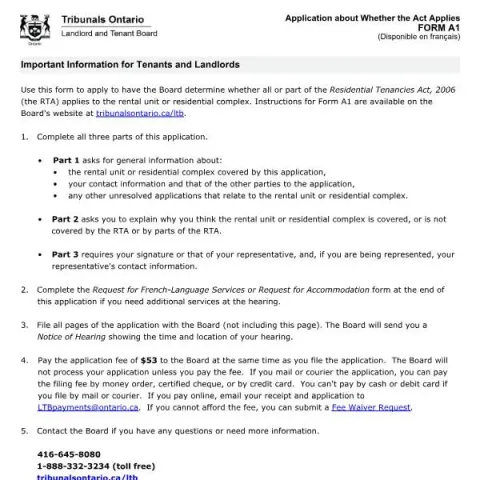
If you are involved in a rental situation in Ontario and are unsure whether the Residential Tenancies Act, 2006 (RTA) applies to your rental unit or complex, the Landlord and Tenant Board (LTB) provides a specific form to clarify this issue. This form, known as Form A1, is an essential step for tenants or landlords seeking a legal determination about the applicability of the RTA.
Purpose of Form A1
The main goal of Form A1 is to request a formal decision from the Landlord and Tenant Board on whether the RTA or particular parts of it govern your rental unit or residential complex. This is especially useful in situations where the legal status of the property is uncertain, such as when a property is converted from a rental to a condominium, or if there are questions about the classification of the premises.
Who Should Use This Form?
Both tenants and landlords can submit Form A1 if they need clarity on whether the RTA applies to their rental unit. For example, a landlord might want to confirm if a property qualifies as a rental unit under the Act before proceeding with certain actions, or a tenant may seek to understand their rights and obligations under the law.
How to Complete the Form: Step-by-Step Guide
Part 1: General Information
This section requires details about the applicant and the rental property:
- Applicant Information: Name, address, contact numbers, and whether the applicant is a landlord or tenant.
- Rental Unit Details: Address of the property, including street number, name, type, and postal code.
- Other Parties: Information about other involved parties, if applicable.
- Related Applications: Any unresolved applications related to the same rental unit should be listed.
Part 2: Explanation of the Application
This is the core of your submission. You must clearly explain why you believe the RTA does or does not apply to your rental unit or complex. Include details about the property’s characteristics, its legal status, and any relevant circumstances that support your position. Attach additional sheets if necessary.
Part 3: Signatures and Representation
The application must be signed by the applicant or their authorized representative. If someone is representing you, their contact information and LSUC number (if applicable) are required. This section confirms who is submitting the application and authorizes the process.
Filing and Fees
Once completed, the entire form must be filed with the Landlord and Tenant Board. The current application fee is $53, payable by money order, certified cheque, or credit card. If mailing or couriering the application, ensure payment is included, as the Board will not process the application without it. For online submissions, email the receipt along with your application to the specified email address.
Post-Submission Process
After your application is received and processed, the Board will send you a Notice of Hearing. This notice will specify the date, time, and location of your hearing where the Board will decide whether the RTA applies to your rental property.
Fill in your form directly online
No printing: type your details into the boxes of the official form, tick, then download the PDF ready to send.
- 1Type into the form boxes
- 2Tick in one click
- 3Save and download the PDF
Additional Support and Considerations
If you require services in French or need accommodations for hearing, complete the relevant request forms provided at the end of your application. Also, if you cannot afford the fee, you may submit a Fee Waiver Request to the Board.
Contact Information
For questions or assistance with the process, contact the Landlord and Tenant Board at:
- 416-645-8080
- 1-888-332-3234 (toll free)
- Website: tribunalsontario.ca/ltb
Filing Form A1 is a crucial step in establishing the legal status of your rental property under Ontario law. Proper completion and submission ensure that the Board can provide a definitive answer, guiding your next steps accordingly.