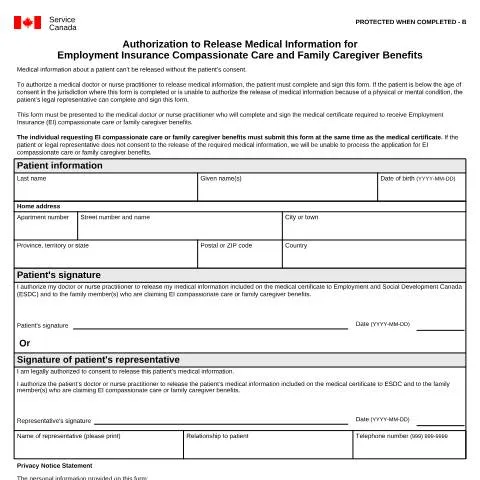
Understanding the INS5257: A Crucial Step in Compassionate Care
Navigating the complexities of the Employment Insurance (EI) system in Canada can be daunting, especially when it concerns sensitive medical information. The Authorization to Release Medical Information for Employment Insurance Compassionate Care or Family Caregiver Benefits (INS5257) serves a pivotal role in this process. This document is essential for individuals applying for compassionate care benefits, ensuring that medical information is shared appropriately to facilitate the claim.
Initiating the Process: When Do You Need INS5257?
In the context of applying for EI compassionate care or family caregiver benefits, the need for the INS5257 typically arises when:
- Someone in your family requires significant care due to a serious medical condition.
- You, as the care provider, are seeking financial assistance to support your caregiving efforts.
- The medical professional treating the individual has advised that EI benefits may be beneficial for you as a caregiver.
This form must be completed simultaneously with the medical certificate that the healthcare provider fills out, as it grants permission to release relevant medical information needed to assess the claim.
Decoding the Components: What’s Inside the INS5257?
The structure of the INS5257 is straightforward but requires careful attention. Here are the critical sections that need completion:
- Patient Information: This section requires basic details such as the last name, given names, and the date of birth of the individual receiving care.
- Home Address: Accurate address information is crucial for correspondence purposes.
- Patient's Signature: This is where the patient (or their representative) authorizes the release of medical information.
- Representative Information: If the patient is unable to sign, a legally authorized representative can provide their signature, ensuring that the patient’s interests are still represented.
Each field must be filled out accurately, as any discrepancies can delay or even hinder the processing of your application.
Completing the INS5257: Tips for Accuracy
To ensure the INS5257 is completed correctly, follow these guidelines:
- Use Clear and Legible Writing: If you are filling out the form by hand, ensure your handwriting is legible to avoid miscommunication.
- Double-Check Personal Information: Verify that all names, addresses, and dates are accurate and match identification documents.
- Understand the Privacy Notice: Familiarize yourself with the privacy notice included in the document. This informs you how the information will be used and the rights you have regarding your personal information.
Providing accurate and complete information will expedite the processing of your application and improve your chances of receiving the benefits you need.
Submitting the INS5257: The Channels Available
Once the INS5257 form has been completed and signed, it needs to be submitted along with the medical certificate. Here are the channels through which you can submit the completed INS5257:
| Submission Method | Details |
|---|---|
| Online Submission | If you are using the online EI application system, upload the INS5257 as part of your electronic submission. |
| Paper Submission | Mail your completed form and the medical certificate to the address specified on the EI application guide. |
| In-Person | Visit a Service Canada Centre to submit your documents directly. Ensure to call ahead to check if an appointment is needed. |
Each method has its considerations, such as processing times and confirmation of receipt, so choose the one that best fits your situation.
Understanding the Administration’s Role: What Happens Next?
After submission, the INS5257, along with the medical certificate, will be reviewed by Employment and Social Development Canada (ESDC). Here’s an overview of the administrative steps that follow:
- Initial Review: Your documents will be checked for completeness and accuracy. Missing information may lead to delays.
- Verification of Medical Information: ESDC will verify the medical information provided to ensure it aligns with the claim for benefits.
- Decision Notification: You will receive a notification regarding the outcome of your application. This may take several weeks, depending on workload and complexity.
It is advisable to keep a record of your submission and to follow up if you have not received any updates within the expected timeframe.
Legal Framework: Why INS5257 Exists
The creation and use of the INS5257 are grounded in Canadian administrative law, which prioritizes the protection of citizens’ rights while allowing government agencies to collect necessary information for program delivery. Specifically, the following principles apply:
- Personal Information Protection: The form adheres to the Privacy Act, ensuring that your medical information is handled confidentially.
- Informed Consent: INS5257 requires the patient’s consent, reflecting a commitment to ethical standards in handling sensitive data.
- Clear Guidelines: ESDC provides clarity on how the information collected will be used, ensuring transparency throughout the process.
This legal framework supports the importance of the INS5257 in facilitating the compassionate care process, ensuring that individuals receive the support they require while maintaining their rights.
Final Thoughts on Utilizing the INS5257 for Compassionate Care
The INS5257 is more than just a form; it is a vital tool for those seeking compassionate care benefits in Canada. Understanding its role, completing it accurately, and submitting it correctly are essential steps toward ensuring that caregivers receive the necessary support during challenging times. By effectively utilizing the INS5257, caregivers can focus on what truly matters—providing care to their loved ones.
Understanding the Authorization Process: Key Steps and Considerations
When you are applying for Employment Insurance (EI) Compassionate Care or Family Caregiver Benefits, understanding the authorization process for the release of medical information is crucial. This process is not only about granting permission for your medical history to be shared, but it also plays a significant role in determining the outcome of your benefits application. Here’s what you need to consider:
- Form Completion: To initiate the authorization, you will have to complete the EI form that pertains to medical information release, typically found as part of the application for compassionate care benefits. Ensure all sections are filled accurately, as any discrepancies could delay processing.
- Scope of Information: Be clear about what specific medical information you authorize to be released. Typically, this will include details pertaining to the medical condition of the individual you are providing care for. If there are particular documents or reports that you wish to include, list them explicitly.
- Timeframe Considerations: Indicate how long you wish for the authorization to remain valid. This could be for the duration of the benefits application process or until the specific medical condition changes. Clear timeframes help avoid confusion for healthcare providers and EI adjudicators.
- Signature and Consent: Your signature is a crucial part of this process. It serves as your consent for the disclosure of the medical information. If you are applying on behalf of someone else, ensure you have the proper authority to provide their consent.
Potential Challenges in the Authorization Process
While the authorization to release medical information is a vital part of securing your EI Compassionate Care or Family Caregiver Benefits, there can be several challenges along the way. Being aware of these potential obstacles can help you navigate them effectively:
- Delays in Medical Documentation: One common issue is obtaining timely medical documentation from healthcare providers. It’s essential to communicate with them early in the process, ideally at the time of your application submission, to set expectations regarding the timeframe for receiving medical reports.
- Understanding the Medical Terminology: If you are not familiar with medical terminology, some of the information you receive may be difficult to comprehend. Don’t hesitate to ask your healthcare provider for clarification on any medical terms or conditions that may affect your benefits.
- Privacy Concerns: Some individuals may hesitate to release their medical information due to privacy concerns. It’s important to understand that this information is kept confidential and is only used to assess your eligibility for benefits. Ensure you read the confidentiality policies of Service Canada regarding how your information will be managed.
- Overcoming Denials: If your initial authorization is questioned or if your benefits are denied due to incomplete or unclear medical information, know that you can appeal the decision. This entails gathering additional documentation and possibly providing further consent for additional information to support your case.
Best Practices for Timely and Effective Communication with Health Care Providers
Efficient communication with healthcare providers can expedite the authorization process and improve your chances of securing your EI benefits. Here are some best practices you can adopt:
- Prepare Your Request: Before reaching out to your healthcare provider, prepare a detailed request for the medical information you need. Include specifics such as the type of benefits you are applying for, the timeline, and any particular medical details that need to be covered in the documentation.
- Follow Up Consistently: After submitting your request, follow up with the healthcare provider to ensure they have received your request and are processing it. A polite reminder can often help expedite the process.
- Provide Necessary Forms: Ensure your healthcare provider has the correct forms needed to release the medical information. This includes the authorization document you completed as part of your EI application.
- Discuss Timelines: Have a conversation with your healthcare provider about what timeline they expect to be able to fulfill your request. If you are working against a deadline for your benefits application, communicate this clearly and ask for their assistance in meeting your timeline.
- Express Appreciation: Don’t forget to thank your healthcare provider for their help. A simple expression of gratitude can go a long way in building a positive relationship and encouraging prompt assistance in the future.