The Critical Role of the Medical Certificate for Employment Insurance Sickness Benefits
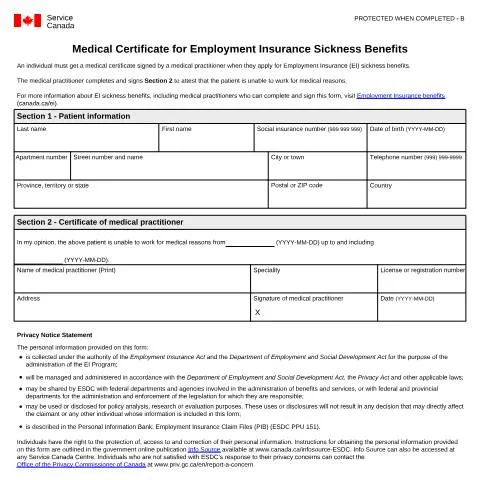
When an individual finds themselves unable to work due to health reasons, the Medical Certificate for Employment Insurance Sickness Benefits, identified by code INS5140, becomes a crucial document. This certificate serves as an official acknowledgment from a medical professional that the individual cannot engage in their work responsibilities due to medical issues, paving the way for potential financial support through Employment Insurance (EI) sickness benefits. Understanding the implications, requirements, and procedures surrounding this certificate is essential for anyone looking to secure these benefits.
Understanding the Legal Framework Behind the Certificate
The Medical Certificate for Employment Insurance Sickness Benefits holds significant legal weight. It is governed by the Employment Insurance Act, which outlines the conditions under which an individual can claim sickness benefits. This certificate is not merely a formality; it is a legal testament issued by a qualified medical practitioner, affirming the patient's inability to work due to medical reasons. Thus, it becomes a pivotal piece of documentation in the claims process.
In the context of Canadian law, the Employment and Social Development Canada (ESDC) administers the EI program, ensuring that those who genuinely need assistance due to health-related work incapacity receive it. The medical certificate must be filled out accurately, as any inconsistencies can lead to delays or denial of benefits.
Who Can Obtain the Medical Certificate and Under What Conditions?
Eligibility for obtaining the INS5140 certificate is primarily dictated by the patient's health status. Here’s a breakdown of the essential criteria:
- Medical Status: The individual must be experiencing a medical condition that significantly impairs their ability to perform work duties.
- Qualified Practitioners: The certificate must be signed by a licensed medical practitioner. This includes doctors, nurse practitioners, or other healthcare providers who are authorized to diagnose medical conditions.
- Timeframe of Illness: The certificate should specify the timeframe during which the patient is unable to work, detailing the start and estimated end dates of the incapacity.
It’s important for individuals to consult their healthcare providers about their condition and determine whether they meet the necessary criteria to apply for this benefit. The medical practitioner will assess their situation and, if appropriate, complete the certificate.
The Step-by-Step Process for Obtaining the Certificate
Acquiring the Medical Certificate for Employment Insurance Sickness Benefits involves several steps:
- Consult Your Healthcare Provider: Schedule an appointment to discuss your health issues and the need for a medical certificate.
- Medical Assessment: During the appointment, your healthcare provider will evaluate your condition, which may include physical examinations and necessary medical tests.
- Complete the Certificate: If deemed appropriate, the provider will fill out the INS5140, including all necessary sections such as your personal information and the details of your medical condition.
- Review the Certificate: Ensure that all information is accurate and complete before leaving the appointment. Any errors could result in issues with your EI application.
- Submit the Certificate: Once you have received the completed certificate, submit it along with your EI claim to ESDC as per their guidelines.
When the Certificate is Required: Real-World Applications
The Medical Certificate for Employment Insurance Sickness Benefits is required in various scenarios, particularly when you need to apply for EI sickness benefits. Some of the common situations requiring this certificate include:
- Extended Illness: If you are diagnosed with a condition that requires an extended recovery period, the certificate will be necessary to validate your claim.
- Surgical Recovery: Post-operative recovery periods often necessitate documentation to justify the inability to return to work.
- Chronic Conditions: Individuals with chronic health issues may also need a medical certificate to ensure they can receive ongoing financial support while they manage their conditions.
Organizations such as employers or insurance companies may also request the certificate to validate absences related to medical issues. In these contexts, having the certificate readily available can streamline communication and approvals.
What to Do in Case of Mistakes, Loss, or Contestation
Errors or issues related to the medical certificate can arise, and addressing them promptly is crucial. Here’s how to manage situations involving mistakes or lost certificates:
- In Case of Errors: If you discover any inaccuracies in the issued certificate, contact your healthcare provider immediately. They can correct the information and issue a new certificate if necessary.
- If Lost: If your certificate goes missing, reach out to your medical practitioner to request a replacement. Ensure you explain the situation so they can expedite the process.
- Disputing Decisions: If your EI claim is denied due to issues with the certificate, you are entitled to appeal the decision. This process often involves submitting additional information, including a new certificate if needed.
Being proactive in addressing these issues can prevent delays in receiving the much-needed financial support during challenging times.
Duration of Validity and Renewal Conditions
The Medical Certificate for Employment Insurance Sickness Benefits is typically valid for a specified period, often correlating with the estimated recovery time provided by your healthcare provider. Here are some key points regarding its validity:
| Condition | Validity Period | Renewal Requirements |
|---|---|---|
| Temporary Illness | Typically 1-3 months | New assessment by a healthcare provider |
| Surgical Recovery | Dependent on the surgery type, often 2-6 months | Follow-up examination required |
| Chronic Conditions | May require ongoing assessments | Regular updates from your healthcare provider |
Renewal of the certificate may be necessary if your recovery extends beyond the initial timeframe indicated on the original form. Staying in close contact with your healthcare provider will ensure that your documentation remains up-to-date.
Leveraging the Certificate for Broader Support
Apart from its role in securing Employment Insurance benefits, the Medical Certificate for Employment Insurance Sickness Benefits can be pivotal in other areas:
- Employer Communication: Presenting the certificate to your employer can facilitate discussions regarding your absence or the need for temporary accommodations.
- Disability Claims: If you are considering filing for additional disability benefits, this certificate can serve as supporting evidence of your medical condition.
- Accessing Health Services: Some health services or programs may require documentation confirming your inability to work due to illness.
Understanding the multifaceted uses of this certificate can empower you to navigate your health challenges more effectively and advocate for your rights.
Final Thoughts on Securing Your Sickness Benefits
The Medical Certificate for Employment Insurance Sickness Benefits is more than just a form; it is your gateway to essential financial support during a difficult time. By grasping the significance of this document, understanding the process to obtain it, and knowing how to handle issues that may arise, you can better position yourself to receive the assistance you need. Always keep communication lines open with your healthcare provider and the relevant authorities to ensure a smooth process.
Understanding the Role of the Medical Certificate in Your EI Claim
When applying for Employment Insurance (EI) Sickness Benefits in Canada, the Medical Certificate is a critical component of your claim. The Medical Certificate serves as proof that you are unable to work due to a medical condition, and it must be completed by a qualified healthcare provider. This document not only validates your claim but also outlines the nature of your illness or injury, the expected duration of your inability to work, and any limitations you may face in performing your job duties.
To ensure that your Medical Certificate meets the necessary requirements, it's essential to understand the specific information that must be included. Healthcare providers are often familiar with the requirements; however, you should discuss the context of your EI claim openly with them. Key pieces of information include:
- Diagnosis: A clear description of your medical condition, including any relevant diagnostic codes if applicable.
- Duration of Impairment: The start date of your medical condition and the expected date of recovery.
- Impact on Work: An explanation of how your condition limits your ability to perform your job.
- Healthcare Provider Details: Full name, contact information, and professional registration number of the healthcare provider.
It is crucial to note that a complete and detailed Medical Certificate can expedite the processing of your EI claim and reduce the likelihood of any request for further information from Service Canada. If your medical condition is likely to be long-term, make sure your healthcare provider indicates this in the certificate. Unexpected delays can occur if the certificate is vague or lacks necessary details.
Navigating the Application Process: Step-by-Step Guidance
Submitting your EI Sickness Benefits application can seem daunting, especially when you need to gather various documents, including the Medical Certificate. However, breaking the process down into manageable steps can help ease your stress. Here's a comprehensive guide to help you navigate through the application process:
- Gather Required Information: Collect your Social Insurance Number (SIN), personal identification, and information about your previous employment, including dates worked and earnings.
- Consult Your Healthcare Provider: Schedule an appointment to discuss your medical condition and request a Medical Certificate. Ensure you communicate the importance of including detailed information.
- Complete the Application: Access the EI application form through the Service Canada website or visit your local Service Canada office. Fill out the form thoroughly, paying special attention to sections that require details about your medical condition and employment history.
- Submit the Application: You can submit your application online or in person at your local Service Canada office. Make sure to include your Medical Certificate and any other supporting documents.
- Track Your Application: After submission, you can track the status of your application online. Keep an eye on your inbox for any communication from Service Canada regarding your claim. Be prompt in responding to any requests for further information.
Keep in mind that the processing time for EI claims can vary; however, staying organized and proactive will help ensure that your claim is processed smoothly. If your claim is denied, you have the right to appeal the decision. In this case, having a detailed Medical Certificate will be even more crucial to substantiate your case.
Common Challenges and How to Overcome Them
While the process for applying for EI Sickness Benefits may seem straightforward, several challenges can arise. Knowing what these challenges are and how to address them can significantly improve your chances of a successful claim. Here are some common hurdles and their solutions:
- Incomplete Medical Certificate: A frequent issue is receiving a Medical Certificate that lacks necessary details. To counter this, you should discuss with your healthcare provider the specific details that need to be included. Offering a checklist of required information can be helpful.
- Delayed Submission: Sometimes, applicants may delay submitting their applications due to gathering documents or uncertainty about the process. To avoid this, aim to initiate the application as soon as you know you will be off work for medical reasons. Early submission can lead to benefits being dated back to your last day of work.
- Misunderstandings About Eligibility: Many applicants are unsure about their eligibility for EI Sickness Benefits. Familiarize yourself with the eligibility criteria, including minimum insurable hours and the circumstances under which you can claim. If in doubt, reach out to Service Canada for clarification.
- Monitoring Your Claim Status: After submission, it’s easy to lose track of your claim’s status. Set reminders to check in and respond promptly to any communication from Service Canada. Keeping records of your application submission date and any correspondence can be beneficial.
By being proactive and well-informed, you can effectively navigate these challenges and enhance your chances of securing EI Sickness Benefits. Understanding the process and potential obstacles will empower you as you take this necessary step to ensure your financial stability during a challenging time.