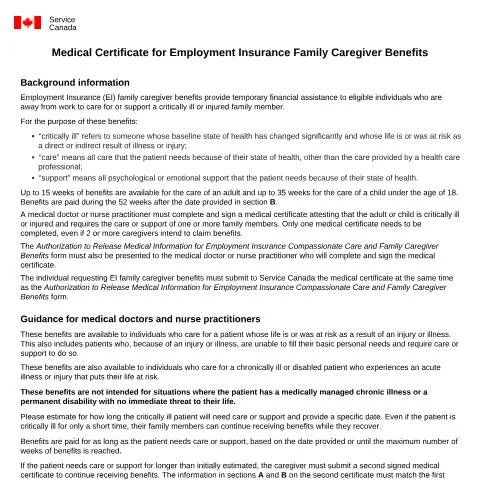
Navigating the Medical Certificate for Employment Insurance Family Caregiver Benefits
When a loved one faces a serious health challenge, family members often find themselves in a position where they need to provide care. This can lead to significant time away from work. In Canada, the Medical Certificate for Employment Insurance Family Caregiver Benefits (INS5242B) plays a crucial role in this process, providing the necessary documentation for family caregivers to access financial support while they care for critically ill family members.
The Role of the Medical Certificate in Family Caregiving
This medical certificate is not just a formality; it holds substantial weight in verifying the caregiver's eligibility for benefits. It serves as an official document that certifies the patient's condition and the caregiver's need to be away from their job to provide care. Understanding the nuances of this document can make a significant difference in the experience of caregiving.
Defining Critical Illness and Care Needs
The certificate specifically addresses three key conditions that must be met for its issuance:
- Life at Risk: The patient’s life is at risk due to illness or injury.
- Change in Health Baseline: There has been a significant change in the patient's health status.
- Required Care: The patient requires care or support from the caregiver.
These conditions must be clearly established in the certificate, as they directly relate to the eligibility for the Employment Insurance (EI) Family Caregiver Benefits.
Obtaining the Medical Certificate: A Step-by-Step Guide
Securing the Medical Certificate is integral to accessing financial support for family caregivers. Here’s a detailed walkthrough of the process:
- Consult a Healthcare Provider: Schedule an appointment with a qualified medical doctor or nurse practitioner.
- Discuss the Patient’s Condition: During the visit, ensure the healthcare provider is aware of the patient's condition and the need for care.
- Complete the Certificate: The medical professional must fill out the INS5242B form, confirming the three conditions mentioned earlier.
- Submit Additional Documentation: Alongside the certificate, you must provide the Authorization to Release Medical Information form.
- Submit to Service Canada: Once completed, send all documents to Service Canada as instructed on the EI benefits portal.
Following these steps accurately will streamline the process and minimize delays in receiving benefits.
Legal Value and Implications of the Medical Certificate
This document is not merely a piece of paper; it has legal implications that can affect the caregiver's ability to claim benefits. Here’s why it matters:
- Proof of Need: The certificate serves as proof that the caregiver's absence from work is justified due to the patient’s critical condition.
- Financial Support Eligibility: Without this documentation, caregivers may not qualify for EI benefits, which can lead to significant financial strain.
- Legal Protection: The accurate representation of the patient's condition can protect caregivers from potential disputes regarding benefit claims.
Failing to provide a properly completed certificate could jeopardize the caregiver's financial support and create additional stress during an already challenging time.
Duration of Validity and Renewal Procedures
A critical aspect to consider is the duration of the Medical Certificate’s validity. Here’s what you need to know:
- Initial Validity: The certificate remains valid for the specific time frame indicated by the healthcare provider at the time of issuance.
- Renewal Processes: If the caregiver needs to provide support beyond the initially specified duration, a new certificate must be obtained. This involves repeating the assessment process with the healthcare provider.
- Time Constraints: Caregivers must act promptly to ensure that benefits continue without interruption, especially if the patient's needs evolve over time.
Addressing Issues: Loss, Errors, and Disputes
In the unfortunate event that you encounter issues with the Medical Certificate, such as loss or errors, it’s essential to know how to address them. Here’s a useful guide:
- In Case of Loss: If the certificate is lost, contact your healthcare provider immediately to request a replacement.
- Correcting Errors: Should there be any mistakes on the certificate, reach out to the medical professional who completed it for corrections.
- Disputes with Service Canada: If a dispute arises regarding the validity or sufficiency of the certificate, gather any supporting medical documentation and seek clarification from Service Canada.
Proactive management of these issues is vital to ensure continued access to caregiver benefits.
Practical Considerations for Caregivers in Different Scenarios
Each caregiving situation is unique, and understanding how to navigate through various circumstances can provide significant relief:
Short-Term vs. Long-Term Care Situations
Different scenarios may necessitate varying lengths of time away from work:
- Short-Term Care: If the need for care is temporary, caregivers should communicate this to their healthcare provider for a focused assessment and shorter certificate duration.
- Long-Term Care: For ongoing support, consider establishing a care plan with your healthcare provider to assess future needs and plan for potential renewals.
Special Cases: Care for Children vs. Adults
Caregiving for a child versus an adult can involve different regulations and benefit durations:
- Child Care: The EI Family Caregiver Benefits provide up to 35 weeks of benefits for caregivers of critically ill children.
- Adult Care: Alternatively, caregivers for critically ill adults can receive benefits for up to 15 weeks, emphasizing the importance of knowing these distinctions.
Final Thoughts: The Importance of Accurate Documentation
In a landscape where family caregiving plays a vital role, the Medical Certificate for Employment Insurance Family Caregiver Benefits stands as a critical component in securing the necessary support for caregivers. Understanding its significance, how to obtain it, and managing potential challenges ensures that caregivers can focus on what truly matters—caring for their loved ones during challenging times.
As a caregiver, staying informed about your rights and the processes at play can alleviate some burden. Keeping an open line of communication with healthcare providers and Service Canada will pave the way for a smoother caregiving experience.
Understanding the Role of Medical Certificates in Family Caregiver Benefits
When applying for Employment Insurance Family Caregiver Benefits, one of the critical pieces of documentation you will need is a medical certificate. This certificate serves to establish the medical necessity of your role as a caregiver for a family member who is critically ill or requiring significant care. Understanding the specifics of the medical certificate can help you avoid delays in your application. The certificate must be completed by a qualified healthcare provider and must include certain key elements. These include the diagnosis of your family member’s condition, the date of diagnosis, and an indication of the level of care needed. The healthcare provider should also specify how your caregiving support will directly impact the family member’s recovery or daily functioning.
It's important to note that the medical certificate must adhere to the guidelines set by the Employment and Social Development Canada (ESDC). Therefore, it's advisable to review the latest requirements on the ESDC website or consult with your healthcare provider to ensure that all necessary information is included. This can help avoid any potential issues or delays in your claim processing.
Special Cases and Exceptions for Medical Certificates
There are certain special cases and exceptions that may apply concerning medical certificates for Family Caregiver Benefits. For example, if your family member has a long-term chronic condition, the medical certificate may need to reflect this ongoing care requirement rather than a temporary illness. In such cases, it may be beneficial to request a more comprehensive assessment from the healthcare provider, documenting the consistent need for care over an extended period.
Additionally, in instances where a family member requires care due to multiple health issues, the medical certificate should provide a detailed account of each condition and its impact on the individual’s functional ability. This thorough documentation can be critical in demonstrating the necessity of your caregiving role, especially if your claim is reviewed or contested.
There may also be times when a family member’s eligibility for support changes, such as when they experience a relapse or a new diagnosis. In these situations, you should ensure that the medical certificate is updated promptly to reflect their current health status and caregiving needs. When in doubt, consulting directly with ESDC can clarify whether an updated medical certificate is necessary based on your specific circumstances.
Tips for a Successful Application Process
The application process for Family Caregiver Benefits can be intricate, so it's essential to approach it methodically. Here are some practical tips to help you through the process:
- Gather All Required Documents: Prior to submitting your application, ensure that you have all necessary documents, including the medical certificate, proof of your relationship with the family member, and any previous medical records that may be relevant.
- Use Accurate and Clear Language: When filling out the application forms, use straightforward and precise language. Avoid jargon or overly technical terms that may confuse reviewers. This clarity will ensure your application is easily understood.
- Double-Check Your Submission: Before submitting your application, review all the details to ensure accuracy. Incomplete or incorrect information can lead to delays or denials.
- Stay Informed About Policies: Keep up-to-date with any changes in the policies surrounding Family Caregiver Benefits. Regularly check the ESDC website for updates, or subscribe to news alerts if available.
- Seek Guidance if Needed: If you find yourself uncertain about any part of the application process, don't hesitate to reach out to Service Canada or community organizations that specialize in employment insurance and caregiver support. They can provide valuable insights and assistance tailored to your situation.
By taking these proactive steps, you can enhance your chances of a successful application and ensure that you are able to provide much-needed care for your family member while receiving the support you deserve.