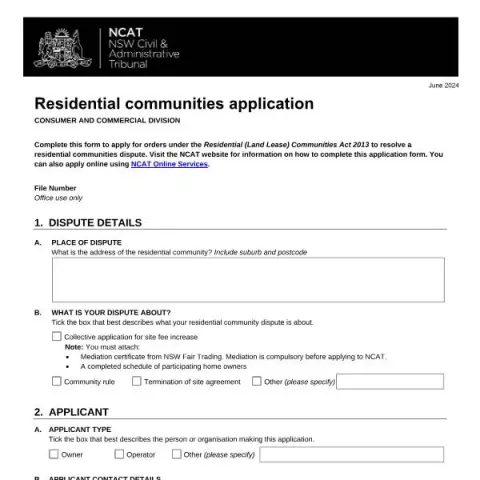
Understanding the Residential Communities Application Form for NCAT
If you are involved in a dispute within a residential community in New South Wales, Australia, you may need to apply to the NCAT Consumer and Commercial Division for resolution. This guide provides an overview of the official Residential Communities Application form, explaining its purpose, how to prepare your submission, and the steps to navigate the process effectively.
Purpose of the Application Form
The Residential Communities Application form is designed for individuals or organisations seeking legal orders under the Residential (Land Lease) Communities Act 2013. It facilitates the resolution of disputes related to residential land lease communities, such as disagreements over site fees, community rules, or termination of agreements. The form is essential for initiating formal proceedings before NCAT, ensuring that disputes are addressed in a structured and legally recognized manner.
Preparing Your Application
Gathering Necessary Information
Before filling out the form, it is important to collect all relevant details about the dispute, including:
- The address of the residential community, including suburb and postcode.
- A clear description of the dispute, selecting the most appropriate category such as site fee increases, community rule disagreements, or termination issues.
- Supporting documentation, particularly if your dispute involves a site fee increase, which requires a mediation certificate from NSW Fair Trading and a completed schedule of participating homeowners.
Completing the Form Accurately
The form requires detailed information about both the applicant and respondent, including:
- Full names, contact details, and organisation information if applicable.
- Legal or representative details if you are acting through a lawyer or agent, including authority documentation.
- Specifics about the respondent, such as their name and contact information.
It is crucial to ensure that all contact details are correct, as NCAT will use these for communication and service of documents throughout the process.
Submitting Your Application
Online and Paper Submission Options
The application can be lodged via the NCAT Online Services portal, which allows for a streamlined digital submission. Alternatively, applications can be printed and submitted in person at the nearest NCAT Registry. When submitting, you must also pay the applicable fee, which varies depending on the nature of the dispute and the orders sought.
Supporting Documentation and Attachments
Ensure that all required attachments are included, such as the mediation certificate (if applicable) and the schedule of homeowners. Proper documentation helps NCAT assess your case more efficiently and reduces delays in processing your application.
Following Up and What to Expect
Case Processing and Hearing
Once submitted, NCAT will review your application to confirm completeness and appropriateness. You will receive correspondence regarding the next steps, which may include scheduling a hearing. It is advisable to prepare all relevant evidence and to consider whether you require language or disability support for the hearing.
Fill in your form directly online
No printing: type your details into the boxes of the official form, tick, then download the PDF ready to send.
- 1Type into the form boxes
- 2Tick in one click
- 3Save and download the PDF
Support and Accessibility
If you need an interpreter or have specific support requirements, you should indicate these on the application form. NCAT aims to provide accessible services to all parties involved.
Additional Contact and Assistance
For further guidance, you can contact the NCAT Registry or visit their official website. The website provides detailed instructions, fact sheets, and online resources to assist applicants throughout the process. If you have questions about completing the form or the dispute resolution process, NCAT’s customer service team is available to help.
In summary, the Residential Communities Application form is a vital step in resolving disputes within residential land lease communities. Proper preparation, accurate completion, and understanding of the process will help ensure your case is handled efficiently and fairly by NCAT.