Understanding the Review Process of an Enduring Guardian Appointment in New South Wales
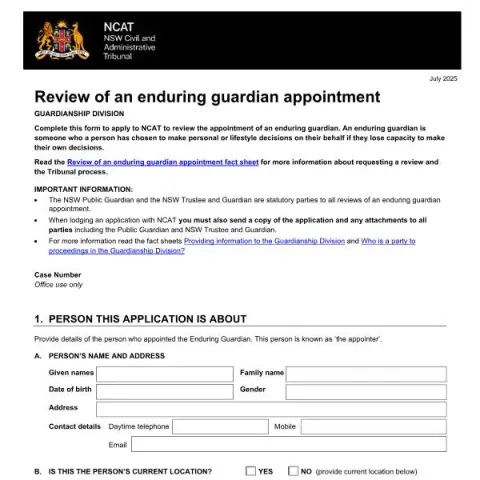
The Review of an enduring guardian appointment form is an essential legal document used within the NSW Civil and Administrative Tribunal (NCAT) to challenge or reassess the appointment of an enduring guardian. This process ensures that decisions made on behalf of individuals who have lost decision-making capacity are appropriate and aligned with their best interests. This article provides a comprehensive overview of the purpose of this form, how to prepare your application, submission procedures, and what to expect during the review process.
Purpose and Scope of the Form
The primary objective of this form is to enable concerned parties—such as family members, friends, or other interested persons—to request a formal review of the appointment of an enduring guardian. An enduring guardian is appointed to make personal or lifestyle decisions when the individual can no longer do so themselves, often due to age, illness, or disability. The review process allows NCAT to assess whether the current guardian's appointment remains appropriate or if changes are necessary.
It is important to note that statutory parties, namely the NSW Public Guardian and the NSW Trustee and Guardian, are automatically involved in these reviews. Applicants must also send copies of their application and attachments to these parties to ensure transparency and procedural fairness.
Preparing Your Application
Gathering Essential Information
Before completing the form, applicants should collect relevant details about the person who appointed the guardian (the appointer), including their full name, date of birth, gender, and current address. If possible, include information about their current location and living arrangements, such as whether they reside at home, in a hospital, or supported accommodation.
Additionally, applicants should consider gathering evidence that supports their concerns, such as medical reports, assessments of decision-making capacity, or documentation indicating the person’s disability. This evidence is crucial if the review is contested or if the capacity of the individual is questioned.
Understanding the Person’s Views and Circumstances
The form prompts applicants to consider whether they have informed the individual about the review and whether they agree with the application. It also requests details about the person’s views regarding the appointment and their preferences for participation in the hearing, including any need for special assistance or communication aids.
Identifying Other Relevant Parties
- Spouse or partner
- Carer or support person
- Enduring guardians (if more than two, additional details should be attached)
Applicants should ensure that all relevant parties are identified and that copies of the application are sent to them, especially the Public Guardian and the NSW Trustee and Guardian, who are statutory parties.
Submitting the Application
Methods of Submission
The completed application can be submitted online via the NCAT portal through myGov or by mailing the physical form. When submitting, applicants must send copies to the Public Guardian and NSW Trustee and Guardian, either by email or postal mail, at the addresses provided in the form instructions.
Important Considerations
It is crucial to attach all relevant evidence, including medical reports or capacity assessments, to support the application. Ensure that all details are accurate and that copies are sent to all statutory parties to avoid delays or procedural issues.
Fill in your form directly online
No printing: type your details into the boxes of the official form, tick, then download the PDF ready to send.
- 1Type into the form boxes
- 2Tick in one click
- 3Save and download the PDF
Follow-up and Hearing Process
Once the application is received, NCAT will review the documentation and may schedule a hearing. The individual subject to the review can participate in the hearing in person, via telephone, or videoconference, depending on their circumstances. The tribunal may also consider any special needs, such as language interpretation or accessibility requirements.
Applicants and interested parties will receive notices of the hearing and any subsequent decisions. The tribunal’s decision can result in confirming, varying, or terminating the existing enduring guardian appointment, always prioritizing the best interests of the individual involved.
Conclusion
The Review of an enduring guardian appointment form is a vital legal tool in safeguarding the rights and well-being of individuals who lack decision-making capacity. Proper preparation, understanding of the process, and adherence to procedural requirements ensure that the review is conducted fairly and efficiently. If you are considering requesting a review, it is advisable to consult the relevant fact sheets and, if necessary, seek legal advice to navigate the process effectively.