Understanding the Process to Request a Review of a Guardianship Order in New South Wales
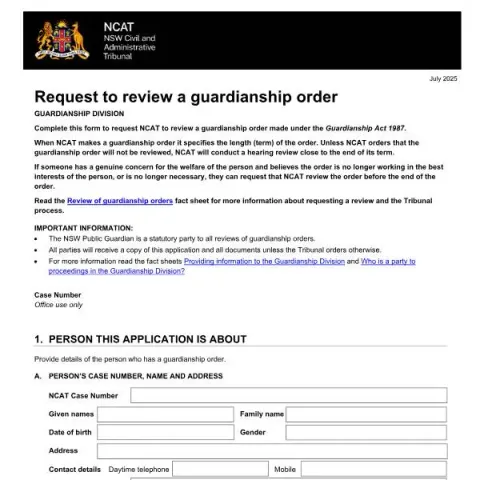
If you are involved in a guardianship case in New South Wales (NSW) and believe that a guardianship order is no longer appropriate or necessary, you have the option to request a review of that order through the NSW Civil and Administrative Tribunal (NCAT). This process allows concerned parties to seek a reassessment of guardianship arrangements under the Guardianship Act 1987, ensuring that decisions made are still in the best interests of the person under guardianship.
When Should You Consider Requesting a Review?
A review may be appropriate if you have genuine concerns about the current guardianship order, especially if circumstances have changed or if the order is believed to be no longer serving the best interests of the individual. Common reasons include changes in the person's condition, the guardianship arrangement no longer being suitable, or new evidence suggesting the person has regained decision-making capacity.
It is important to note that unless NCAT explicitly states otherwise, the tribunal will conduct a hearing close to the end of the order's specified term. However, if urgent concerns arise, a party can apply for an earlier review by submitting the appropriate application form.
How to Complete the Application for Review
Gathering Necessary Information
Before filling out the application, you should collect relevant details about the person subject to guardianship, including:
- Full name, date of birth, and gender
- Current address and contact details
- Current location and type of accommodation
- Any existing reports or evidence regarding their decision-making capacity
It is also necessary to identify yourself as the applicant, providing your details and relationship to the individual. If you are not the person under guardianship, ensure you have consent or a valid reason for submitting the application.
Key Sections of the Application Form
The form is divided into several sections:
Fill in your form directly online
No printing: type your details into the boxes of the official form, tick, then download the PDF ready to send.
- 1Type into the form boxes
- 2Tick in one click
- 3Save and download the PDF
- Details of the Person Under Guardianship: Includes case number, personal details, current location, and views about the guardianship order.
- Applicant Information: Your full name, relationship to the individual, and contact details.
- Parties Involved: Details of the current guardian, enduring guardian (if any), spouse, or carer.
- Consent and Acknowledgement: Confirmation that all parties will receive copies of the application and that you understand your responsibilities.
Submitting the Application
Once completed, the application must be sent to NCAT's Guardianship Division. It is essential to also send a copy to the NSW Public Guardian, who is a statutory party to all guardianship reviews. This can be done via email or postal mail, using the contact details provided in the form.
Additional Considerations and Tips
- Supporting Evidence: Attach any relevant reports from healthcare professionals or other documentation that support your case that the individual’s capacity has changed or that the guardianship is no longer suitable.
- Participation at the Hearing: Consider whether the individual can attend the hearing in person or participate via telephone or videoconference. Also, identify if they require special assistance, such as language interpretation or accessibility support.
- Legal and Procedural Advice: It may be beneficial to consult with a legal professional or a community legal service experienced in guardianship matters to ensure your application is complete and properly supported.
Final Thoughts
Requesting a review of a guardianship order is a formal process that provides an important safeguard for individuals under guardianship, ensuring their rights are protected and their circumstances are regularly reassessed. By understanding the requirements and following the correct procedures, concerned parties can effectively initiate this review process through NCAT, promoting decisions that truly reflect the best interests of the individual involved.