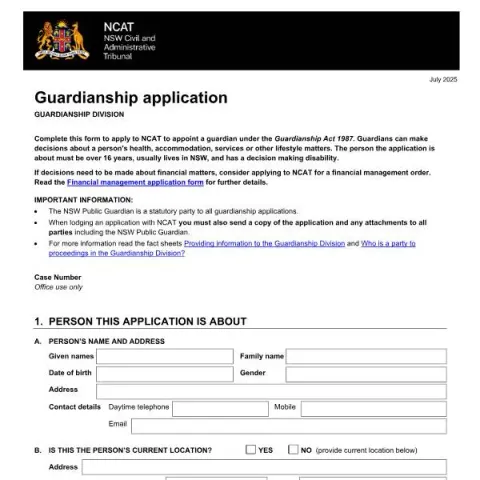
Understanding the Guardianship Application Process in New South Wales
The Guardianship Division of the New South Wales Civil and Administrative Tribunal (NCAT) provides a formal process for appointing a guardian to make decisions on behalf of a person with a decision-making disability. This article guides you through the essential aspects of the guardianship application form, its purpose, eligibility criteria, and the steps involved in completing and submitting the application.
What is the Guardianship Application?
The guardianship application is a legal form used to request NCAT to appoint a guardian under the Guardianship Act 1987. Guardians are authorised to make decisions about a person’s health, accommodation, services, or other lifestyle matters. This process is designed for individuals over 16 years of age who usually reside in NSW and have a decision-making disability.
Who Can Apply and Who Is the Application For?
The application can be made by a relative, friend, carer, or other interested party who believes that the person requires a guardian due to their disability. The person the application concerns must be over 16, usually living in NSW, and have a recognised decision-making impairment, such as dementia, intellectual disability, neurological injury, or other conditions affecting their capacity.
It is important to note that if the decision relates specifically to financial matters, applicants are encouraged to consider applying for a financial management order instead, which is a separate process managed by NCAT.
Key Sections of the Guardianship Application Form
1. Details About the Person the Application Is About
This section requires comprehensive information about the individual, including their full name, date of birth, gender, current address, and contact details. Applicants must specify whether the individual is currently in their own home, hospital, supported accommodation, or another setting. The form also asks about the person’s views regarding the guardianship application, whether they have been informed, and their level of agreement or disagreement.
2. Evidence of Disability and Capacity
Applicants should provide details on why they believe the individual has a decision-making disability. Supporting evidence from health professionals, such as reports from doctors or psychologists, should be attached to the application. The form also inquires about any previous orders related to guardianship or decisions made in other Australian states or territories.
3. Assistance and Participation at the Hearing
This part assesses whether the individual can attend the hearing in person, participate via videoconference or telephone, or requires special assistance such as interpreters or communication devices. It also considers cultural, linguistic, or religious needs to ensure the person’s participation is accessible and respectful.
4. Applicant Details and Parties Involved
The applicant must provide their personal information and relationship to the individual, confirming their understanding of their responsibilities. If the applicant is not the person themselves, they must specify their connection and consent to the process. The form also requests details of any spouse, carer, or existing enduring guardian, and requires that copies of the application be sent to all relevant parties, including the NSW Public Guardian.
Fill in your form directly online
No printing: type your details into the boxes of the official form, tick, then download the PDF ready to send.
- 1Type into the form boxes
- 2Tick in one click
- 3Save and download the PDF
Submitting the Application and Next Steps
Once completed, the application must be sent to NCAT’s Guardianship Division, along with attachments such as medical reports. It is mandatory to send a copy of the application and any supporting documents to the NSW Public Guardian, either by email or post, as they are a statutory party to all guardianship proceedings.
Following submission, NCAT will review the application, and a hearing will be scheduled. The individual concerned, their family, and other parties will be notified of the hearing date. During the hearing, NCAT will determine whether a guardian should be appointed and, if so, who is suitable for the role.
Important Considerations
- The application process requires careful completion of all sections to ensure clarity and completeness.
- Supporting evidence from health professionals is crucial to substantiate claims of disability and decision-making capacity.
- All parties involved must be kept informed, and their rights respected throughout the process.
- Applicants should consider the individual’s preferences and views, where possible, to uphold their dignity and autonomy.
In summary, the guardianship application process in NSW is a structured legal procedure designed to protect individuals with decision-making disabilities by appointing appropriate guardians. Understanding each step and fulfilling all legal requirements ensures a smooth and fair process, ultimately supporting the well-being and rights of the individual involved.