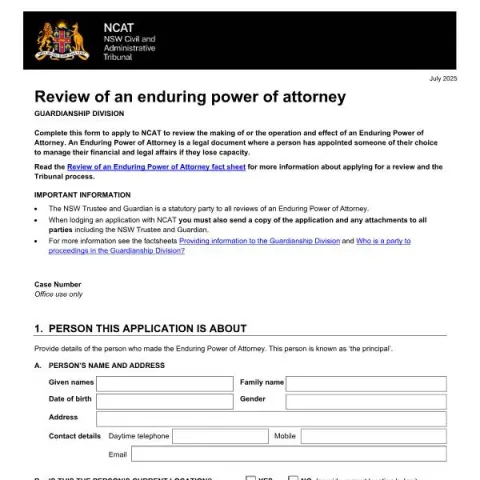
Understanding the Review Process of an Enduring Power of Attorney in New South Wales
In New South Wales, an Enduring Power of Attorney (EPOA) allows a person, known as the principal, to appoint someone they trust to manage their financial and legal affairs if they become unable to do so. However, circumstances may arise where the operation or validity of this document needs to be reviewed. The NSW Civil and Administrative Tribunal (NCAT) provides a formal process for such reviews, ensuring that the interests and rights of the principal are protected.
Purpose of the Application
This official form is designed for individuals or parties seeking to apply to NCAT to review either the making or the ongoing operation of an Enduring Power of Attorney. The review can be initiated if there are concerns about the principal’s decision-making capacity, the conduct of the appointed attorney, or the validity of the EPOA itself. The process helps to determine whether the attorney is acting appropriately and in the best interests of the principal.
Preparing Your Application
Gathering Essential Information
Before completing the form, applicants should collect comprehensive details about the principal, including their full name, date of birth, gender, current address, and contact details. If the principal is in a care facility or has no fixed address, this information should be clearly indicated. It is also crucial to document the principal’s current location and their views regarding the application, especially if they are capable of expressing these views.
Evidence of the principal’s decision-making capacity, such as medical reports or assessments, should be attached to support the application if available. This documentation is vital to substantiate claims about the principal’s disability or incapacity to make decisions.
Identifying Parties and Attendees
The applicant must specify their relationship to the principal and whether they are making the application on their own behalf or on someone else’s. Details of any other parties involved, such as the attorney appointed under the EPOA, spouses, carers, or other relevant individuals, should be included. It is mandatory to notify the NSW Trustee and Guardian, who are statutory parties to all reviews, by sending them a copy of the application.
Submitting the Application
Method of Lodgment
Applications can be lodged online via the NCAT portal through myGov or by mailing the completed form and attachments to the appropriate NCAT address. It is essential to ensure that all supporting documents, including medical evidence and any correspondence, are included to facilitate a thorough review.
Notification and Service
Once submitted, the applicant must serve a copy of the application and all attachments on the NSW Trustee and Guardian. This step is crucial, as they are a statutory party involved in the proceedings. The applicant should keep proof of service, such as postal receipts or email confirmation, to demonstrate compliance with procedural requirements.
During the Review Process
NCAT will assess the application, considering all evidence provided. The tribunal may schedule a hearing, which can be attended in person, by telephone, or via videoconference, depending on the circumstances of the principal. If necessary, the tribunal can also arrange for special accommodations, such as hearing aids, wheelchair access, or communication aids, to ensure the principal’s full participation.
Fill in your form directly online
No printing: type your details into the boxes of the official form, tick, then download the PDF ready to send.
- 1Type into the form boxes
- 2Tick in one click
- 3Save and download the PDF
The review process aims to safeguard the principal’s rights and ensure that their affairs are managed appropriately. The tribunal’s decision may include confirming, varying, or revoking the Enduring Power of Attorney, based on the evidence presented.
Contacts and Additional Support
Applicants seeking further guidance can consult the official fact sheets provided by NCAT, which outline the process and responsibilities involved. It is also advisable to seek legal advice or support from advocacy services if the case involves complex issues or disputes.
In summary, applying for a review of an Enduring Power of Attorney through NCAT involves careful preparation, clear communication, and adherence to procedural requirements. This process ensures that the rights and wellbeing of individuals who have appointed attorneys are protected and that their autonomy is respected as much as possible.