Understanding the "Reply to Appeal" Form for the NSW Civil and Administrative Tribunal
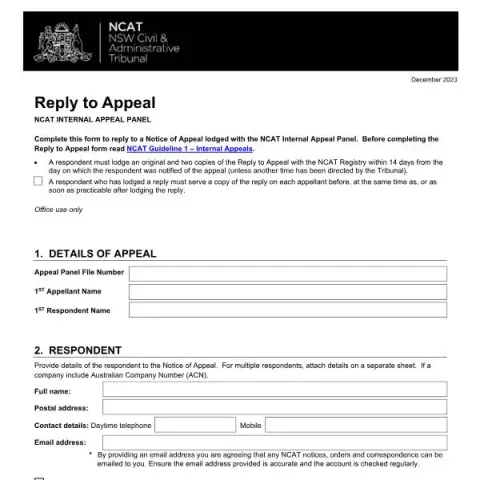
If you are involved in a legal matter before the New South Wales (NSW) Civil and Administrative Tribunal (NCAT), you may encounter the need to respond to an appeal lodged against a decision made by the Tribunal. The "Reply to Appeal" form is a crucial document in this process, allowing respondents to formally present their case and clarify their position. This article provides a comprehensive overview of this form, including its purpose, eligibility criteria, step-by-step filling instructions, and important deadlines.
Purpose and Scope of the "Reply to Appeal" Form
The "Reply to Appeal" form is designed for respondents who wish to respond to a Notice of Appeal filed with the NCAT Internal Appeal Panel. When a party (the appellant) challenges a decision made by the Tribunal, the respondent can use this form to support their position, contest the grounds of the appeal, or clarify their stance on the original orders. It is a formal part of the legal process that ensures all parties have an equal opportunity to present their arguments before the Tribunal considers the appeal.
Who Can Lodge a "Reply to Appeal"?
- Respondents: Any individual or entity who was a party to the original proceedings and has been notified of an appeal against the Tribunal’s decision.
- Legal Representatives: Respondents may also choose to have a lawyer or legal representative lodge the reply on their behalf, although they may need to seek the Tribunal’s permission for this arrangement.
Key Conditions and Eligibility Criteria
To lodge a valid "Reply to Appeal," respondents must adhere to certain conditions:
- Time Limit: The form must be lodged within 14 days from the date the respondent was notified of the appeal, unless the Tribunal has directed a different timeframe.
- Copies: The respondent must submit an original and two copies of the reply to the NCAT Registry.
- Service: A copy of the reply must be served on each appellant, either at the time of lodging or as soon as practicable afterward.
Step-by-Step Guide to Filling Out the Form
1. Complete the Appeal Details
Begin by entering the Appeal Panel File Number and the names of the appellant and respondent. These details are usually provided in the Notice of Appeal.
2. Provide Respondent Details
Fill in your full name, postal address, contact numbers, and email address. If you have a legal representative, include their details and specify if they are authorized to receive correspondence on your behalf.
3. Address the Grounds of Appeal
Review the grounds for appeal outlined in the Notice of Appeal. Indicate whether you support the original orders or oppose them, and specify your reasons. You may need to attach additional sheets if your response is lengthy.
4. Respond to Leave to Appeal and Extension Requests
If the appellant has requested leave to appeal or an extension of time, state whether you oppose or support these requests. Provide reasons if you oppose, supported by relevant evidence.
5. Indicate Hearing Needs
If you have any special needs, such as wheelchair access or hearing assistance, or require an interpreter, specify these requirements in the relevant sections.
Fill in your form directly online
No printing: type your details into the boxes of the official form, tick, then download the PDF ready to send.
- 1Type into the form boxes
- 2Tick in one click
- 3Save and download the PDF
6. Attach Supporting Documents
Gather all relevant evidence and supporting documents to substantiate your reply. Ensure you keep copies for your records and send the necessary copies to the Tribunal and the appellant.
Important Deadlines and Submission Process
The completed "Reply to Appeal" form, along with supporting documents, must be lodged within 14 days of receiving the Notice of Appeal, unless directed otherwise by the Tribunal. You can lodge your reply by mailing it to the NCAT Appeals Unit at the specified address. It is advisable to keep copies of all submitted documents for your records.
Conclusion
The "Reply to Appeal" form is a vital procedural document that allows respondents to respond effectively to appeals lodged against NCAT decisions. By carefully completing the form within the prescribed timeframe and attaching all relevant evidence, respondents can ensure their case is properly presented for consideration by the Tribunal. For further guidance, consult the official NCAT guidelines or seek legal advice to navigate the appeal process confidently.