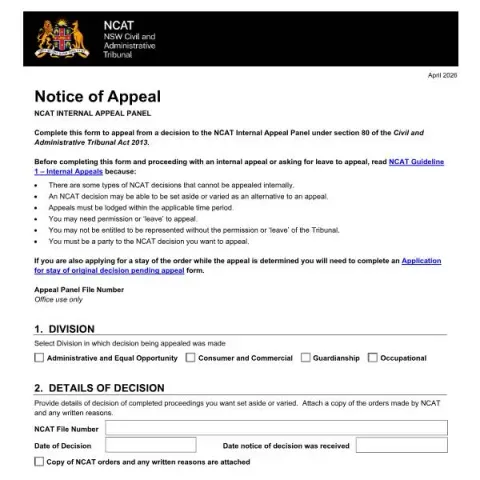
Understanding the Notice of Appeal Form for the NSW Civil and Administrative Tribunal
If you are involved in a decision made by the NSW Civil and Administrative Tribunal (NCAT) and believe that the decision was incorrect, you may have the option to appeal. The formal process for lodging an appeal involves completing a specific form known as the Notice of Appeal. This article provides a comprehensive guide to understanding this form, its purpose, and how to navigate the appeal process effectively.
What is the Notice of Appeal Form?
The Notice of Appeal is a legal document that must be completed if you wish to challenge a decision made by NCAT. It is designed for parties who believe that the Tribunal's decision was flawed and seek a review or variation of the original order. This form is used specifically for internal appeals under section 80 of the Civil and Administrative Tribunal Act 2013.
The form is intended for use by individuals or entities directly affected by the decision, such as applicants, respondents, or their representatives. It is essential to understand that not all decisions are eligible for internal appeal, and some may require permission or 'leave' to proceed.
When Should You Use the Notice of Appeal?
This form is applicable in situations where:
- You wish to challenge a final or interim decision made by NCAT.
- The decision falls within the categories eligible for internal review, such as administrative or consumer disputes.
- You believe the decision was incorrect based on the facts, evidence, or legal grounds.
Before completing the form, it is recommended to review NCAT Guideline 1 – Internal Appeals, which provides details on decisions that can or cannot be appealed and whether you need to seek leave to appeal.
Key Sections of the Notice of Appeal Form
1. Division and Decision Details
Here, you specify the division of NCAT that made the original decision (e.g., Administrative and Equal Opportunity, Consumer and Commercial) and provide details of the decision, including the file number, date of decision, and attached copies of the orders and reasons.
2. Appellant and Respondent Information
You must supply your full name, contact details, and postal address. If you are represented by a lawyer or advocate, their details should also be included. The same applies to the respondent, who is the other party involved in the original proceedings.
3. Grounds for Appeal
This section requires you to specify which orders you wish to have changed and to outline the reasons why the Tribunal's decision was incorrect. These grounds can include errors of fact, legal mistakes, or procedural unfairness.
4. Orders Sought and Stay Applications
If successful, you should specify the orders you want the Tribunal to make. Additionally, if you seek to suspend the original decision pending the appeal, you need to complete a separate application for a stay.
Fill in your form directly online
No printing: type your details into the boxes of the official form, tick, then download the PDF ready to send.
- 1Type into the form boxes
- 2Tick in one click
- 3Save and download the PDF
5. Questions of Law and Leave to Appeal
If your appeal involves questions of law, you can list these for an appeal as of right. Otherwise, you will need to request leave to appeal, providing reasons why the Tribunal should grant permission, especially if the decision is not final or involves complex legal issues.
Important Points to Remember
- Timeliness: Appeals must be lodged within the period specified by NCAT, usually within a certain number of days after receiving the decision.
- Representation: You may need permission to have legal representation during the appeal process.
- Supporting Documents: Attach all relevant documents, such as the original orders, reasons, and any new evidence that supports your case.
- Legal Advice: Given the complexities of appeal rights and grounds, seeking independent legal advice is strongly recommended to ensure your appeal is properly prepared.
Submitting the Notice of Appeal
The completed form can typically be lodged online via the NCAT portal or in person at the NCAT registry. Ensure all sections are filled out accurately and all necessary attachments are included to avoid delays or rejection.
In conclusion, the Notice of Appeal is a crucial step in challenging NCAT decisions. Properly understanding its structure and requirements can significantly improve your chances of a successful appeal, ensuring that your rights are protected within the tribunal system.