Understanding the "Notice of Appeal to the District Court" Form in New South Wales
If you have recently been involved in a legal case in the Local Court of New South Wales (NSW) and wish to challenge a conviction or order, you may need to complete a "Notice of Appeal to the District Court." This official form is a critical step in the appeals process, allowing you to formally initiate an appeal against a decision made by the Local Court. This article explains what this form is, who should fill it out, how to complete it correctly, and the key considerations to keep in mind.
What is the "Notice of Appeal to the District Court"?
The "Notice of Appeal to the District Court" is a formal legal document that initiates an appeal against a conviction, order, or sentence issued by the Local Court of NSW. It is a necessary step for individuals or entities seeking to have a higher court review and potentially overturn or modify a decision. The form captures essential details about the appellant, the original case, and the grounds for appeal, serving as the official record of your intention to contest the Local Court's ruling.
Who Should Complete This Form?
This form is intended for individuals who:
- Have had a conviction or order made against them in the Local Court of NSW.
- Wish to challenge that decision by appealing to the District Court.
- Are legally represented or acting in person.
It is essential to note that the District Court generally requires all appeals to be made after exhausting all review options available in the Local Court. Therefore, this form should only be submitted once you have completed any relevant reviews or appeals within the Local Court system.
How to Fill Out the "Notice of Appeal" Form
Gather Necessary Information
Before filling out the form, ensure you have the following details:
- Personal details of the offender (name, address, date of birth, contact number, and driver’s licence number if applicable).
- Details of the original case (order date, place of order, judicial officer involved, and offence(s)).
- Grounds for appeal – clearly state the reasons why you believe the decision was incorrect.
- If applicable, information about legal representation, especially if you wish to be represented by an Aboriginal Legal Officer.
Completing the Form
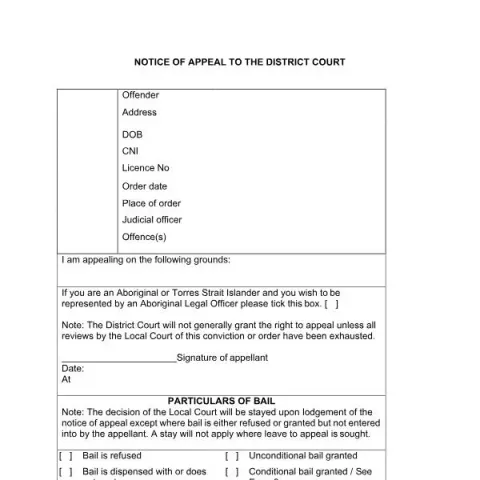
The form requires you to fill in the following key sections:
- Offender Details: Full name, address, date of birth, contact details, and licence number if relevant.
- Case Information: Date and place of the original order, judicial officer’s name, and the offence(s) involved.
- Grounds of Appeal: A detailed explanation of why you are appealing, including legal or factual errors you believe occurred.
- Representation: Indicate if you wish to be represented by an Aboriginal Legal Officer by ticking the relevant box.
- Signature and Date: Sign the form and date it to confirm your appeal.
Additionally, you will need to specify whether bail is refused, granted unconditionally, granted conditionally (see Form 8), or dispensed with. This information is crucial as the decision on bail will impact the stay of the original order upon lodgement of your appeal.
Fill in your form directly online
No printing: type your details into the boxes of the official form, tick, then download the PDF ready to send.
- 1Type into the form boxes
- 2Tick in one click
- 3Save and download the PDF
Submitting the Appeal
The completed form must be lodged with the District Court of NSW. This can typically be done in person at the court registry or through authorized electronic submission processes, depending on the court's current procedures. It is important to submit the form promptly, as there are strict time limits for lodging appeals after the original decision.
Important Considerations and Common Errors
- Exhausting Reviews: The District Court will generally not accept an appeal unless all review options in the Local Court have been exhausted.
- Completeness: Ensure all sections are filled accurately and legibly, including grounds for appeal and signatures.
- Supporting Documentation: Attach any relevant documents, such as the original order or transcripts, as required by the court.
- Timeliness: Be aware of the appeal deadline, which is usually specified in the original court order or relevant legislation.
Final Advice
Filing an appeal is a serious legal step that can significantly impact the outcome of your case. If you're unsure about how to complete the "Notice of Appeal to the District Court" or whether you meet the criteria, it is advisable to seek legal advice or assistance from a qualified legal practitioner or community legal service. Properly completing and submitting this form ensures your appeal is properly considered and processed by the NSW District Court.