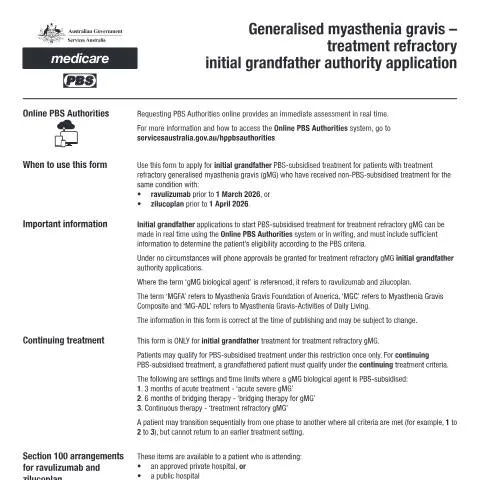
Navigating the PB398: Understanding the Grandfather Authority Application for Treatment-Refractory Myasthenia Gravis
In the realm of Australian healthcare, specific conditions require tailored treatment approaches. For patients grappling with generalised myasthenia gravis who have reached a stage where standard treatments have failed, the PB398 form plays a pivotal role. This application, known as the Grandfather Authority Application Form, is not merely a bureaucratic hurdle but a vital document that can unlock access to necessary treatments.
Distinguishing the PB398 from Other Forms
Within the landscape of healthcare documentation processed by Services Australia, the PB398 stands out due to its unique focus on treatment refractory conditions. Unlike standard authority application forms that cater to a broad range of medications or therapies, the PB398 is specifically designed for patients diagnosed with generalised myasthenia gravis. Understanding this distinction is crucial for both healthcare professionals and patients alike.
Why the PB398 Matters
- Targeted Treatment: The form addresses the needs of individuals whose condition does not respond to conventional treatments.
- Access to Alternatives: Successful submission may lead to access to more suitable therapies that are essential for managing symptoms.
- Financial Support: Approval through this process may also provide financial relief by covering the costs of prescribed medications.
Breaking Down the Application: Key Sections of the PB398
Filling out the PB398 involves navigating several important sections. Each component is not only essential for conveying patient information but also for ensuring the application meets the necessary criteria for approval. Below are the critical sections of the form that require careful attention:
Patient Information
The opening section typically requests detailed information about the patient, including personal details and medical history. Accuracy here is paramount—any discrepancies could lead to delays or rejection.
- Name and Date of Birth: Ensure these are correct and match official documents.
- Medical History: Provide comprehensive details on previous treatments and their outcomes.
Diagnosis Confirmation
In this segment, healthcare professionals must certify the diagnosis of generalised myasthenia gravis. This section often requires supporting documentation, such as test results or specialist reports.
Treatment History
A thorough outline of prior treatments is mandatory. It should detail the therapies attempted, duration, and reason for inefficacy. This information is crucial for the decision-making process.
Required Documentation
Alongside the form, specific documents need to be submitted. This might include:
- Specialist letters.
- Test results confirming the diagnosis.
- Medication history records.
The Implications of the PB398 Submission
Submitting the PB398 can have significant implications for both the patient and healthcare provider. It opens doors for tailored treatment regimens and potential financial assistance.
Rights and Responsibilities
Patients have the right to access necessary treatments as outlined in the guidelines for the PB398. However, they must fulfil their obligations to provide accurate information and comply with any additional requests from Services Australia for further documentation or clarification. Failure to do so can result in the application being delayed or denied.
What Happens Next?
After submission, the application undergoes a review process by Services Australia. This can take several weeks, and patients should be prepared to follow up on their application status, particularly if they experience delays. Utilizing the myGov account can streamline this check-in process, allowing for easier tracking of application status.
Handling Complex Cases and Exceptions
Some patients may find themselves in unique situations that complicate the PB398 application process. Understanding how to navigate these challenges can be crucial for securing the necessary treatment.
Special Considerations for Foreign Patients
For non-resident patients or those on temporary visas, additional requirements may apply. Documentation proving residency status and eligibility for healthcare services must be included. Consulting with a healthcare provider familiar with these complexities is advisable.
Minors and Parental Guidance
When applying for minors, the form requires additional consent from guardians. Parents or legal guardians must provide information about previous treatments and any relevant medical background of the minor.
What to Expect After Submission
Once the PB398 form is submitted, there are several paths forward depending on the outcome of the review process.
Approval and Next Steps
If approved, patients will receive a notification through their myGov account or directly via post. This approval enables access to specific treatments that were previously inaccessible due to the standard limitations.
Denial and Appeal Process
In case of denial, patients retain the right to appeal the decision. The appeal process is outlined under the Administrative Decisions (Judicial Review) Act 1977 (Cth). It’s essential to examine the reasons for denial carefully and to provide additional information or clarification if needed.
Engaging with Services Australia: Best Practices
Effective communication and engagement with Services Australia can significantly enhance the experience and outcome of the PB398 process.
Maintaining Clear Communication
Patients are encouraged to keep detailed records of all communications with Services Australia. This includes dates, times, and the names of representatives spoken to. This level of diligence can aid in resolving any issues that may arise during the application process.
Following Up on Applications
After submitting the PB398, it is advisable to follow up periodically. Utilizing the myGov platform allows for easy access to application status updates and potential notifications about additional documentation requests.
Final Considerations for a Successful Application
Successfully navigating the PB398 form can indeed unlock crucial treatment options for patients with generalised myasthenia gravis. Here are some final considerations:
- Thoroughness: Double-check all information provided for accuracy and completeness.
- Documentation: Ensure all necessary supporting documents are attached to avoid delays.
- Consultation: Engaging healthcare professionals during the application process can provide valuable insights and assistance.
Understanding Generalised Myasthenia Gravis: A Clinical Perspective
Generalised Myasthenia Gravis (gMG) is an autoimmune disorder characterized by the body's production of antibodies that block or destroy nicotinic acetylcholine receptors at the neuromuscular junction. This disruption in communication between nerves and muscles results in varying degrees of muscle weakness, which can severely affect daily activities. Understanding the pathophysiology of gMG is crucial for healthcare professionals when considering treatment options for patients who are treatment refractory.
This condition is generally progressive, and treatment strategies often involve the use of immunosuppressants, corticosteroids, or monoclonal antibodies. However, some patients may not respond adequately to these traditional therapies, leading to the classification of the disease as treatment refractory. In Australia, the management of gMG, particularly for those who do not respond to standard treatments, requires careful consideration of alternative therapies and eligibility for special funding under the Pharmaceutical Benefits Scheme (PBS).
Navigating the Application Process for PB398: Practical Insights
The application for the PBS authority to prescribe treatment for patients with treatment refractory generalised myasthenia gravis using the form PB398 is a critical step for many healthcare providers. Understanding the nuances of the application can significantly impact the approval process and the patient’s access to necessary treatments.
Firstly, it’s essential to gather all relevant medical documentation, including detailed clinical assessments and previous treatment records. The form requires a thorough description of the patient's condition and previous therapeutic trials, which should be clearly articulated to illustrate the refractory nature of the disease.
In addition to clinical details, the application must demonstrate that the proposed therapy aligns with the PBS criteria, emphasizing the need for careful selection of treatment options, including any potential off-label uses backed by clinical evidence. It can be beneficial to involve a multidisciplinary team that may include neurologists, pharmacists, and dietitians to support the application with comprehensive data and optimised patient management plans.
Furthermore, keeping abreast of changes in the PBS regulations and maintaining an open line of communication with the PBS authorities can lead to improved outcomes. Regularly checking the latest guidelines and recommendations can prepare healthcare providers to make informed decisions regarding treatment plans and application submissions.
Impact of Social Support and Resources on Patient Outcomes
Social support plays a vital role in the management of chronic illnesses such as generalised myasthenia gravis. Patients often face emotional and psychological challenges alongside their physical symptoms. Access to support groups, both online and offline, can provide individuals with gMG the chance to share experiences, learn coping strategies, and foster a sense of community, which can improve mental health and overall wellbeing.
In Australia, several organizations and foundations focus on neuromuscular disorders, offering resources ranging from educational materials to advocacy services. Patients are encouraged to leverage these resources which can assist in navigating the complexities of their condition, including information on health services, financial support, and legal rights related to their health status.
Moreover, the integration of social services in the management plan can enhance compliance with treatment regimens. Healthcare professionals should consider conducting referrals to psychologists or counselors who specialize in chronic illnesses to address the psychological aspects of living with gMG. Very often, patients may benefit from having their family members involved in educational sessions to better support their loved ones through the challenges of treatment refractory gMG.